Harmful Habits: Common Tree Care Errors Damaging Your El Monte Yard
The lush, vibrant trees in your yard are more than just scenery; they are a significant investment in your property's value, aesthetics, and local ecosystem. They provide shade, improve air quality, and create a peaceful environment. However, even with the best intentions, homeowners often make simple mistakes that can cause severe, long-term damage to these valuable assets. Here at El Monte Tree Service, we've seen firsthand how common errors can lead to stressed, unhealthy, or even hazardous trees.
Understanding these pitfalls is the first step toward fostering a thriving landscape. This comprehensive guide will walk you through the seven most common tree care mistakes we see in the El Monte area and explain how to avoid them, ensuring your trees remain healthy and beautiful for generations to come.
Mistake #1: The Dreaded "Tree Topping"
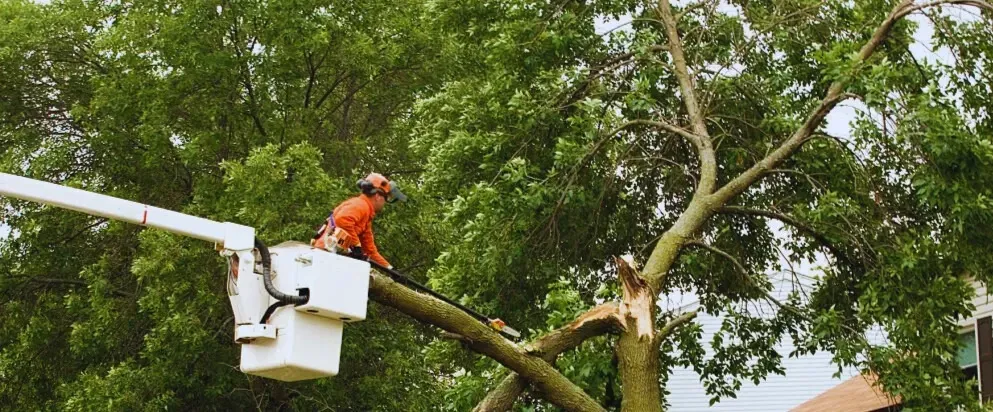
Perhaps the most damaging practice in tree care, "topping" involves indiscriminately cutting the main branches and trunk from the top of a tree, leaving behind ugly, blunt stubs. People often do this believing it will control the tree's size or make it safer. In reality, it does the exact opposite.
What is Topping, Exactly?
Topping is the drastic removal of a large portion of a tree's canopy. It's a shortcut that ignores the tree's natural biology and structure. A properly pruned tree has its branches carefully selected and removed at specific points to encourage healthy growth, whereas a topped tree is essentially butchered.
Why It's a Disaster for Your Tree
- Starvation: A tree's leaves are its food factories, producing energy through photosynthesis. Topping removes a massive percentage of these leaves, effectively starving the tree and putting it under immense stress.
- Weak, Unstable Growth: In a desperate survival response, the tree rapidly sends out numerous thin, weakly attached sprouts (epicormic shoots) just below the cuts. These new branches are prone to breaking off in wind or storms, making the tree far more dangerous than before.
- Disease and Pest Magnet: The large, open wounds created by topping cuts are difficult for the tree to seal. This leaves them highly vulnerable to insect infestations and fungal diseases that can rot the tree from the inside out.
- Increased Cost: A topped tree will require corrective pruning within a few years to manage the weak, dense regrowth. Eventually, it may become so hazardous that it requires complete removal, a far greater expense than proper, routine care.
The Professional Alternative: Proper Pruning
The correct approach is selective pruning or crown reduction. A certified arborist will carefully remove specific branches back to a strong lateral branch that is at least one-third the diameter of the removed stem. This respects the tree's natural form, directs growth, and maintains its structural integrity. Our team at El Monte Tree Service is trained in these precise techniques to ensure your tree's health and safety. Learn more about our professional tree care services.
Mistake #2: Watering Woes - Too Much or Too Little
Water is life, but the right amount is crucial. Both overwatering and underwatering can be fatal to trees, especially in Southern California's unique climate. The key is to understand your tree's needs and your soil's properties.
Signs of Overwatering
Overwatering suffocates the roots by filling all the air pockets in the soil with water, preventing them from absorbing oxygen. Signs include:
- Yellowing leaves (chlorosis) that may drop prematurely.
- New growth that wilts or withers.
- Brittle, easily broken green leaves.
- Presence of fungus or algae on the soil surface or base of the trunk.
- Waterlogged, foul-smelling soil.
Signs of Underwatering
Underwatering is common during our dry seasons. A dehydrated tree can't transport nutrients effectively. Watch for:
- Wilted or drooping leaves that don't perk up after sunset.
- Dry, brittle leaves that are brown at the edges.
- Scorched-looking foliage.
- Slowed or stunted growth.
- Premature leaf drop.
The Right Way to Water Trees in Southern California
The best practice is deep, infrequent watering. This encourages the tree to grow a deep, drought-resistant root system. Use a soaker hose or let a regular hose trickle slowly at the tree's dripline (the area on the ground under the outermost branches) for several hours. The goal is to moisten the soil to a depth of 12-18 inches. Check the soil moisture before watering again; it should be dry a few inches down. For most established trees, a deep watering every few weeks during the dry season is sufficient.
Mistake #3: Planting Too Deeply
This is a widespread problem that often starts at the nursery. When a tree is planted too deep, its root flare—the area where the trunk widens to meet the roots—is buried. This can be a slow death sentence for the tree.
The Critical Root Flare
The root flare needs exposure to air. When buried with soil and mulch, the bark in this area stays constantly moist, leading to decay, disease, and insect problems. It also encourages the growth of girdling roots, which wrap around the trunk and slowly strangle the tree by cutting off the flow of water and nutrients.
How to Check and Correct Planting Depth
You should be able to see the root flare at the base of the tree, slightly above ground level. If your tree trunk looks like a telephone pole going straight into the ground, it's likely planted too deep. Carefully excavate the soil around the base of the trunk until you expose the top of the main roots. This simple act can dramatically improve your tree's health and longevity.
Mistake #4: Building a "Mulch Volcano"
Mulch is fantastic for trees. It conserves moisture, suppresses weeds, and improves soil health. However, applying it incorrectly can cause more harm than good. The most common error is piling mulch high against the trunk, creating a "mulch volcano."
Why Volcanoes Erupt in Problems
Like burying the root flare, a mulch volcano traps moisture directly against the tree's bark. This constant dampness invites fungal diseases and trunk rot. It also provides a perfect, hidden environment for destructive pests like rodents and borers to chew on the bark, damaging the tree's circulatory system.
The Perfect "Mulch Donut" Technique
The correct method is to create a "mulch donut." Apply a 2-4 inch layer of organic mulch in a wide circle around the tree, starting 3-6 inches away from the trunk and extending out to the dripline if possible. This keeps the trunk dry and airy while providing all the benefits of mulch to the critical root zone.
Mistake #5: Ignoring the Whispers of Pests and Disease
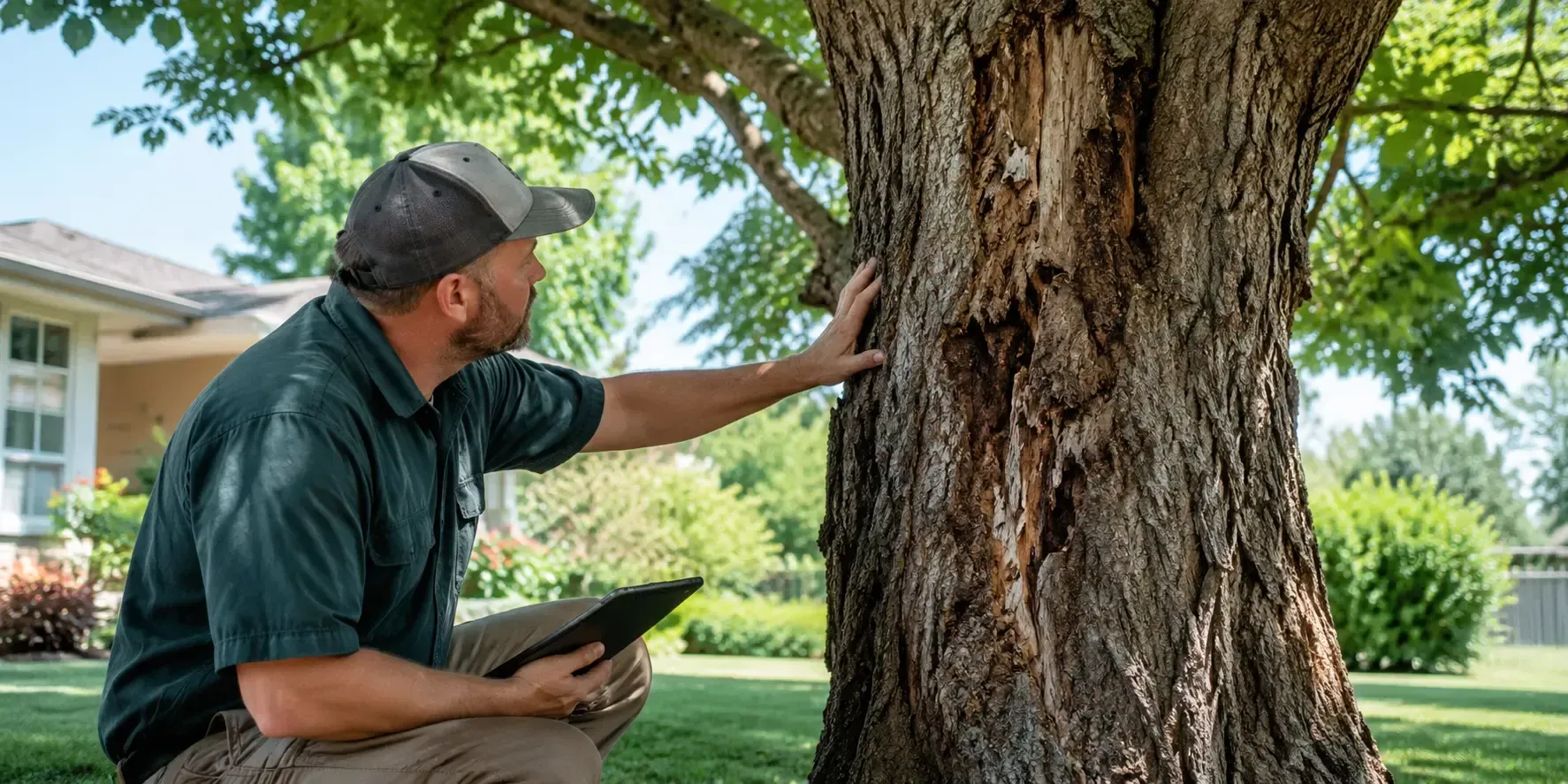
Trees are living organisms that can get sick. Often, they show subtle signs of distress long before a problem becomes severe. Ignoring these early warnings can lead to an infestation or disease that is much harder, and more expensive, to treat.
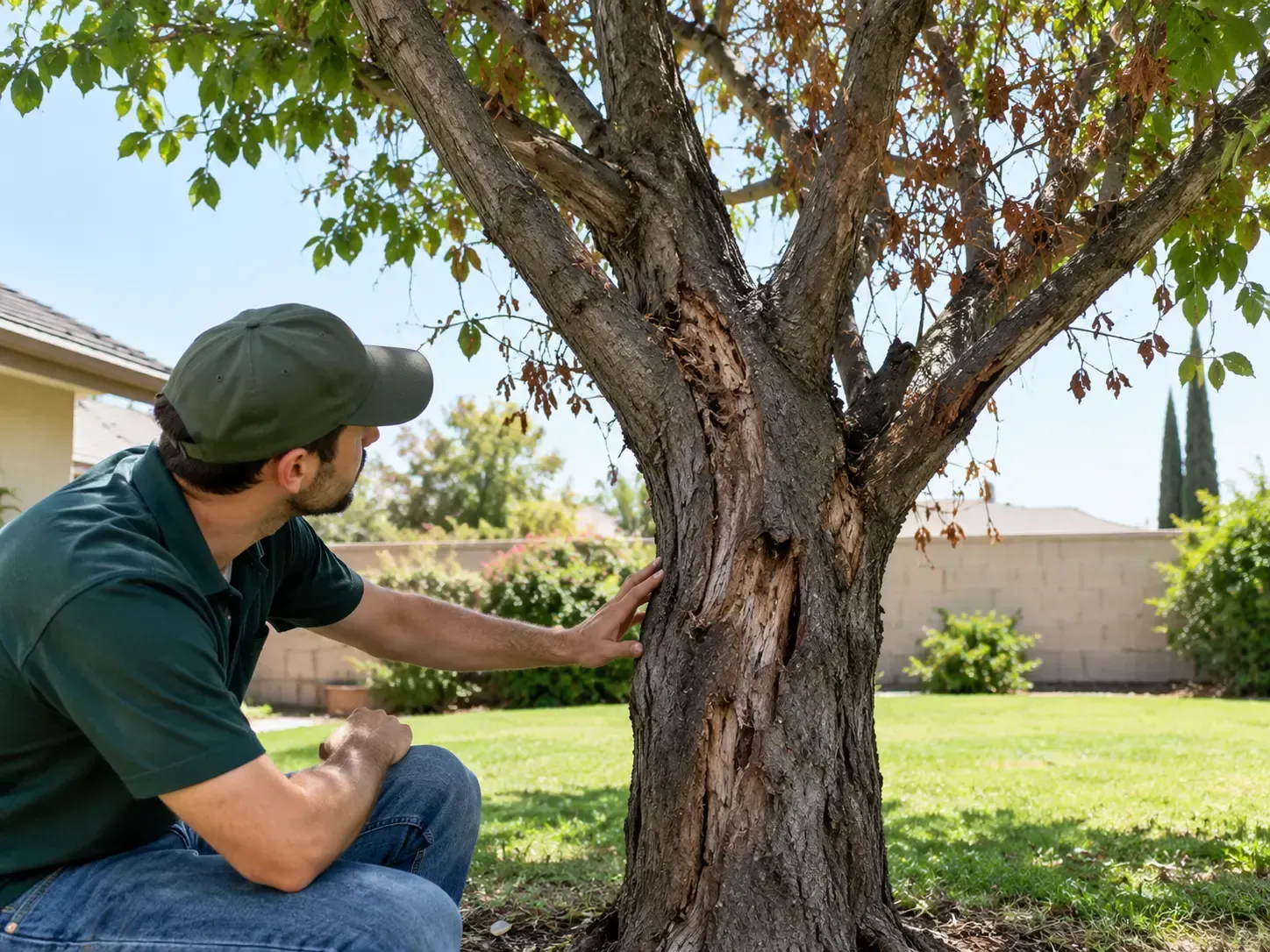
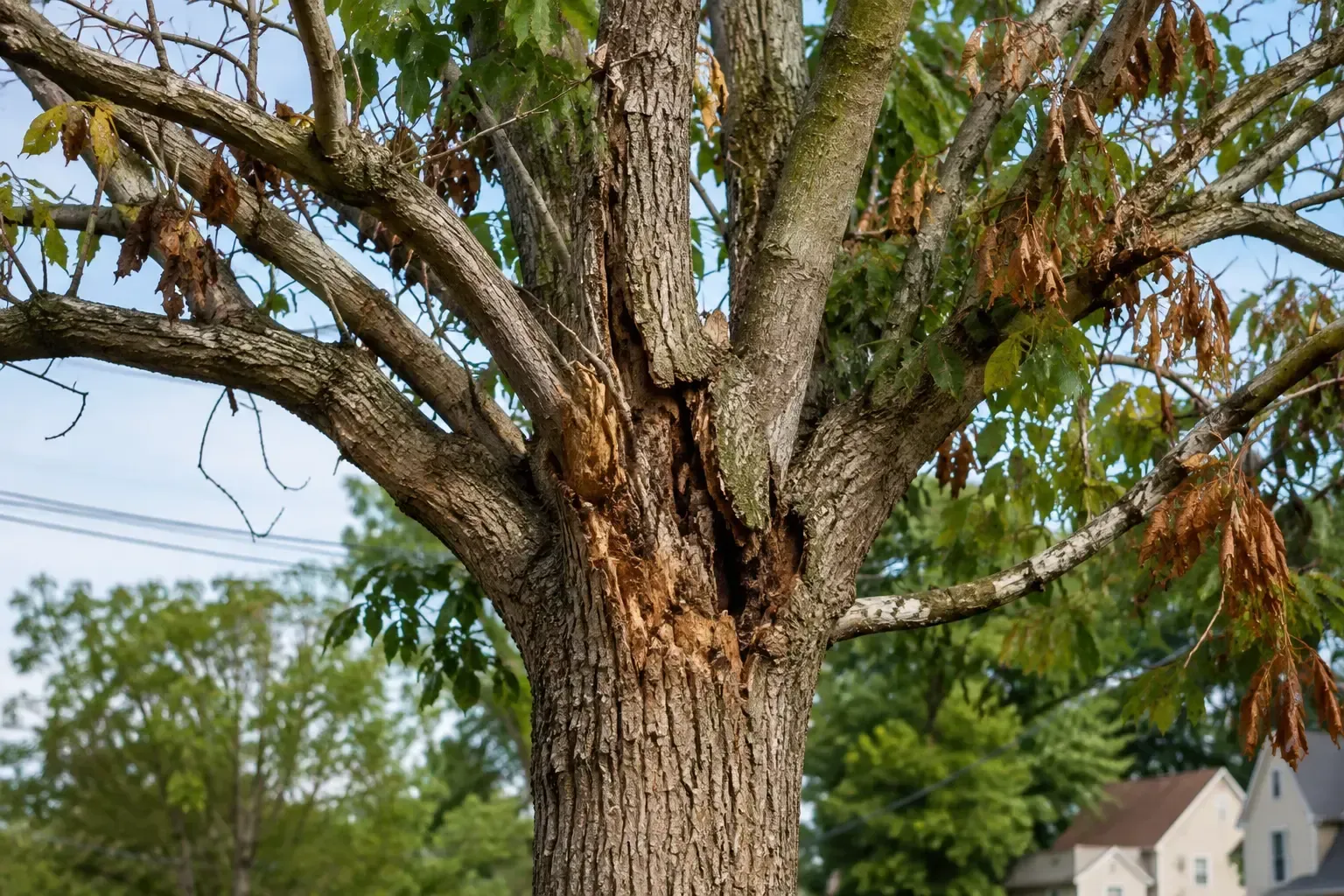
Early Warning Signs to Watch For
- Unusual Leaf Color: Widespread yellowing, browning, or black spots.
- Chewed or Deformed Leaves: Holes, ragged edges, or curled leaves can indicate insect activity.
- Sawdust-like Material (Frass): This near the base of the tree or in bark crevices is a classic sign of boring insects.
- Fungal Growth: Mushrooms or other fungal bodies growing on the trunk or major roots are often a sign of internal decay.
- Deadwood: An increasing number of dead or dying branches in the canopy.
When to Call for a Professional Diagnosis
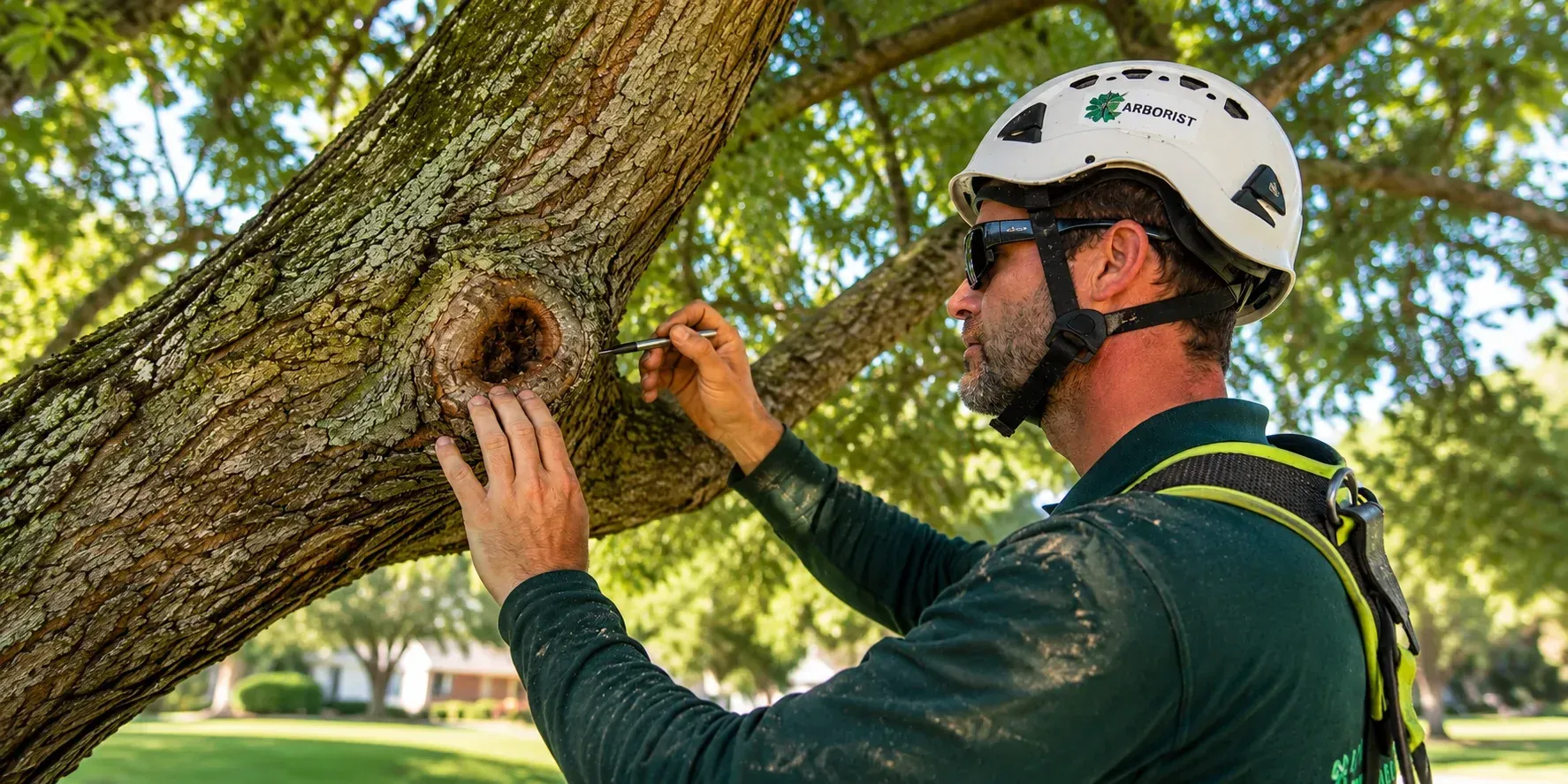
If you notice any of these signs, it's time to call in a professional. At El Monte Tree Service, our arborists can accurately diagnose the issue—whether it's a pest like the Polyphagous Shot Hole Borer or a fungal disease—and recommend the most effective treatment plan. Early intervention is key to saving your tree.
Mistake #6: Forgetting About the Soil Beneath
A tree's health is directly tied to the health of its soil. Over time, the soil in a typical yard can become heavily compacted from foot traffic, lawnmowers, and construction.
The Problem with Soil Compaction
Compacted soil has very little pore space. This makes it difficult for water and oxygen to penetrate down to the tree's roots. Roots struggle to grow through the dense soil, leading to a weaker, stressed tree that is more susceptible to all the other problems on this list.
Simple Solutions for Healthier Soil
One of the best ways to combat compaction is through proper mulching, as described above. As the organic mulch breaks down, it improves soil structure. For severe cases, professional soil aeration may be necessary. Avoiding parking vehicles or storing heavy materials under your trees will also prevent further compaction.
Mistake #7: Risky DIY on Large Trees
While trimming small shrubs or low-hanging branches can be a satisfying DIY project, major tree pruning or removal is a different story entirely. It is one of the most dangerous jobs in the world and should always be left to trained and insured professionals.
The Hidden Dangers of DIY Tree Work
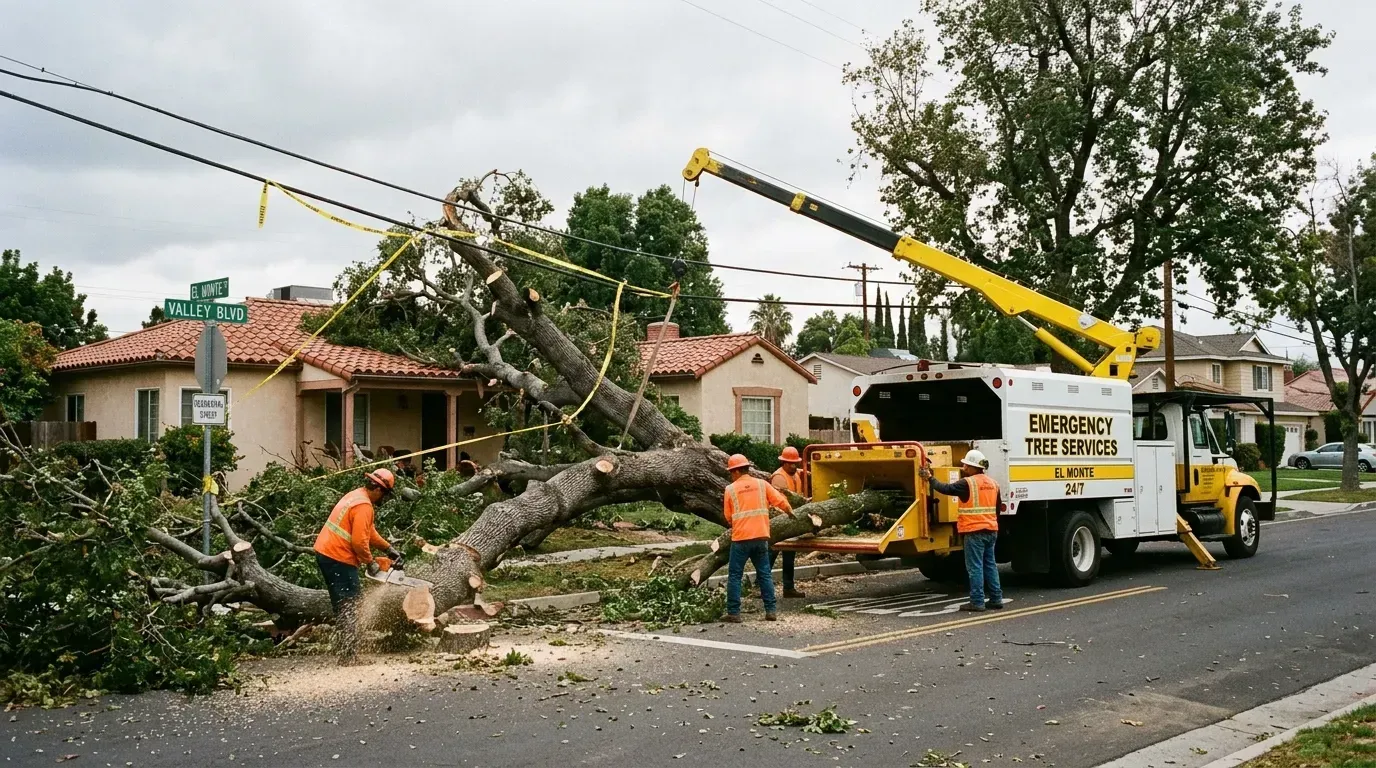
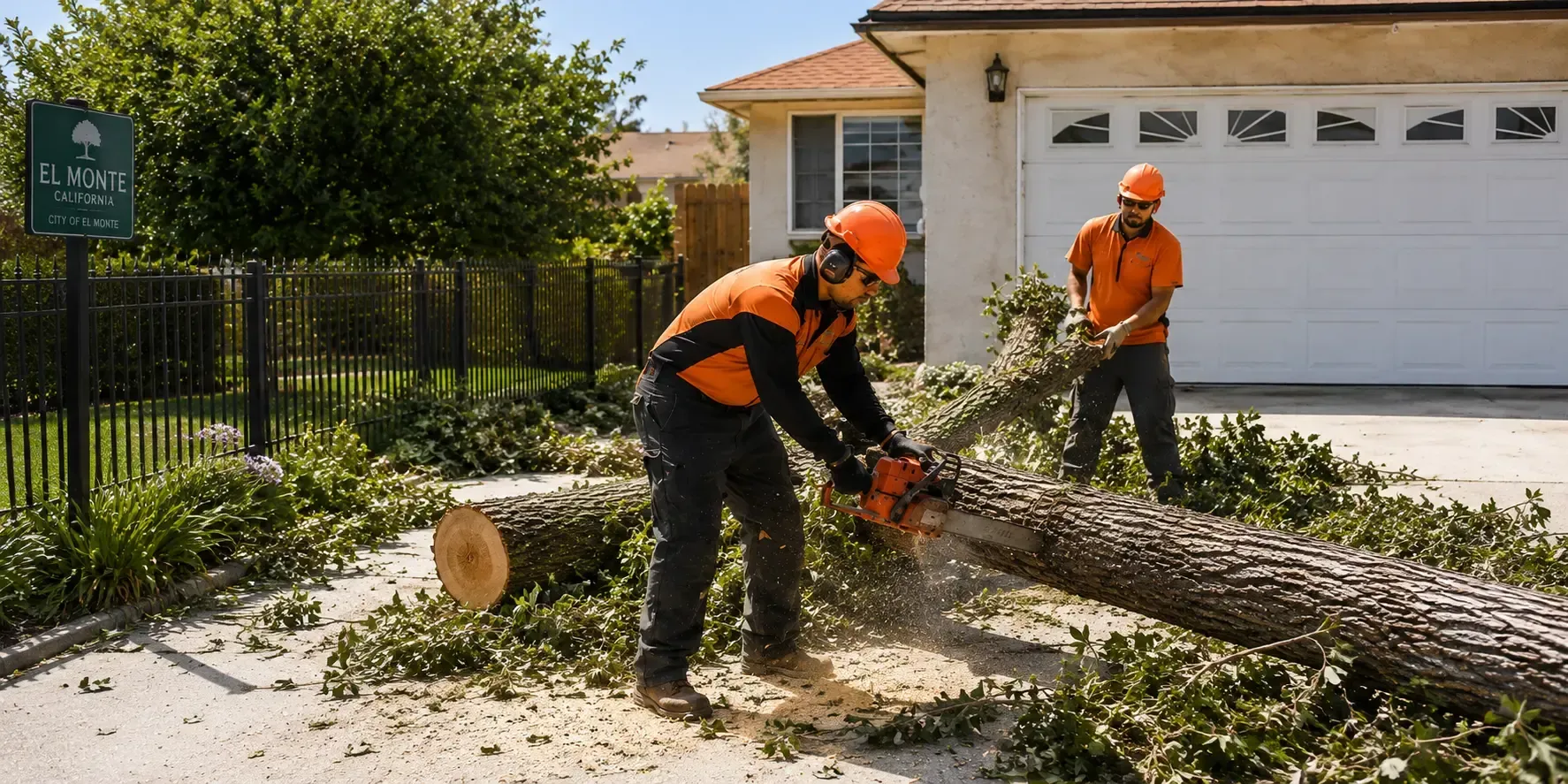
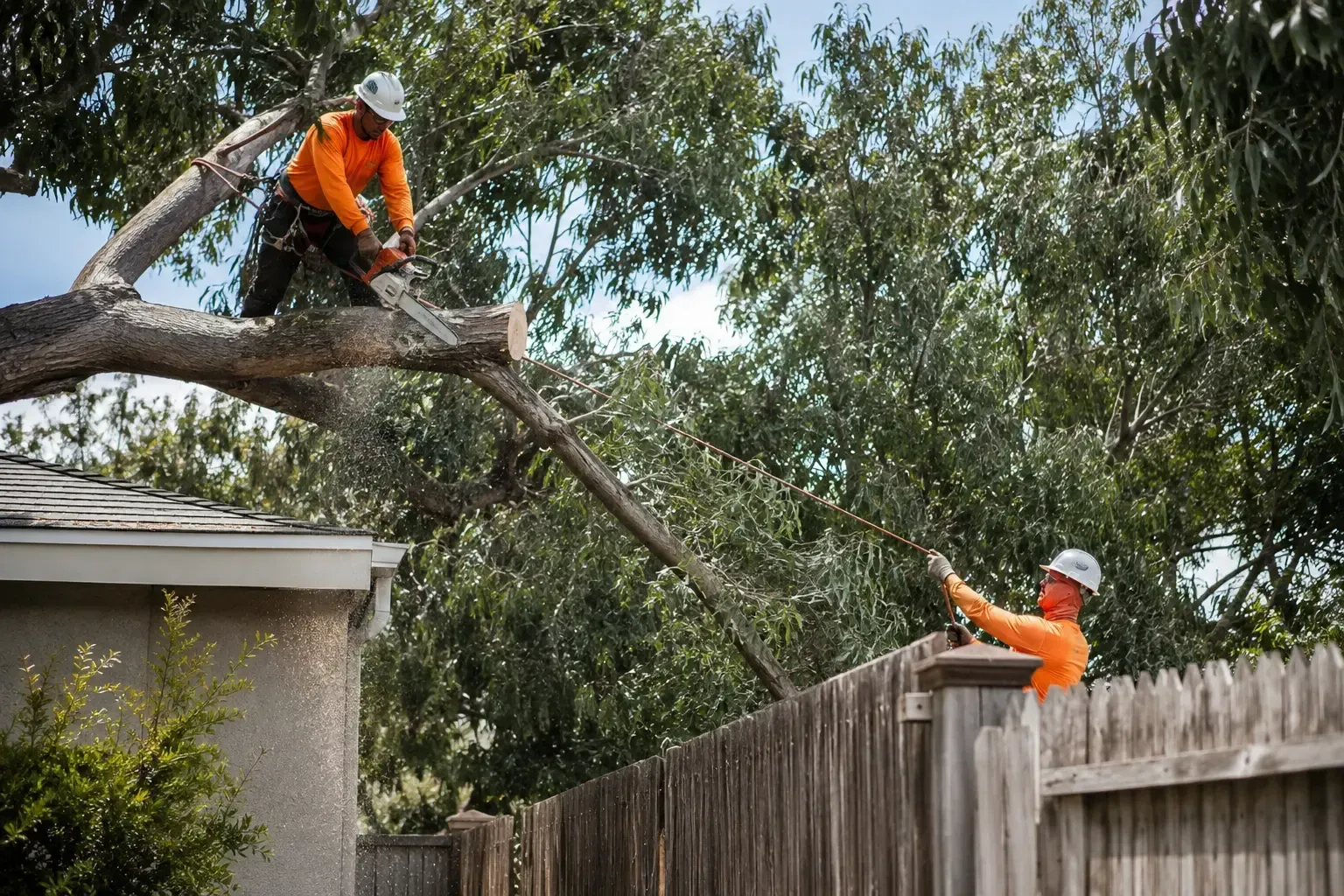
Working at height with powerful tools like chainsaws is inherently risky. Homeowners often lack the proper safety gear, training, and understanding of tree physics. A wrong cut can cause a massive limb (or the entire tree) to fall in an unpredictable direction, endangering people, homes, and power lines.
Why Professionals are a Smart Investment
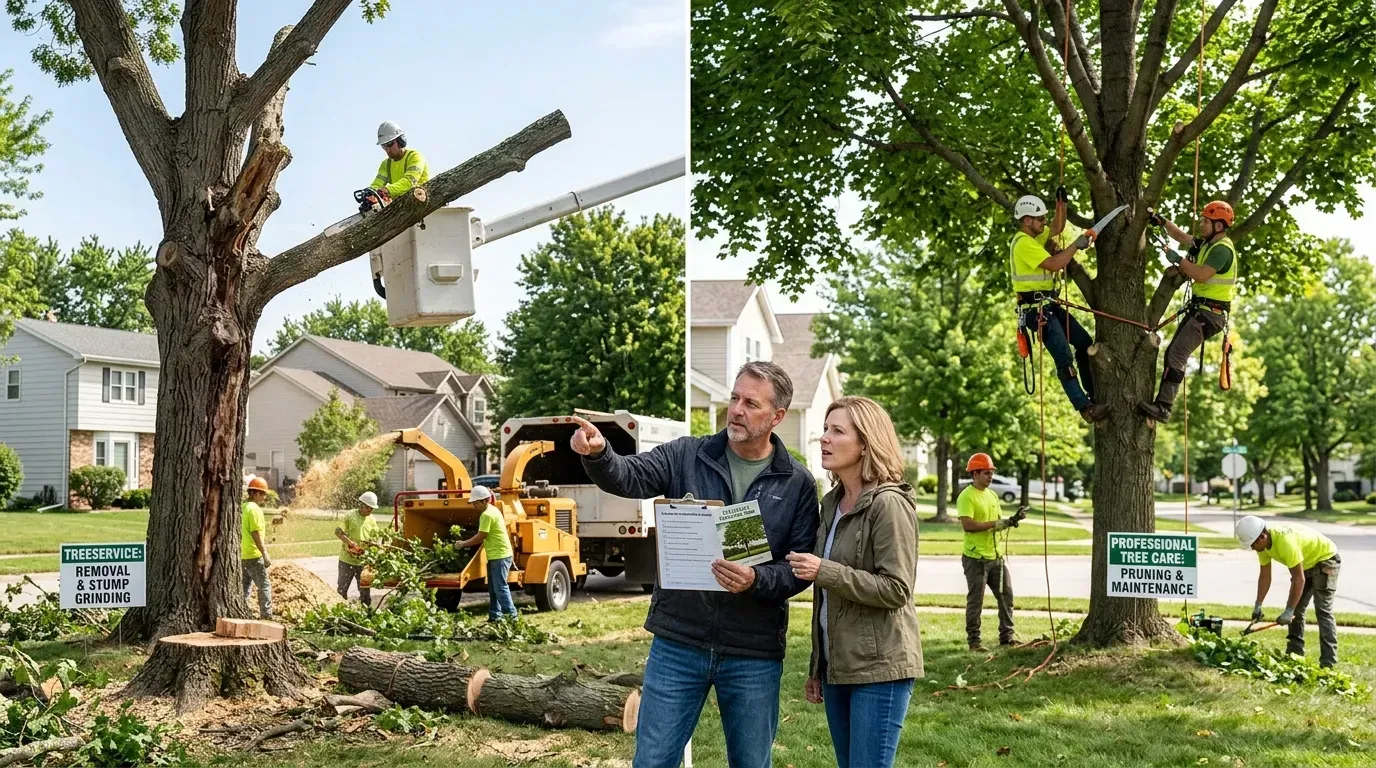
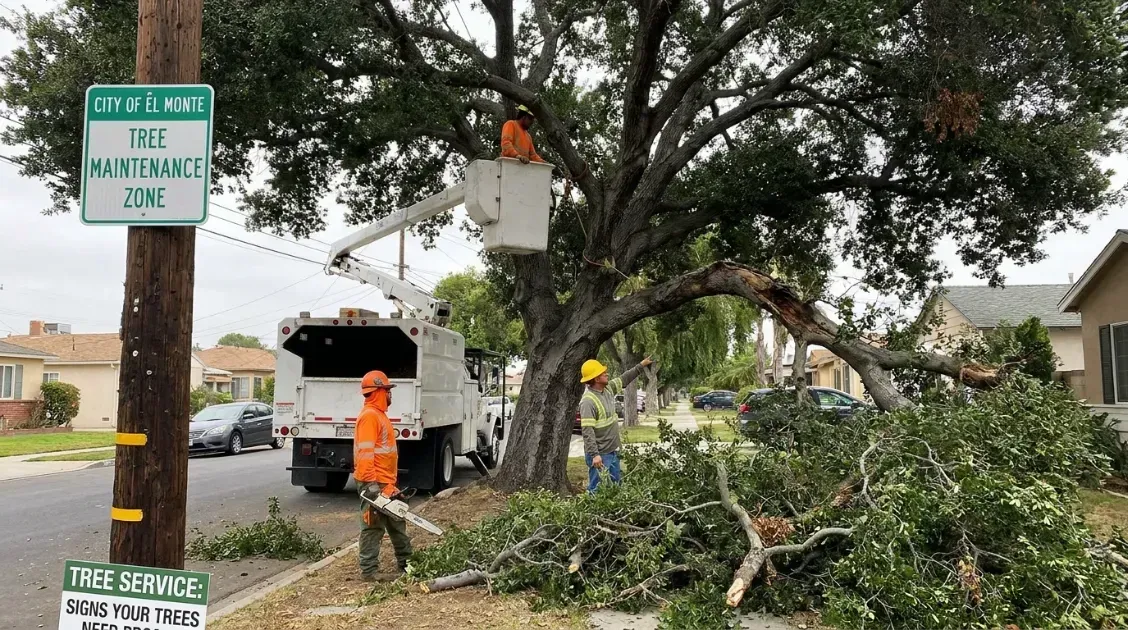
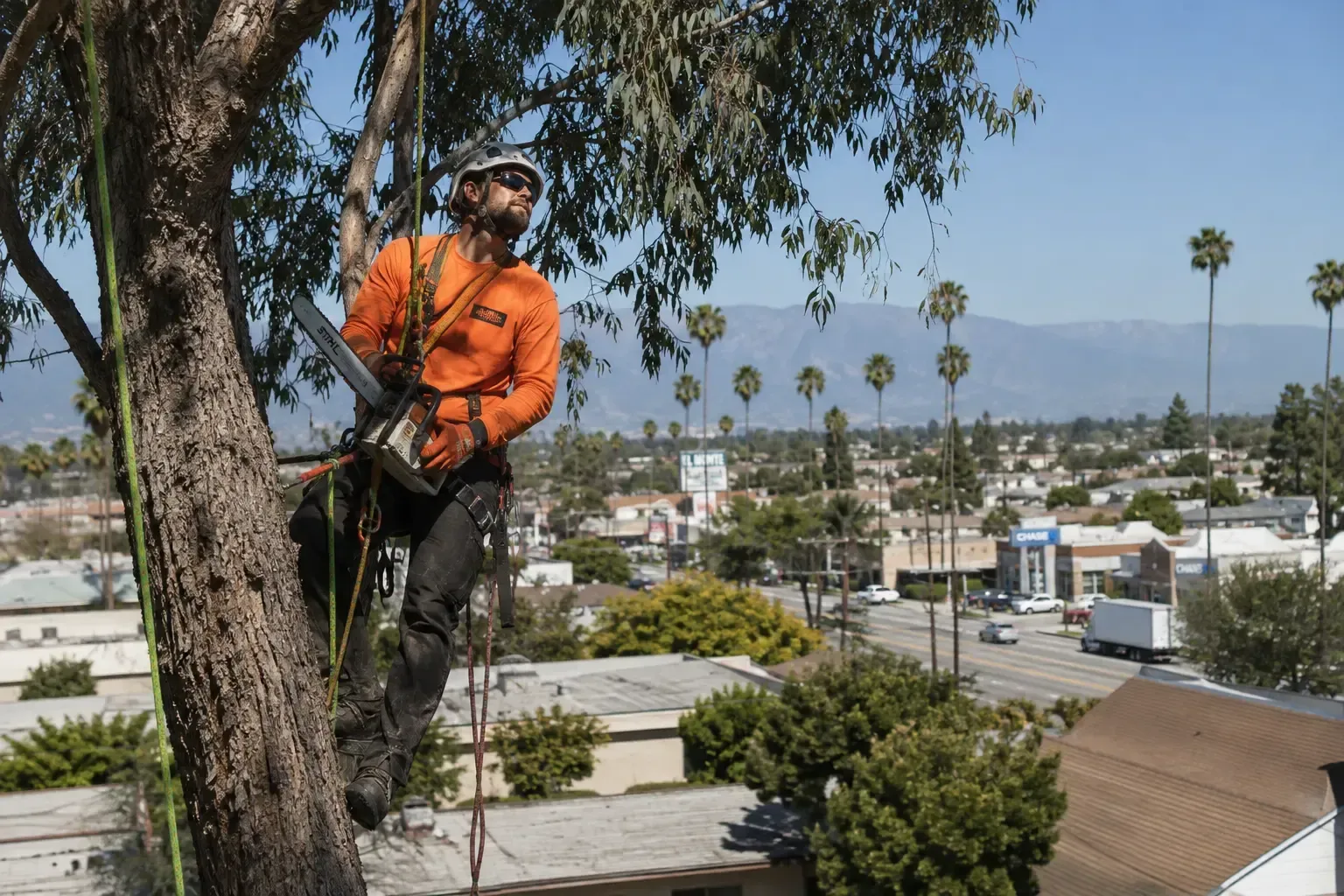
Hiring a reputable company like El Monte Tree Service is an investment in safety and quality. Our crews are equipped with state-of-the-art safety gear, are trained in advanced rigging techniques to control the descent of large limbs, and are fully insured to protect you and your property. Don't risk your safety for a job that requires expert hands.
Conclusion: Proactive Care for a Thriving Yard
Avoiding these seven common errors will put you well on your way to maintaining a healthy, beautiful, and safe landscape. Proper pruning, watering, planting, and mulching form the foundation of good tree care. Being observant for signs of trouble and knowing when to call for professional help are equally important. Your trees are a legacy. By investing in their health today, you ensure they will grace your El Monte property for many years to come.
Ready to give your trees the expert care they deserve? The team at El Monte Tree Service is here to help with everything from precision pruning to health diagnostics. Contact us today for a consultation!
Frequently Asked Questions
How often should I have my trees pruned?
Most mature trees benefit from professional pruning every 3-5 years to remove deadwood and maintain structural integrity. Younger trees may need more frequent structural pruning (every 2-3 years) to encourage a strong growth habit. However, this can vary greatly depending on the tree's species, age, and health.
What's the best time of year to prune in the El Monte area?
For most deciduous trees, the best time to prune is during the dormant season in late fall or winter. This allows for a full view of the tree's structure and minimizes stress. However, dead, diseased, or hazardous branches can and should be removed at any time of year. Certain species, like oaks, have specific pruning windows to avoid disease transmission.
Can a tree that has been topped be saved?
It's possible, but it requires a long-term restoration plan. A certified arborist can perform corrective pruning over several years to re-establish a more stable branch structure from the weak sprouts that grew after topping. The tree will never fully regain its natural form or strength, but its health and safety can often be improved.
How do I know if my tree has a disease?
Look for changes from the norm. Key indicators include discolored or wilting leaves, unusual spots, fungal growth (mushrooms) on the trunk or roots, peeling bark, and branches that are bare in spring when they should have leaves. If you suspect a problem, it's best to get a professional diagnosis, as many diseases have similar symptoms.