From Healthy to Hazard: A Visual Checklist for Identifying Dying Trees
Most homeowners don't notice a dying tree until it’s lying across their driveway or, worse, through their living room ceiling. That’s a massive mistake. A tree doesn't just decide to fall on a sunny Tuesday afternoon for no reason. It gives you signs. It whispers its distress for months, sometimes years, before the structural failure actually occurs. If you aren't listening, you’re playing a high-stakes game of property-damage roulette.
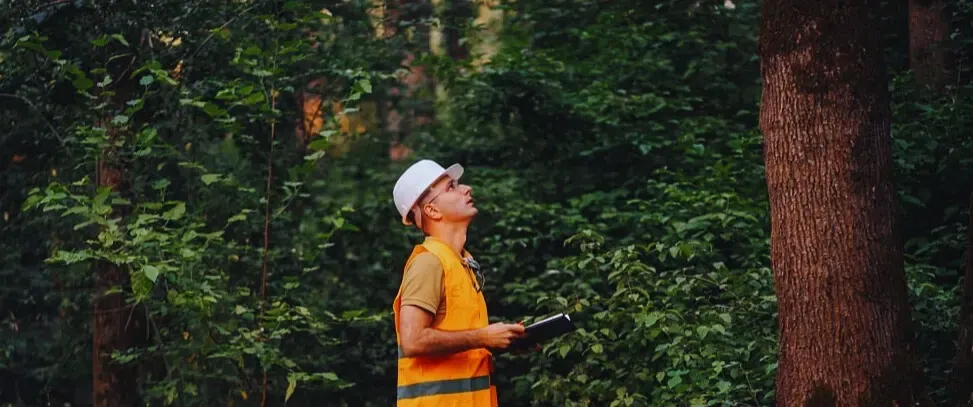
Trees are biological machines. Like any machine, they have components that wear out, rust, and eventually break. But unlike a car, a 50-foot Oak doesn't have a check engine light. You are the sensor. You have to be the one to spot the decay before gravity takes over. Whether you are looking for a local tree service to handle a pruning job or you suspect a complete removal is necessary, understanding the visual cues of a hazard tree is the first step in responsible property management.
The Root of the Problem: Ground-Level Red Flags
You can tell a lot about a tree’s health without ever looking up. The root system is the anchor and the digestive tract of the tree. When the roots fail, the rest of the organism is on borrowed time. Soil heaving is one of the most immediate indicators of a disaster in progress. If you see the soil mounding up on one side of the tree, it means the roots are physically lifting out of the earth. This is a structural emergency. It indicates that the tree is actively leaning and the root plate is failing to hold the weight.
Fungal growth at the base is another dead giveaway. If you see mushrooms or "conks" growing out of the root flare or the soil immediately surrounding the trunk, the news is rarely good. These fungi, such as Armillaria or Ganoderma, are the fruiting bodies of internal rot. By the time you see the mushroom, the fungus has already been eating the cellulose and lignin inside the roots for years. The tree is literally rotting from the inside out while looking perfectly green on top. This is why consulting an expert arborist is vital; they can perform a "resistograph" test to see how much solid wood is actually left.
Check the "Our Homepage" at El Monte Tree Service to understand how we evaluate root stability. We often see homeowners cover their tree roots with too much mulch or soil during "Our Main Services" or landscaping projects. This suffocates the roots. Roots need oxygen. When you bury them, they die, they rot, and then the tree falls. It’s a slow-motion tragedy that starts with a simple bag of mulch.
The Trunk: Your Tree's Structural Spine
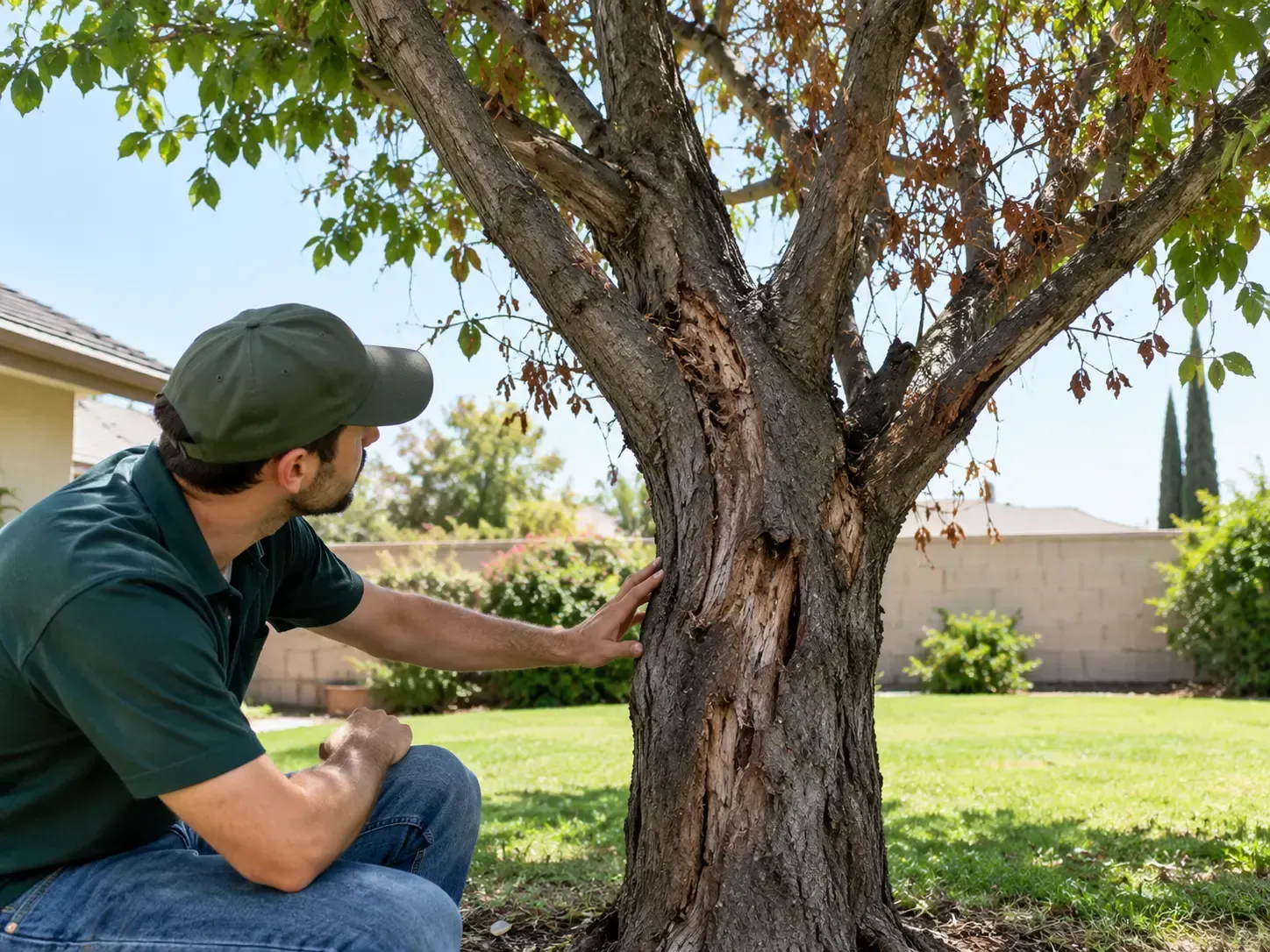
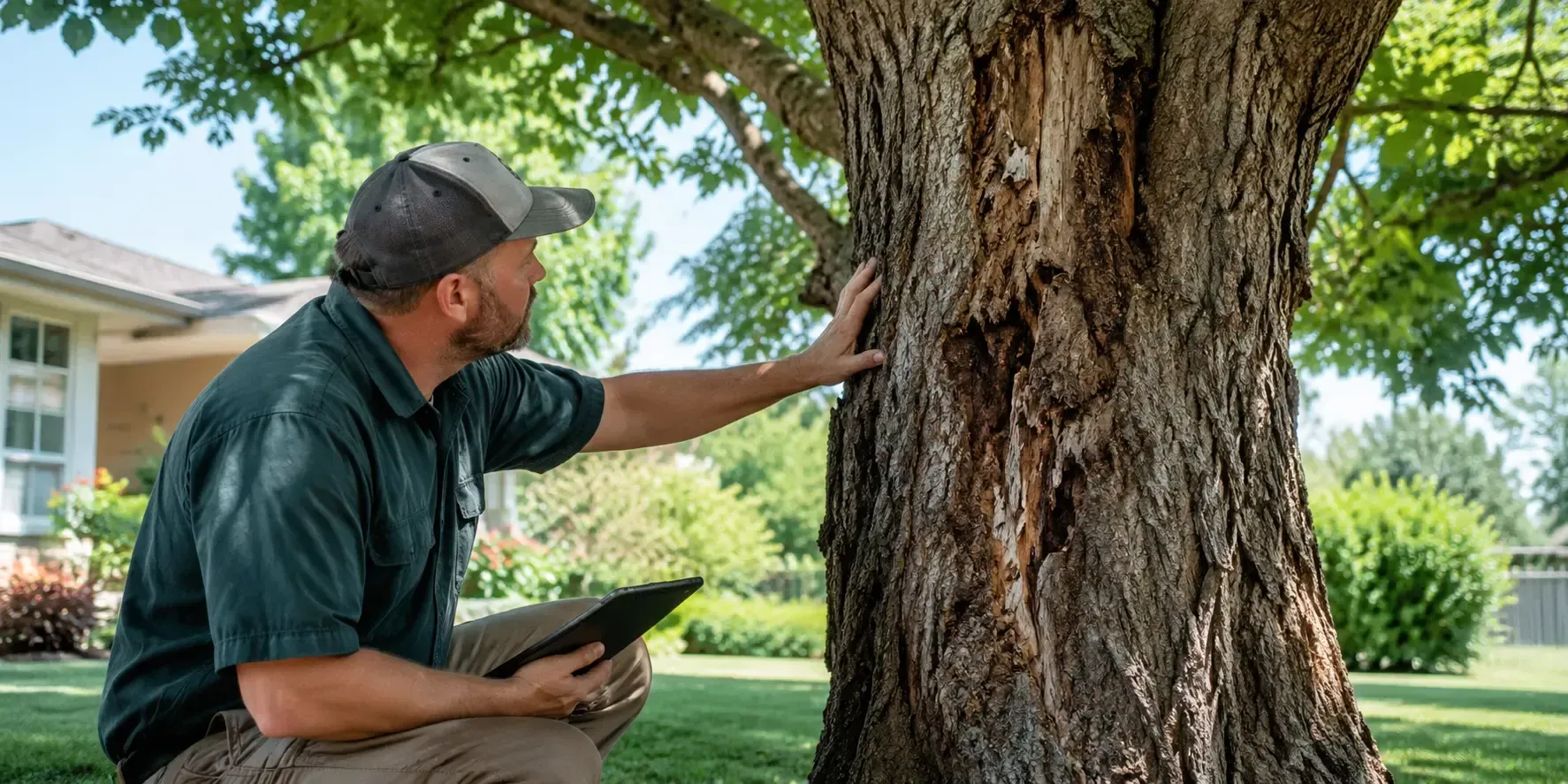
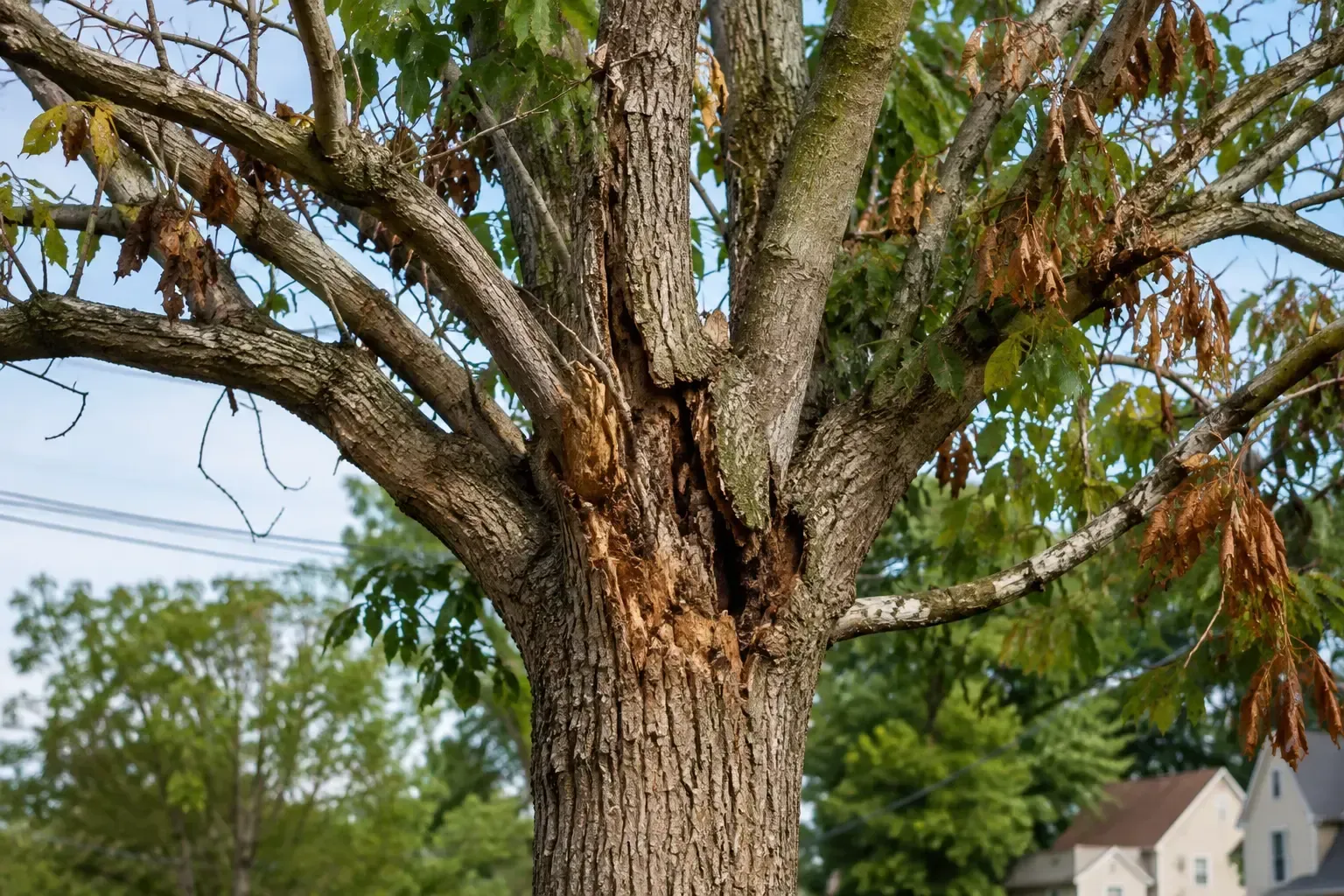
The trunk isn't just a pillar of wood. It's a complex delivery system for water and nutrients. It’s also the primary structural support. If the trunk is compromised, the whole system is a hazard. Look for deep cracks or "seams" in the bark. A vertical crack that goes through the bark and into the wood is a sign of internal stress. If you see two cracks on opposite sides of the trunk, the tree is likely splitting in half. This is a "Contact Us" immediately situation.
Peeling bark can be normal for some species, like Sycamores or Birches, but for most trees, it’s a sign of a localized death. If the bark is falling off in large sheets and the wood underneath is smooth or slimy, that area of the tree is no longer transporting nutrients. We call these "cankers." Cankers are localized dead spots caused by fungi or bacteria. If a canker encompasses more than half of the tree’s circumference, the tree is functionally dead, even if the leaves are still green for now.
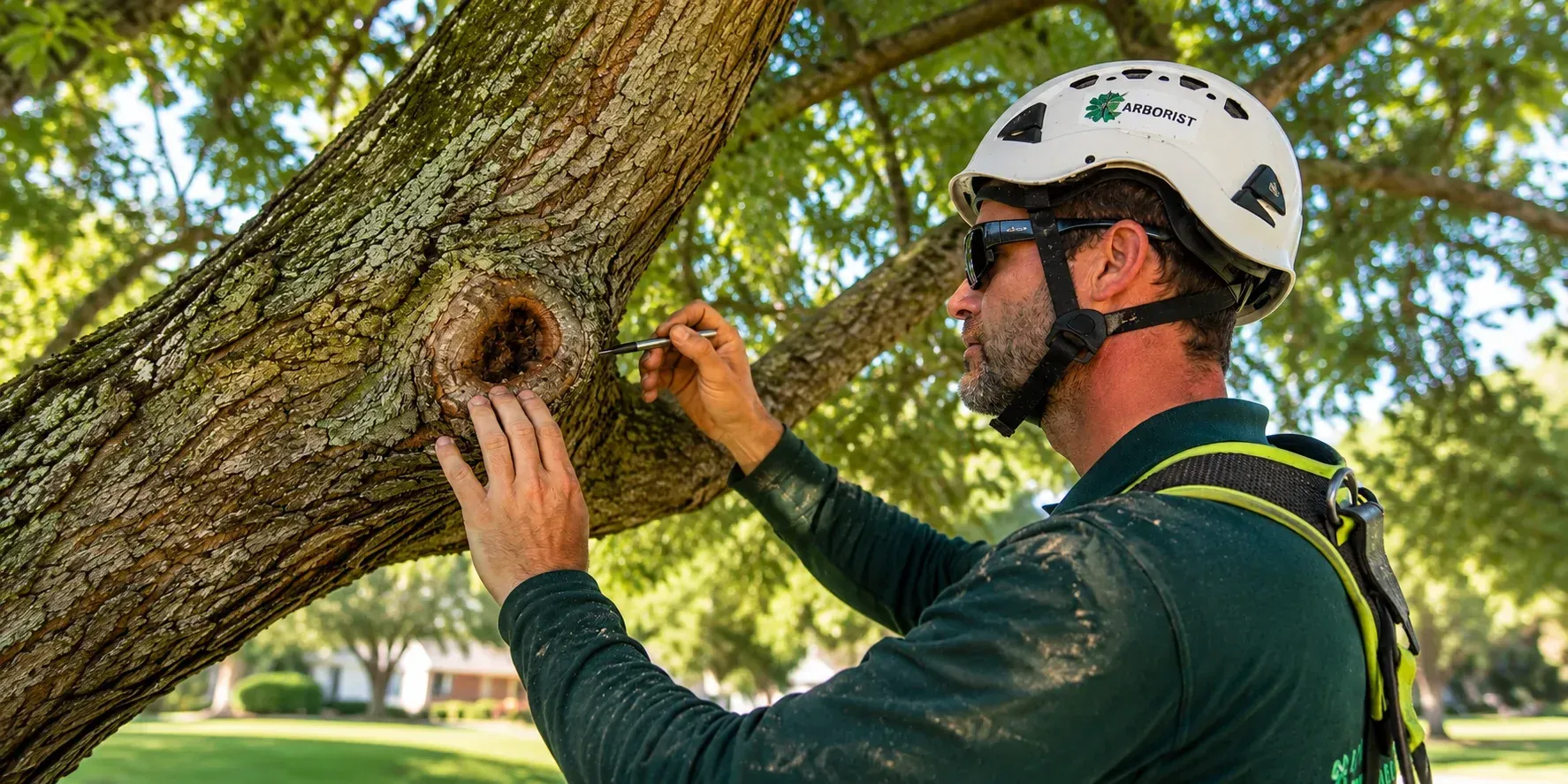
Cavities and hollows are often seen as "charming" or a place for squirrels to live. From a safety perspective, they are nightmares. A hollow tree can stand for decades, but its load-bearing capacity is significantly reduced. If the "shell" of the tree—the solid wood around the hollow—is less than 30% of the total diameter, the tree is a high-risk hazard. At El Monte Tree Service, we’ve seen hollow trees that looked sturdy on the outside but snapped like a dry twig during a moderate windstorm.
The Canopy: Reading the Leaves
The crown of the tree is often the first place where stress manifests. A healthy tree should have a full, vibrant canopy. If you see "dieback"—dead branches at the very top of the tree—it’s a sign that the root system can no longer pump water to the highest points. This is often the beginning of the end. If the dieback moves downward from the top, the tree is in a state of "decline."
Epicormic sprouting is another weird sign. These are those tiny, thin "sucker" branches that grow directly out of the trunk or large limbs. Homeowners often think the tree is growing more, but it’s actually a panic response. The tree is struggling to photosynthesize and is throwing out "emergency" foliage because its primary branches are failing. It’s the tree’s version of a gasp for air. It’s usually a sign of severe stress, often from drought, root damage, or old age.
Leaf color and size also matter. If the leaves are smaller than usual or turn yellow (chlorosis) in the middle of the growing season, the tree is nutrient-deficient or the vascular system is blocked. This is where professional Tree Services become essential. A simple fertilization treatment might fix it, or it might be a sign of a lethal vascular wilt disease. You won't know until a professional takes a look. Learn more About Us and how we diagnose these complex botanical issues.
The Lean: Is Gravity Winning?
Not every leaning tree is a hazard. Some trees grow at an angle to reach the sunlight. This is called "phototropism." However, there is a massive difference between a tree that grew with a lean and a tree that is *starting* to lean. If a tree was straight last year and is tilted this year, you have a problem. Look at the ground on the side opposite the lean. Are there cracks in the soil? Is the grass pulling away from the trunk? This is a sign of an imminent tip-over.
Trees that lean more than 15 degrees from vertical are generally considered high-risk, especially if they are leaning toward a "target." In the world of an arborist, a "target" is anything the tree could hit: your house, your car, the power lines, or the sidewalk. If a tree is leaning in the middle of a forest, it’s just nature. If it’s leaning over your bedroom, it’s a liability. Professional Tree Services can determine if the lean can be mitigated with cabling and bracing or if the tree needs to come down for safety.
Pests and Pathogens: The Silent Killers
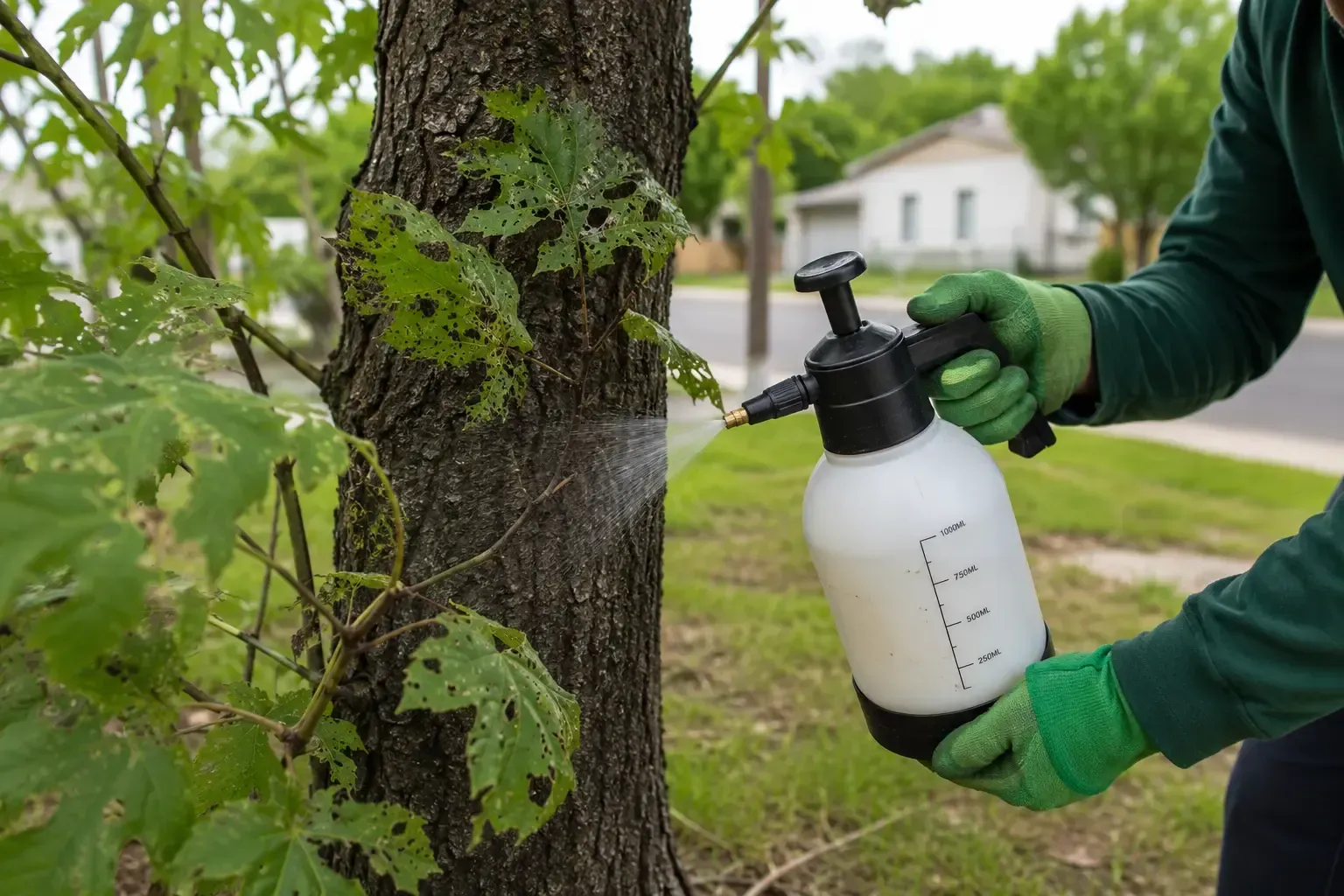
Sometimes the tree looks fine, but it’s being eaten from the inside by invaders. Boring insects, like the Emerald Ash Borer or various bark beetles, are a death sentence for many species. Look for tiny "D-shaped" or circular holes in the bark. These are exit holes. If you see sawdust-like material (frass) collected in the crevices of the bark or at the base of the tree, you have active borers. They tunnel through the cambium layer—the part of the tree that actually grows—and effectively girdle the tree from the inside.
Diseases like Oak Wilt or Dutch Elm Disease move fast. They can kill a mature, healthy-looking tree in a single season. These pathogens clog the tree’s water-conducting tissues. It’s like a botanical heart attack. If you notice your tree’s leaves wilting and browning rapidly in early summer, don't wait. Contact Us immediately. Speed is everything when dealing with infectious tree diseases; sometimes, we can save neighboring trees even if the infected one is lost.
The Dangers of Deadwood
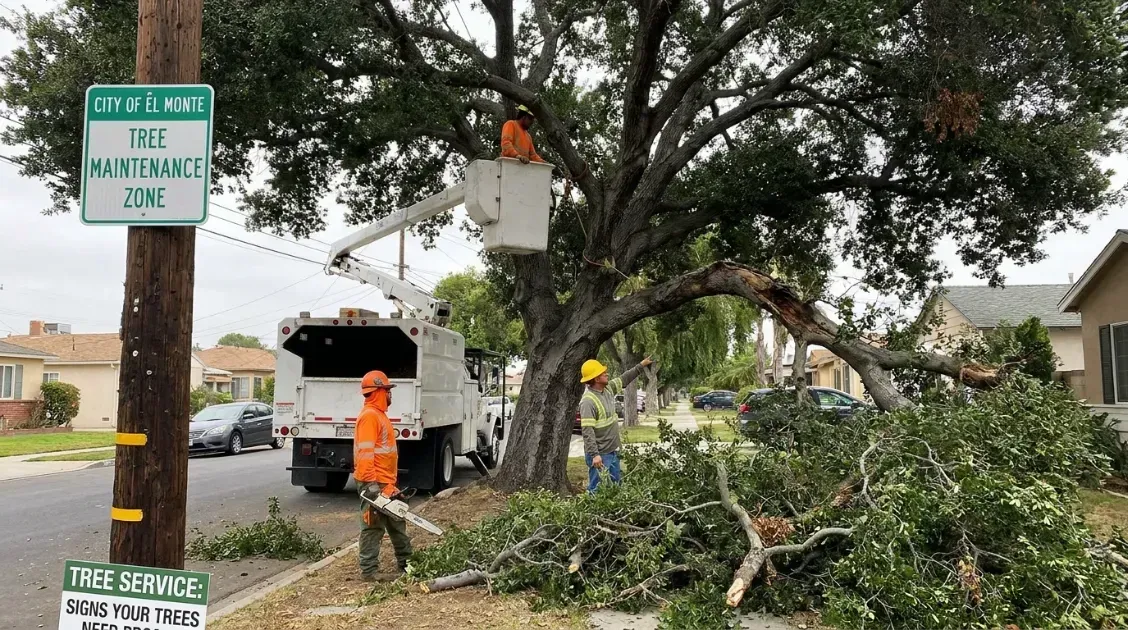
Dead branches are the most common hazard. Even a tree that is generally healthy can have "widow-makers"—large, dead limbs hanging high in the canopy. These limbs can fall at any moment, even without wind. They rot at the point of attachment, and eventually, the weight of the wood overcomes the decaying connection. If you see bark falling off a limb or branches that have no leaves when the rest of the tree is green, that wood is dead. It needs to be removed by a professional local tree service before it falls on someone.
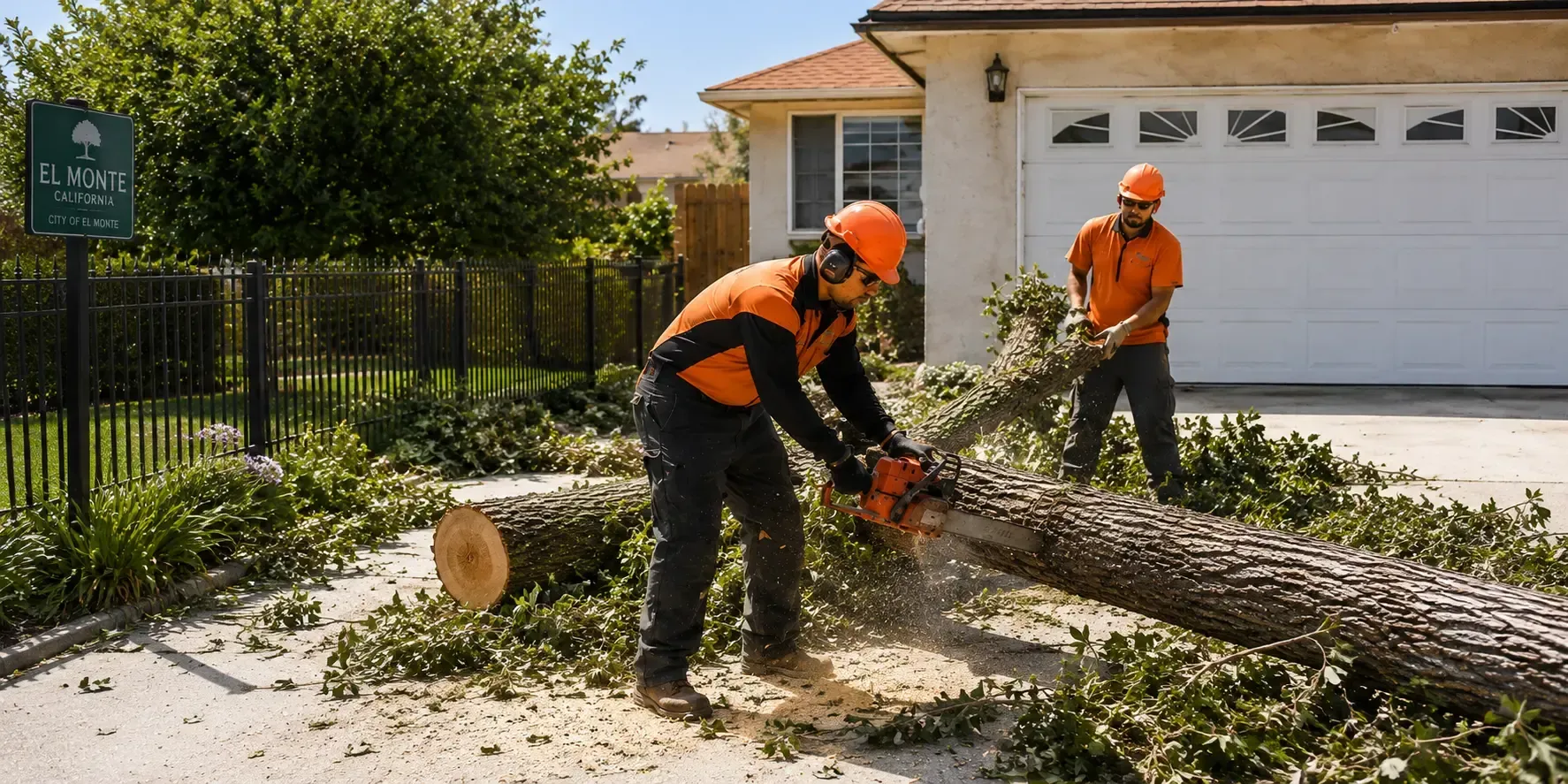
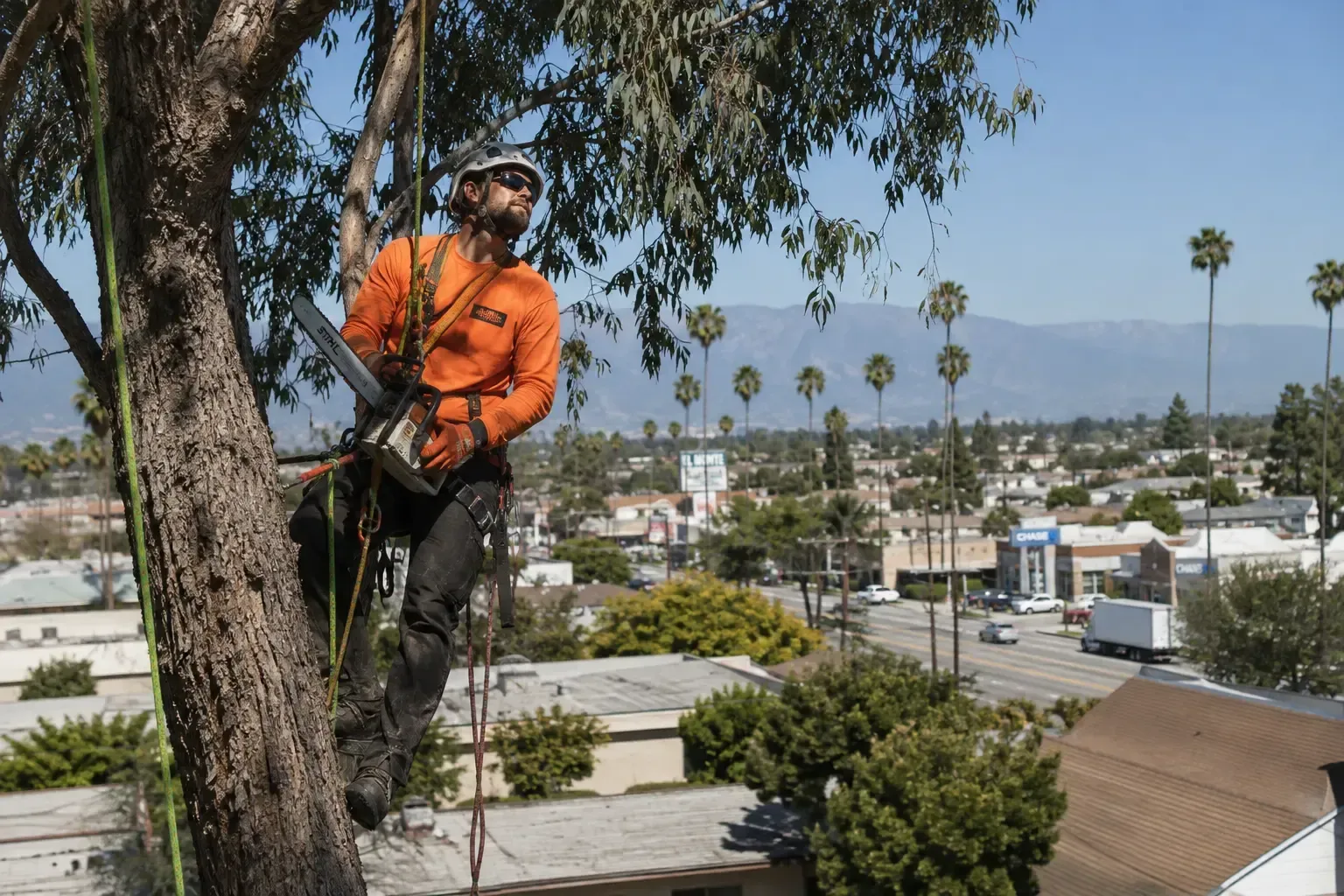
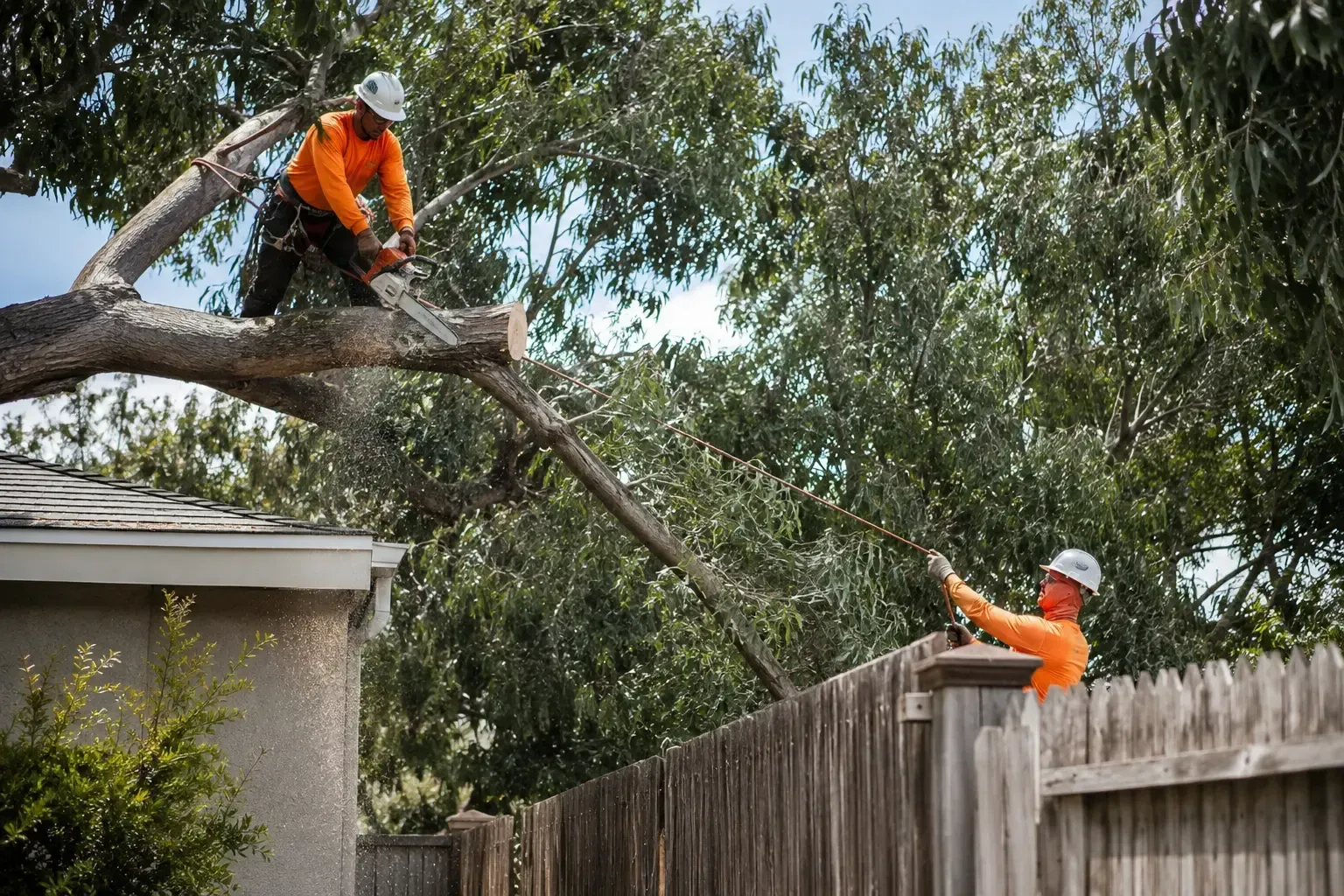
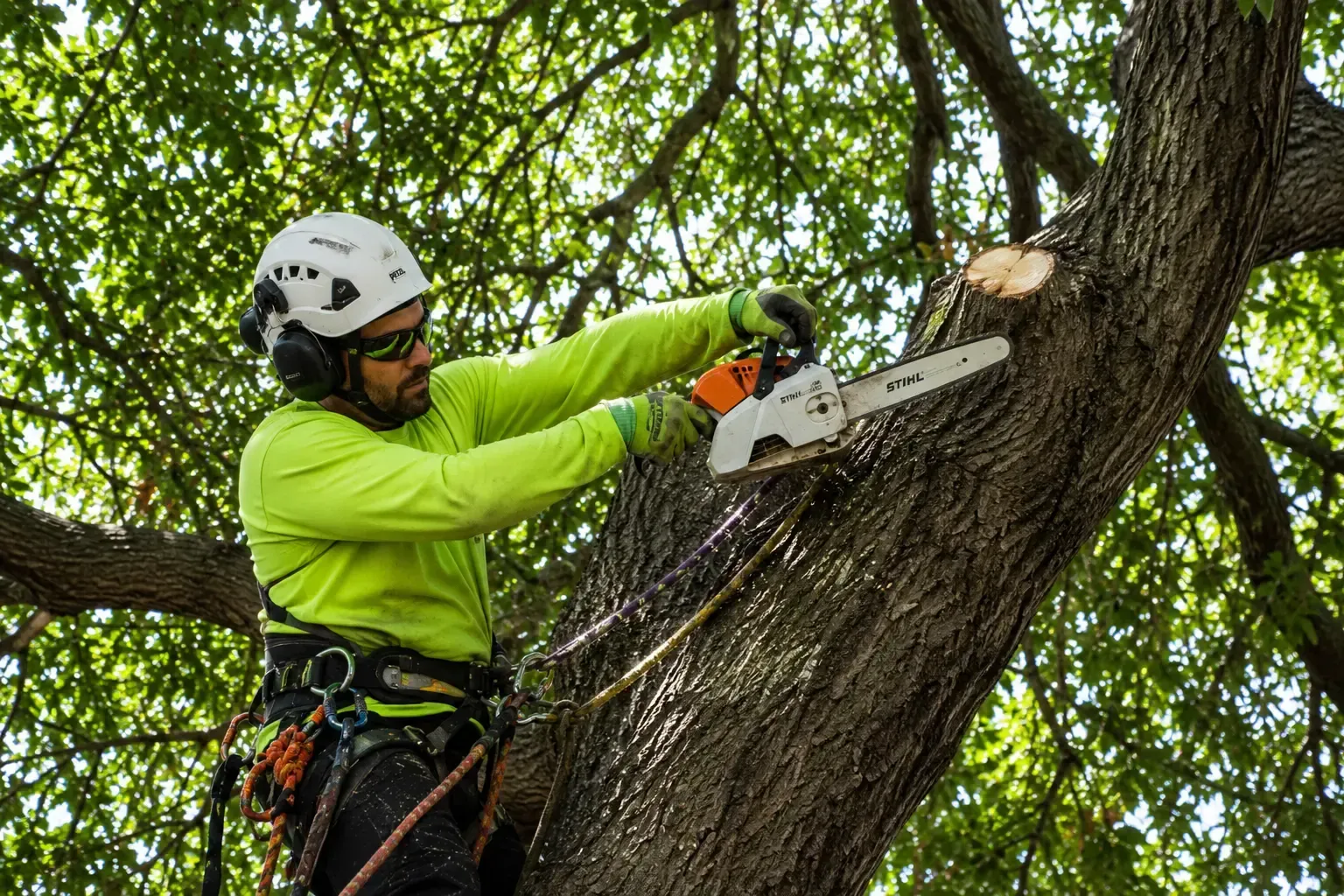
Pruning is an art and a science. Many people try to do it themselves with a ladder and a chainsaw. This is how most tree-related accidents happen. Professional arborists use specialized rigging to lower limbs safely. We don't just "cut and drop." We control the descent of every piece of wood to ensure your property remains undamaged. Our team at El Monte Tree Service has the training to spot these weak points that the average eye misses entirely.
Liability and the Law: Why You Can't Ignore It
In many jurisdictions, if a tree on your property shows visible signs of decay and you do nothing about it, you are liable for any damage it causes when it falls. This is the "duty of care." If a storm knocks down a perfectly healthy tree, it's often considered an "Act of God," and insurance handles it. But if that tree had a massive fungal conk and a 20-degree lean, and you ignored it, the insurance company might argue that you were negligent. They might deny the claim, leaving you to pay for the repairs out of pocket.
This is why a documented inspection from a certified arborist is so valuable. It shows you are exercising due diligence. It protects your finances just as much as it protects your roof. When you hire Our Main Services, you aren't just paying for wood cutting; you are paying for the peace of mind that comes with professional risk assessment. We provide the expertise needed to navigate these safety concerns before they become legal nightmares.
The El Monte Tree Service Advantage
Why choose us? Because we live and breathe tree health. We aren't just guys with chainsaws. We are technicians who understand the local climate, the specific soil conditions of our region, and the pests that are currently migrating through our area. When you look at About Us, you'll see a history of commitment to the canopy. We don't recommend removals unless they are absolutely necessary. Our goal is to preserve the "Our Homepage" beauty of your property while ensuring your family is safe.
We use state-of-the-art equipment. From aerial lifts that reach the highest crowns to stump grinders that leave your yard looking pristine, we handle the job from start to finish. We don't leave a mess. We don't leave "surprises" on your bill. We provide clear, honest assessments of your trees’ health and offer solutions that fit your budget and your safety needs. If you're searching for a local tree service that actually cares about the biology of your trees, you’ve found us.
Conclusion: Take Action Today
Your trees are an asset. They provide shade, increase your property value, and clean the air. But an unmaintained tree is a liability. It’s a ticking time bomb. Take a walk around your yard today. Look at the roots. Look at the trunk. Look at the canopy. If anything looks "off," don't wait for the next big storm to confirm your suspicions. The cost of a professional inspection is a fraction of the cost of a home insurance deductible.
Be proactive. Be responsible. Whether you need routine pruning, a health consultation, or an emergency removal, El Monte Tree Service is ready to help. We have the tools, the talent, and the local knowledge to keep your property safe and your trees thriving. Don't let a "Healthy" tree become a "Hazard" on your watch. Contact Us today for a comprehensive evaluation and let’s ensure your trees stand tall for years to come.
Frequently Asked Questions
How can I tell if a tree is rotting from the inside?
Look for fungal growth (mushrooms) at the base, hollow cavities in the trunk, or "conks" growing on the bark. These are signs of internal decay. An arborist can use a resistograph to measure the density of the internal wood and determine if the tree is structurally sound or a hazard.
Does a leaning tree always need to be removed?
No, not always. Some trees grow at an angle naturally. However, if the lean is new, or if there is cracked soil and heaving roots on the opposite side, the tree is failing. A professional assessment is required to determine if cabling or removal is necessary for safety.
Why are my tree's leaves turning brown in the summer?
This is often a sign of "dieback" or a vascular disease like Oak Wilt. It could also indicate severe root stress or a pest infestation like bark beetles. If the browning starts at the top and moves down, the tree's water-transport system is likely failing, and immediate professional help is needed.
What are "widow-makers" in tree care?
Widow-makers are large, dead branches that are still attached to the tree or hung up in the canopy. They are extremely dangerous because they can fall at any time without warning. Removing these dead limbs through regular pruning is essential for preventing serious injury or property damage.
Is it cheaper to remove a tree before it falls?
Absolutely. A controlled removal is much cheaper than an emergency removal after a tree has fallen on a structure. Emergency services require specialized equipment and crews often working in dangerous conditions, which significantly increases the cost. Proactive maintenance is always the more cost-effective choice for homeowners.