Danger in the Backyard: 7 Signs You Need Emergency Tree Removal Before Disaster Strikes

John Constantine • January 31, 2026

That massive Oak shading your driveway isn't just a piece of landscaping. It is thousands of pounds of timber suspended above your car, your roof, and your family. Most of the time, it stands guard. But when gravity and decay team up against structural integrity, that guardian becomes a guillotine.


You don't need a degree in arboriculture to know when something looks wrong, but you do need to know exactly when "wrong" turns into "emergency."
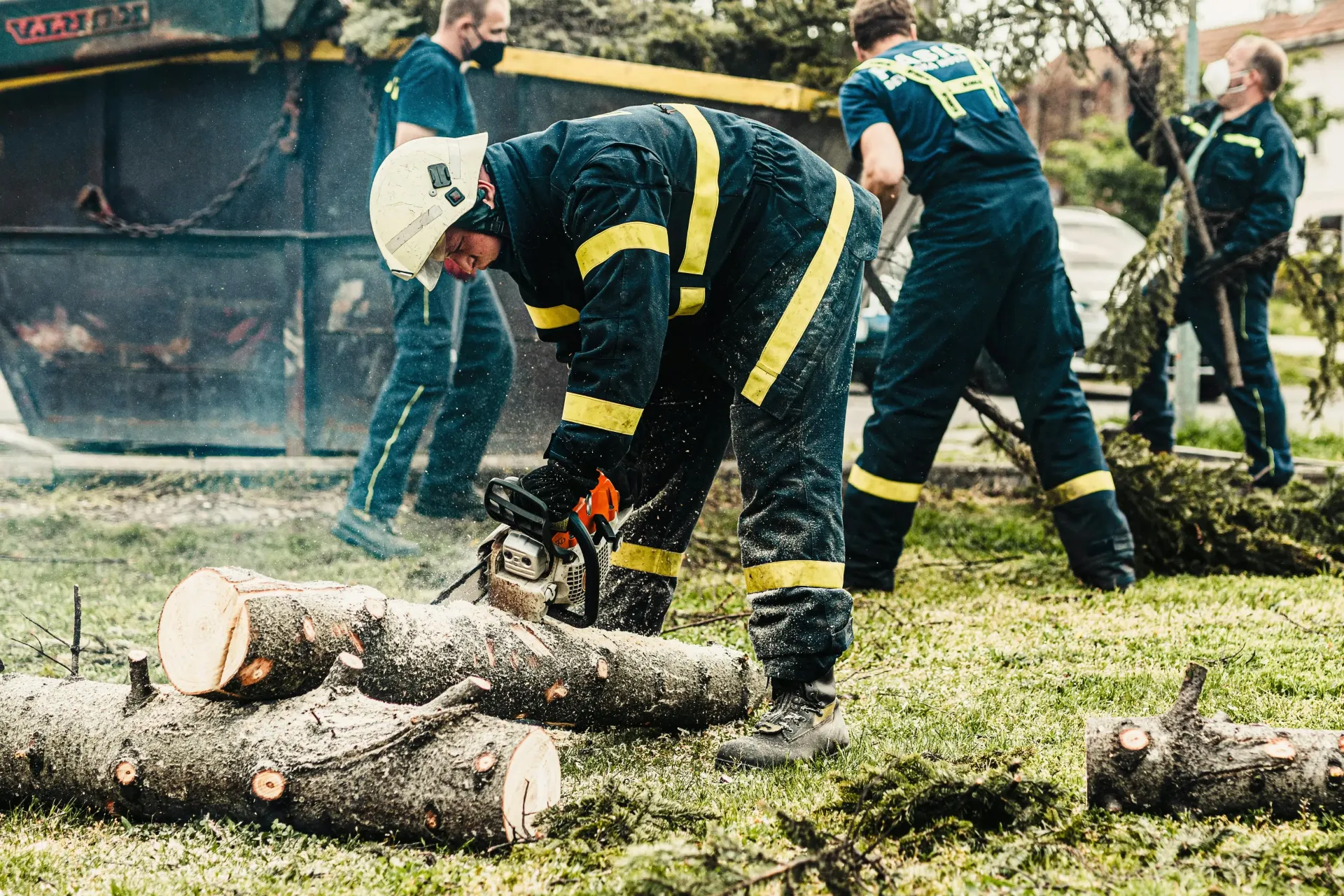
Here in El Monte, we deal with a unique mix of stressors. We aren't battling blizzards, but the Santa Ana winds don't mess around. Neither does the heat. From the dense neighborhoods near the Santa Fe Trail to the commercial strips along Valley Boulevard, trees are fighting for space, water, and stability. When they lose that fight, they fall. Fast.

If you spot these seven signs, stop guessing. You need tree removal experts on the phone immediately. Not next week. Now.


1. The "Sudden Lean" and Soil Heaving

Trees don't generally decide to change their posture overnight. If a tree that was vertical yesterday is listing to the left today, panic is an appropriate response. This isn't a quirk of nature; it is a structural failure in progress.


Look at the ground. Is the soil around the base of the trunk heaving upwards on the side opposite the lean? That mound of dirt is the root plate lifting out of the earth. The anchors have snapped. The only thing holding that tree up is temporary friction and luck. According to the International Society of Arboriculture (ISA), soil heaving associated with a new lean is an imminent hazard rating. Get everyone out of the potential impact zone and call El Monte Tree Service.


2. Deep, Vertical Cracks in the Trunk

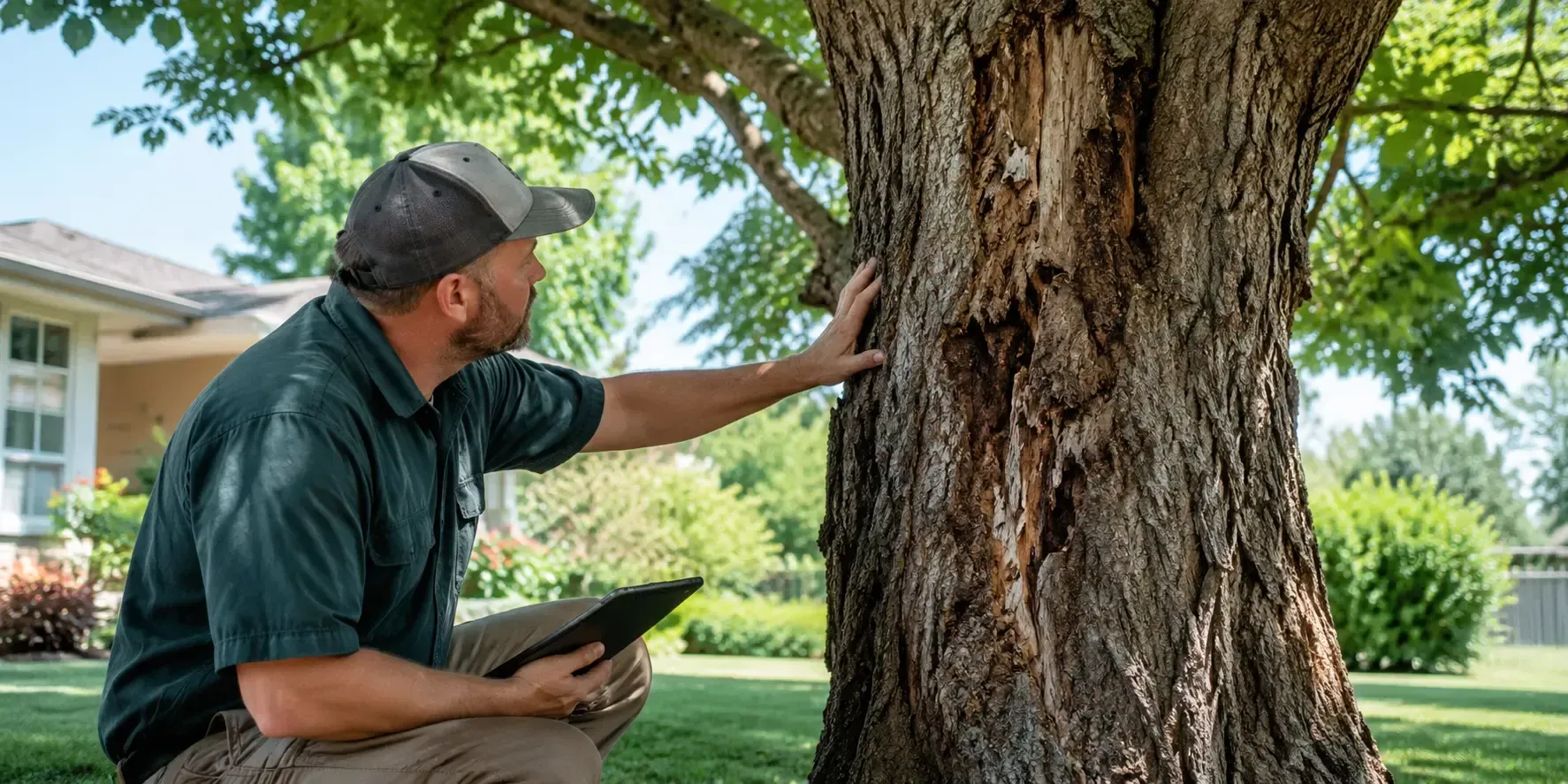
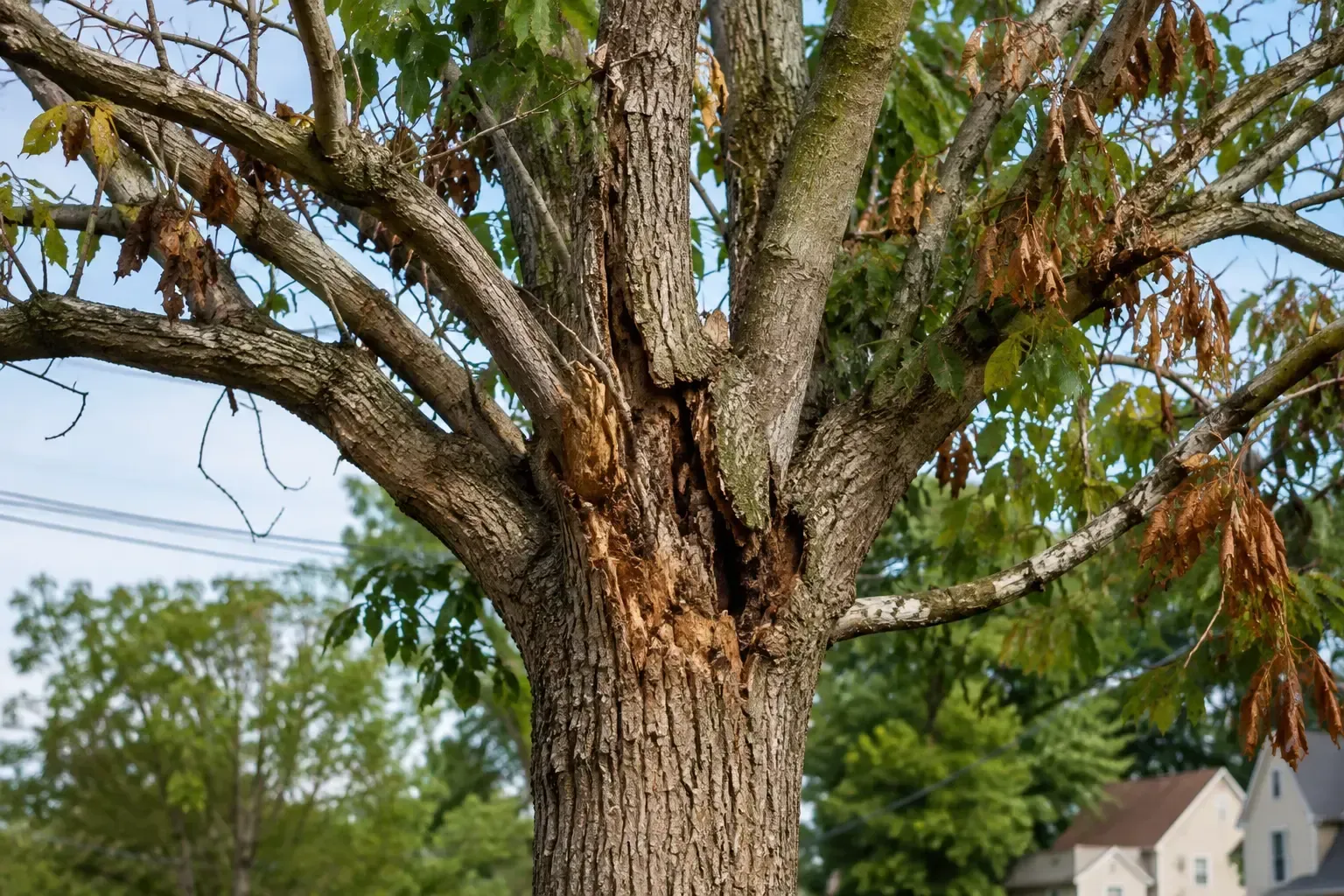
Bark texture varies. That’s normal. What isn’t normal is a deep, vertical crack that looks like a zipper opening up the trunk. We call these shear cracks. They often appear on opposite sides of the tree.


Think of the trunk as a pillar supporting the canopy's massive weight. A vertical crack indicates the wood fibers are separating under tension. If you hear a loud cracking sound during a wind event—even if the tree hasn't fallen yet—the internal structure has likely compromised. It’s a ticking clock.


3. Fungi: The Silent Destroyers at the Base

Mushrooms are not cute decorations. When you see large fungal brackets (often called "conks") growing at the base of a tree or on the root flares, you are looking at the external symptom of internal rot. The USDA Forest Service notes that many root-rot fungi destroy the structural wood before the tree even looks sick in the canopy.


By the time you see the mushrooms, the fungus has likely been eating the heartwood for years. The tree might look green and leafy, but its foundation is turning into mush. In El Monte’s clay-heavy soils, root rot can spread aggressively, turning a majestic Sycamore into a hollow shell waiting for a gust of wind.


4. The "Widowmakers" (Hanging Limbs)

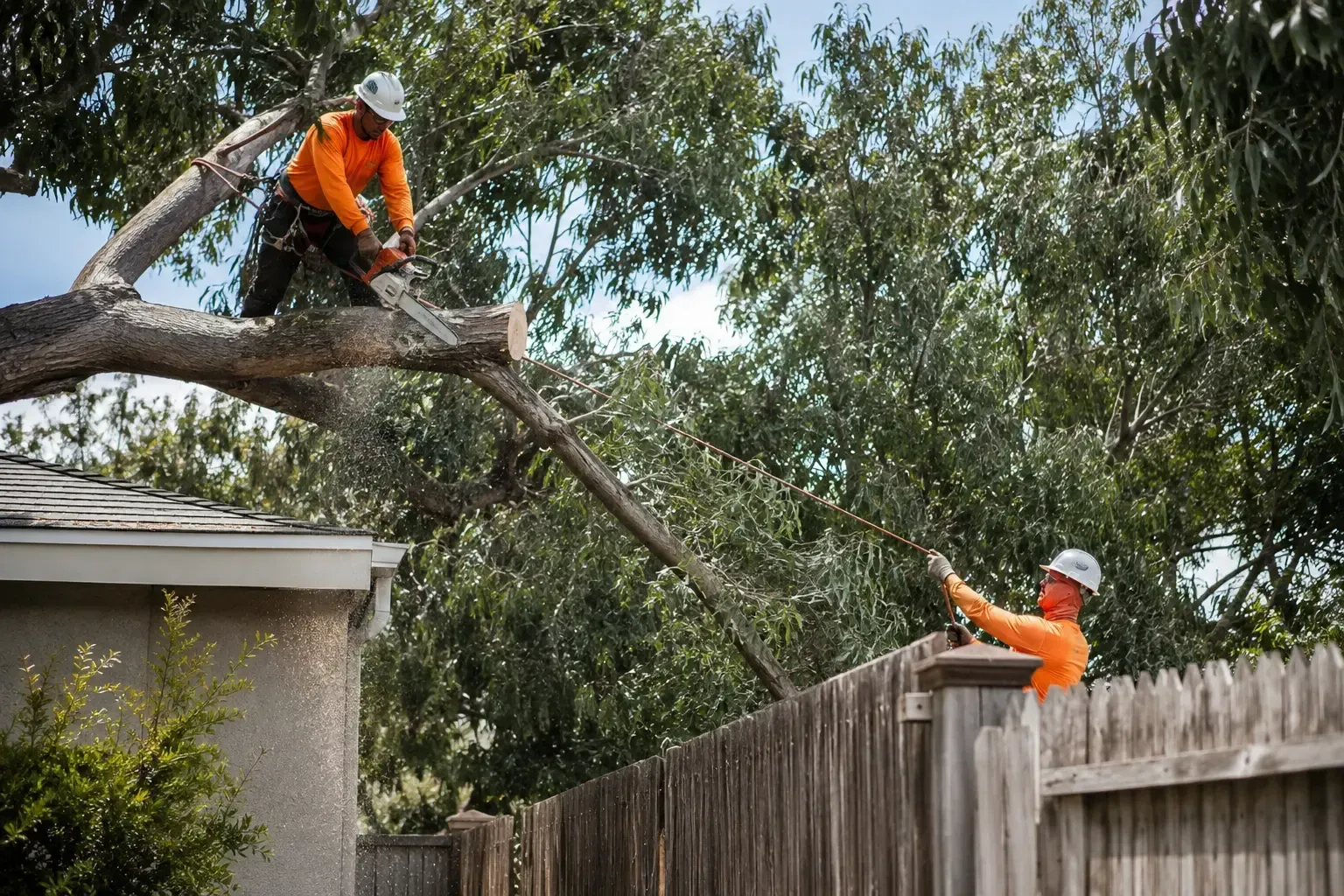
Arborists have a grim nickname for large, broken branches that detach but get caught in the canopy: Widowmakers. They hang there, deceptively peaceful, until a breeze dislodges them. A hardwood limb the size of a thigh can weigh hundreds of pounds. If it drops from thirty feet up, it will go through a windshield like paper.


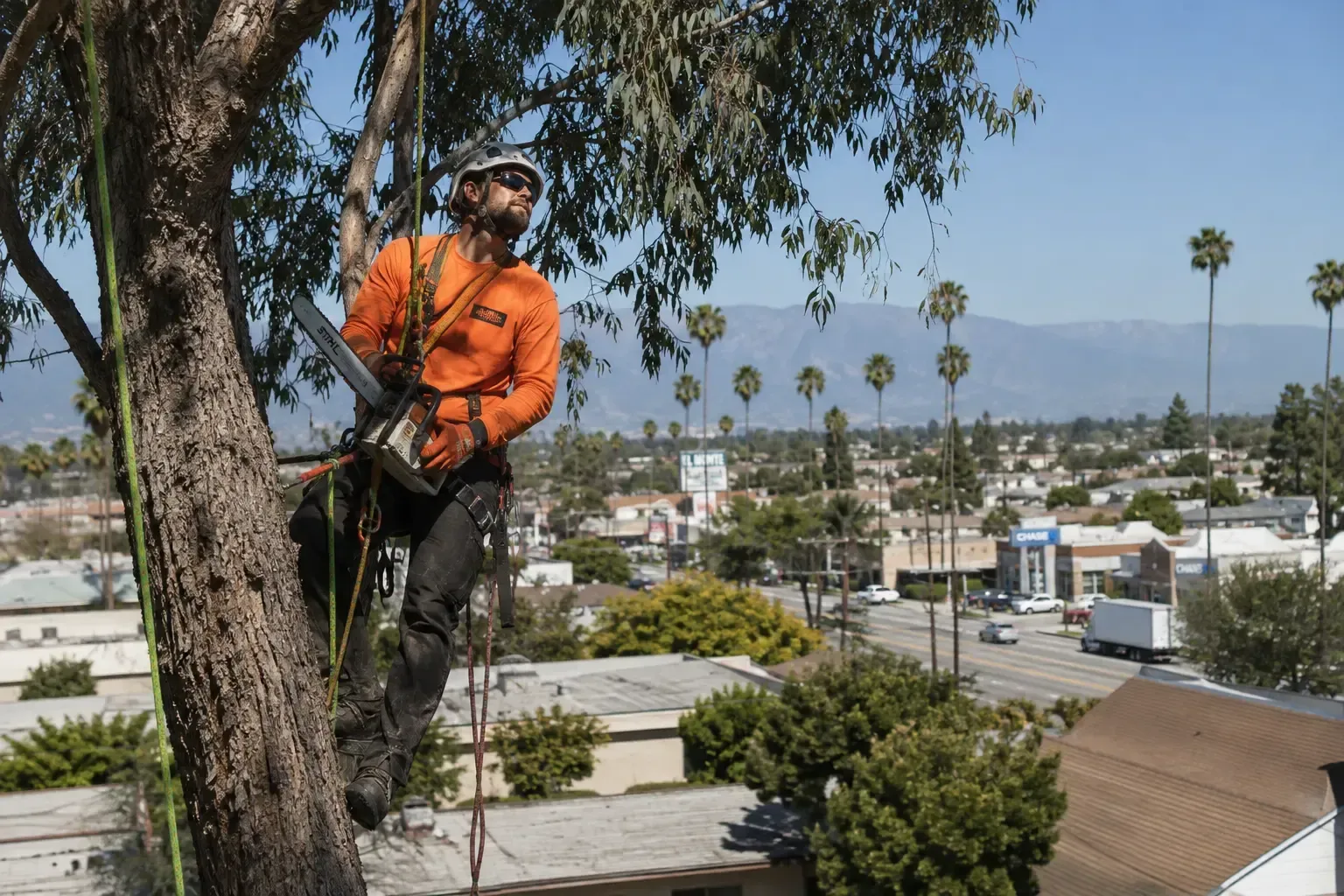
This is common with Eucalyptus trees, which are prevalent throughout the San Gabriel Valley. They are notorious for "Sudden Limb Drop" syndrome, where perfectly healthy-looking branches snap off during hot summer afternoons without warning. If you see a hanger, don't walk under it. Secure the area.


5. Cavities and Hollows

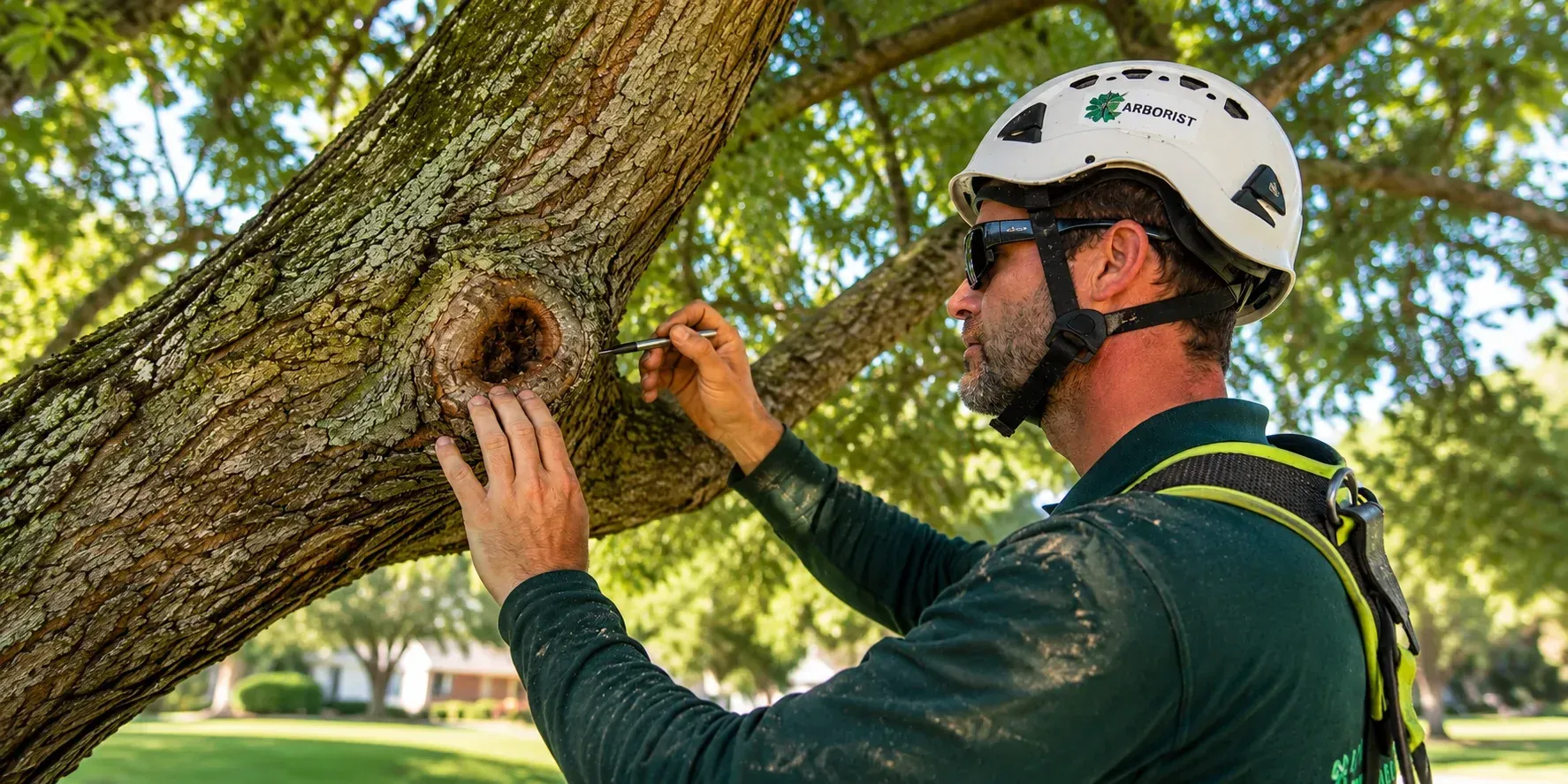
A hollow tree isn't necessarily a dead tree. Many ancient trees have hollows. However, the placement and size of the cavity matter immensely. If a large cavity is located at a stress point—like a heavy branch union or the base of the trunk—structural failure is probable.

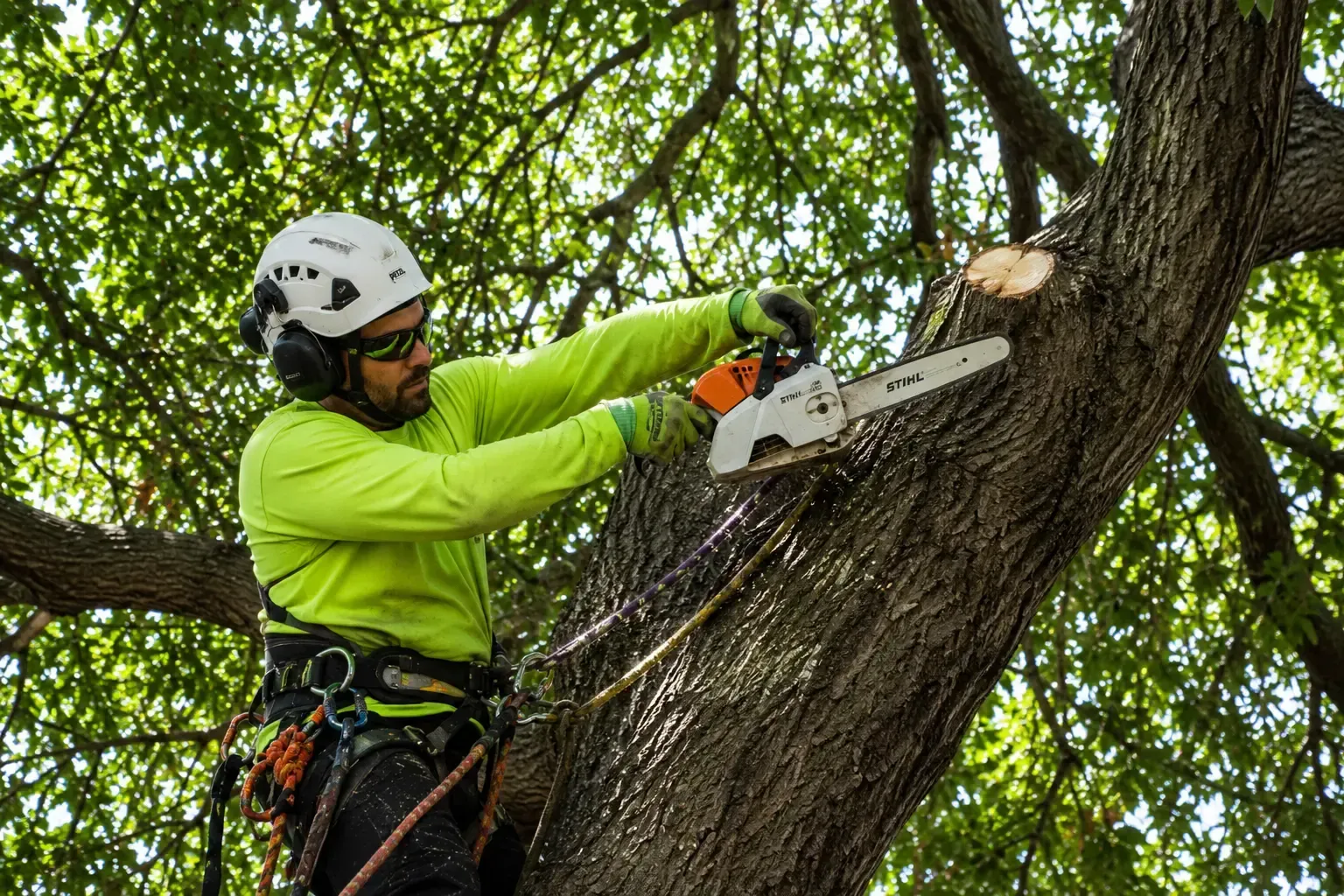
If less than one-third of the tree's diameter is sound wood, the risk of failure skyrockets. You can't measure this with your eyes alone. You need a professional risk assessment. We use specialized tools to sound the wood and determine if there is enough solid timber left to support the tree, or if emergency tree removal is the only safe option.

6. Root Damage from Construction

El Monte is constantly developing. Sidewalk repairs, driveway paving, and utility line trenching sever root systems. A tree's root system is its counterbalance. If you cut the roots on one side, you've removed the guy-wires holding the pole up.


Did you recently renovate your home or redo the landscaping? If heavy machinery drove over the root zone (compaction) or trenched near the trunk (severing), the tree may be destabilized. The damage usually isn't visible in the leaves for a year or two, but the instability is immediate.

7. Encroachment on Power Lines

This is the one time you might not call us first—you might need to call Southern California Edison. However, if a tree on your private property is arcing against a service drop (the line from the pole to your house), it is a fire hazard. In California, where wildfire risk is a constant anxiety, sparks from a tree are a nightmare scenario.


Wet foliage conducts electricity. If you see smoke, charring on branches, or hear buzzing, stay far away. This requires specialized handling to disconnect power before the removal can safely proceed.


Why "Wait and See" is a Failed Strategy

Trees are stoic. They die slowly, from the inside out. By the time a tree "looks" dead to the average homeowner—brown leaves, brittle twigs—it might have been structurally unsound for half a decade.


Ignoring these signs doesn't save money. It gambles your property value. The cost of emergency tree removal is a fraction of the cost of repairing a crushed roof, not to mention the deductible on your homeowners insurance. El Monte Tree Service isn't just a business; we are your neighbors. We drive down the same streets. We know the difference between a tree that needs a trim and a tree that needs to go before it hurts someone.


Nature is unpredictable. Your response to it shouldn't be. If your gut says the tree is unsafe, listen to it.


Frequently Asked Questions

  • How much does emergency tree removal cost?

    Emergency removal typically costs more than scheduled maintenance due to the immediate mobilization of crews and hazardous conditions. Prices vary wildly based on tree size, location, and risk level, often ranging from $1,500 to over $5,000 for complex, hazardous removals. Always ask for a written estimate.

  • Does homeowners insurance cover tree removal?

    Generally, insurance covers removal only if the tree has fallen on a covered structure (like your house or fence) and caused damage. If the tree is standing but hazardous, insurance usually denies the claim, considering it a maintenance issue. Check with the Insurance Information Institute or your agent for specifics.

  • Can I remove a fallen tree myself?

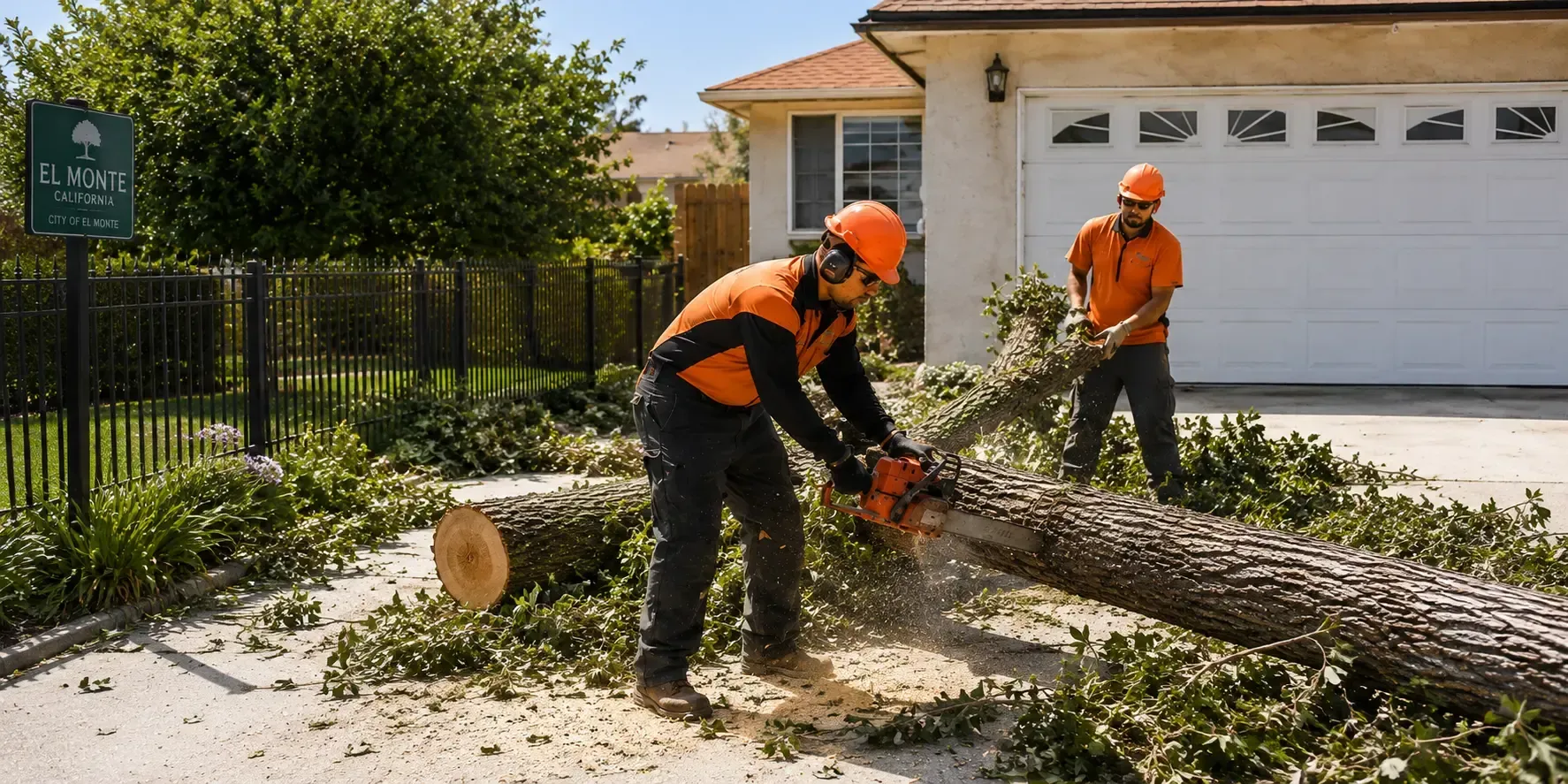
    No. Fallen trees are often under extreme tension ("spring poles"). Cutting a branch can cause the trunk to snap back violently, causing severe injury or death. Chainsaw work on storm-damaged trees is statistically one of the most dangerous tasks in the world. Leave it to certified professionals.
By John Constantine February 4, 2026
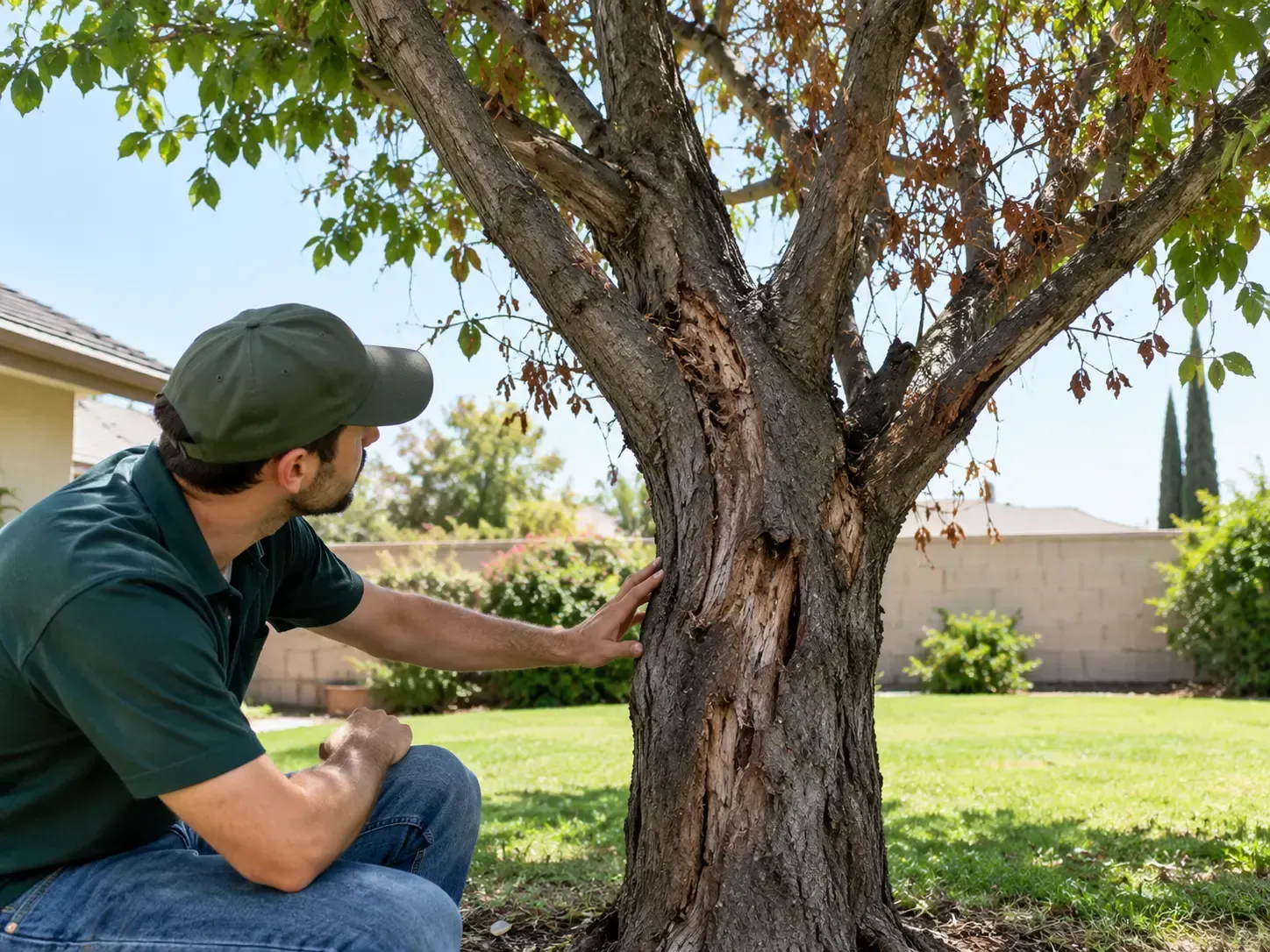
Most homeowners don't notice a dying tree until it’s lying across their driveway or, worse, through their living room ceiling. That’s a massive mistake. A tree doesn't just decide to fall on a sunny Tuesday afternoon for no reason. It gives you signs. It whispers its distress for months, sometimes years, before the structural failure actually occurs. If you aren't listening, you’re playing a high-stakes game of property-damage roulette.  Trees are biological machines. Like any machine, they have components that wear out, rust, and eventually break. But unlike a car, a 50-foot Oak doesn't have a check engine light. You are the sensor. You have to be the one to spot the decay before gravity takes over. Whether you are looking for a local tree service to handle a pruning job or you suspect a complete removal is necessary, understanding the visual cues of a hazard tree is the first step in responsible property management.
By John Constantine January 31, 2026
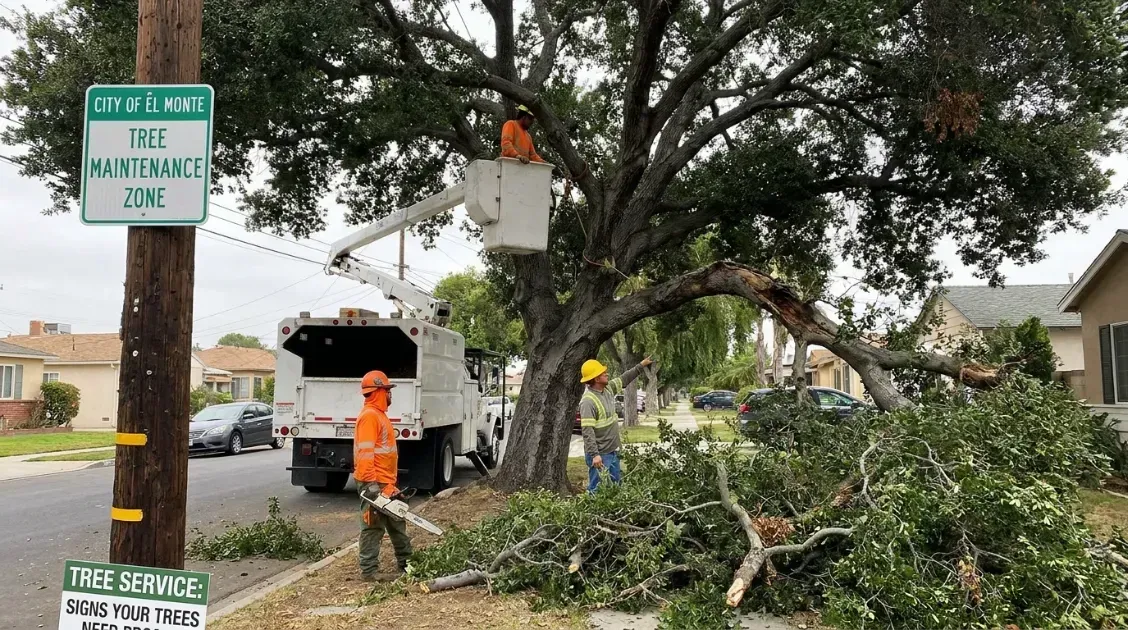
Trees add beauty and value to your property but without proper care they can quickly become a safety risk. Many homeowners in El Monte ask the same question every year Do I really need a professional tree service or can this wait? This locally focused guide explains when tree care becomes necessary how professional help protects your property and why choosing El Monte Tree makes a difference.
By John Constantine January 23, 2026
Have you ever seen a tree that looks like it went through a meat grinder? It happens more often than you’d think. Someone grabs a rusted hand saw or a cheap electric chainsaw from a big-box store and decides to "tidy up" their yard. An hour later, the tree is mangled, the bark is stripped, and the property owner is lucky they still have all ten fingers. Tree care isn't just about cutting wood. It is a surgical procedure performed on a living organism. When you treat it like a weekend DIY craft project with subpar tools, the tree pays the ultimate price.  Most people view trees as static objects. They aren't. They are dynamic systems that react to every cut. Using the wrong equipment doesn't just make the job harder; it introduces pathogens, causes structural instability, and can lead to a slow, agonizing decline of a specimen that took fifty years to grow. If you want your canopy to survive the next decade, you need to understand why the gear matters. This is why professional Tree Services invest tens of thousands of dollars in high-grade machinery and specialized hand tools. It isn't for show. It’s for the biology of the tree.
By John Constantine January 20, 2026
Stop treating your trees like oversized perennials. They aren't just big plants that need a quick trim when the branches get too low. Trees are complex, long-lived biological organisms that require a completely different level of care than your lawn or flower beds. Most homeowners make the mistake of hiring a general gardener to handle their massive oaks or delicate maples. That is a recipe for disaster. You need a specialist. You need someone who understands the cellular structure of wood, the mechanics of root systems, and the specific pathogens that plague our local canopy.  If you want a yard that looks decent for a season, hire a guy with a mower. If you want a property that increases in value and stays safe for decades, you need the expertise found on Our Homepage . The intersection of garden design and tree science is where most people get lost. They prioritize the "look" of the yard while inadvertently suffocating the very trees that provide shade, privacy, and character to the property. It’s time to change how we think about our outdoor spaces.
By John Constantine January 17, 2026
The sound of a snapping branch at 2:00 AM is unmistakable. In El Monte, it usually follows a week of heavy rain and the arrival of the Santa Ana winds. You lie there, staring at the ceiling, wondering if that 40-foot Eucalyptus in the backyard is finally going to give up its grip on the San Gabriel Valley soil. It is a common nightmare for local homeowners. When a tree fails, you don't need a lecture on nature; you need a tree removal service that understands the specific municipal codes and wind patterns of our corner of Los Angeles County.
By John Constantine January 14, 2026
Your trees are trying to tell you something. Usually, it’s a warning. In El Monte, where the Santa Ana winds can turn a beautiful oak into a rooftop-crushing disaster in seconds, ignoring your trees is a high-stakes gamble. You might think a chainsaw and a weekend of free time make you a groundskeeper. You’re wrong. Professional tree care isn't about making things look pretty for the neighbors; it’s about structural integrity, local law, and keeping your house in one piece. El Monte has some of the most beautiful canopy cover in the San Gabriel Valley. But that beauty comes with a price. Between the Invasive Shot Hole Borer and strict municipal codes, managing your property’s greenery requires more than just a pair of loppers. If you aren't calling in a pro, you’re likely breaking a law or inviting a crisis. Here is why hiring a professional tree service in El Monte is the only move that makes sense for a healthy, safe property.
By John Constantine January 14, 2026
Put the shears down. If you are reading this in July, you are likely too late or too early. But if the days are short and the San Gabriel Mountains have that crisp, cold look, you are right on time. Most homeowners in El Monte, CA (91731) operate under a massive misconception: they think trees should be pruned when they are blooming. That is dead wrong. Winter is the power season for arboriculture. It isn't just about tidying up; it is about biological necessity. While you are bundled up inside, the massive Oaks, Sycamores, and Ash trees lining our neighborhoods are in a state of dormancy. This metabolic "sleep" makes winter the safest, most effective time to cut. At El Monte Tree Service, we don't just hack away at branches; we execute strategic surgical cuts that dictate how your landscape behaves for the rest of the year. If you want a lush canopy in May, you have to do the work in January.
By John Constantine January 13, 2026
A giant oak limb hanging over your roof isn't just a bit of shade. It’s a liability. Most homeowners in California treat their trees like outdoor furniture—things that just exist without needing much attention. That’s a mistake. When you ignore your trees, you aren't just letting them grow wild; you are inviting rot, pests, and eventual structural failure. By the time you notice a problem, you’re usually past the point of a simple trim and well into the territory of needing an emergency tree removal service. Trees are living, breathing investments. They require maintenance to stay structurally sound and biologically healthy. If you’re living in the San Gabriel Valley, finding a reliable tree service el monte is about more than just making the yard look pretty. It’s about risk management. Proper pruning ensures that your trees can withstand the Santa Ana winds and the occasional heavy downpour without snapping like dry kindling. Here is why you need to pick up the phone before the next storm hits.
By John Constantine January 5, 2026
Trees are the silent guardians of our landscapes, offering shade, beauty, and environmental stability. However, even the sturdiest oak or the most vibrant sycamore can fall victim to invisible threats. From invasive pests to fungal infections, the challenges facing our urban canopy are more complex than many homeowners realize. When these issues arise, the difference between a thriving yard and a hazardous property often comes down to the intervention of professional tree service experts . At El Monte Tree Service , we have spent years diagnosing and resolving the most stubborn arboricultural challenges. Understanding the "why" behind tree decline is the first step toward a solution. In this guide, we’ll explore the most common tree problems and the advanced techniques used by professionals to restore health and safety to your landscape.
By John Constantine January 2, 2026
Trees are a beautiful and valuable asset to any property in El Monte, California. They provide shade, improve air quality, and enhance curb appeal. However, there are times when a tree can become a liability. Whether it’s due to disease, storm damage, or simply growing too close to your home, sometimes tree removal is the only safe option. While the DIY spirit is admirable, tree removal is a complex and dangerous task that should always be left to the professionals. Here at El Monte Tree Service , we want to ensure our community stays safe. Here are the top reasons why hiring a professional tree removal company is the smart choice for your El Monte home.