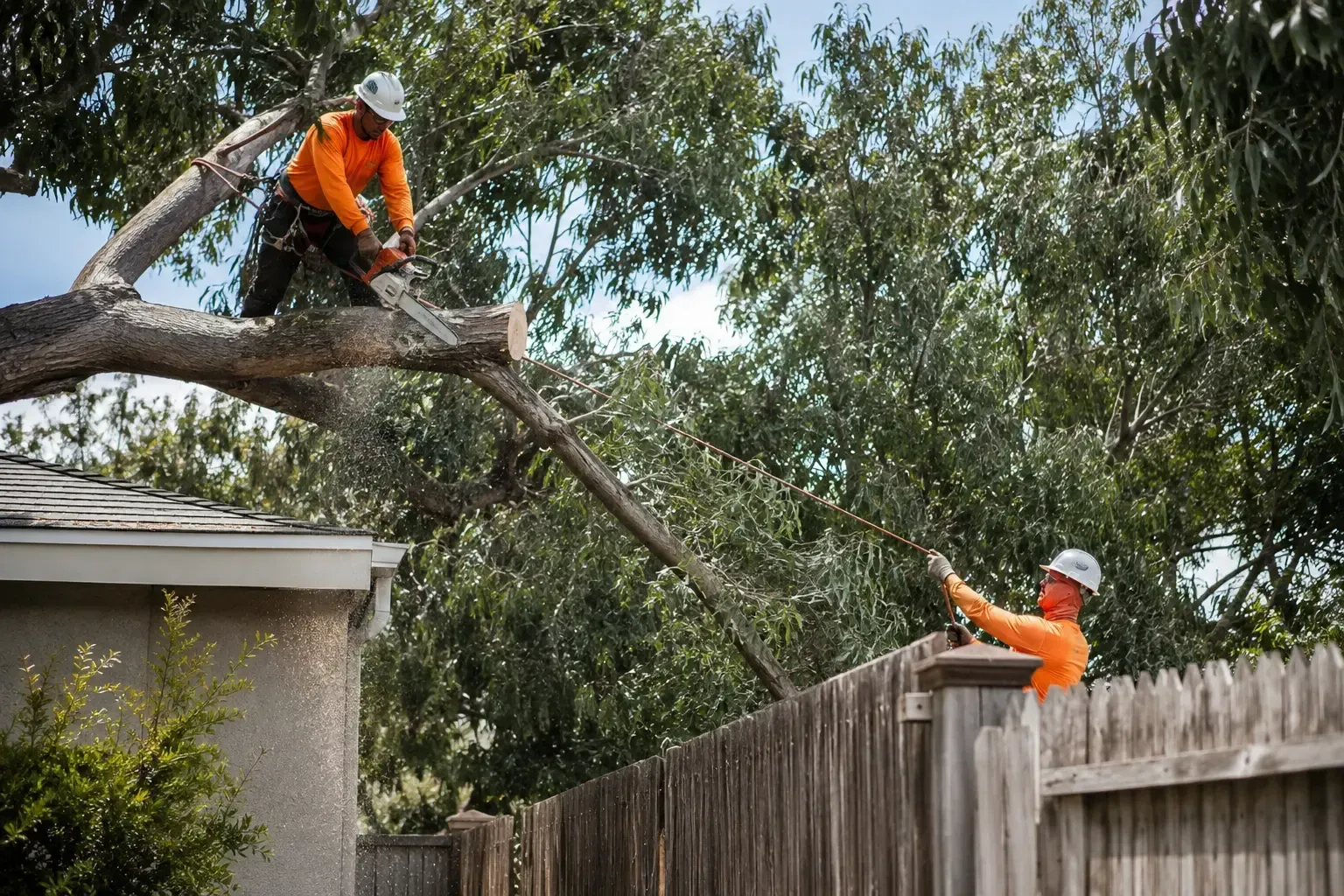
How Routine Tree Trimming Helps Prevent Falling Branch Accidents in El Monte
Routine tree trimming is an essential preventative measure that protects El Monte properties from the devastating financial and physical impacts of falling branches. By implementing a consistent maintenance strategy, homeowners and property managers can identify structural weaknesses, reduce canopy wind resistance, and safeguard their real estate investments. Partnering with a licensed and insured local tree service ensures safe, reliable care that significantly enhances long-term property value.
* Proactive branch weight reduction prevents property damage and liability claims for homeowners and landlords.
* Thinning dense canopies reduces wind resistance during El Monte's severe seasonal weather events.
* Consistent, species-specific maintenance schedules improve overall tree health and minimize the need for emergency removals.
How Routine Tree Trimming Helps Prevent Falling Branch Accidents in El Monte
El Monte, California, is known for its beautiful residential neighborhoods and thriving commercial districts, many of which are shaded by mature, impressive trees. While this urban canopy provides vital environmental benefits and aesthetic charm, it also introduces significant structural responsibilities for property owners. Heavy winds rolling off the San Gabriel Mountains and seasonal rainstorms routinely test the stability of local foliage. Without proper intervention, overgrown canopy structures become major liabilities.
Falling branches cause severe property damage, destroy vehicles, disrupt power lines, and present severe physical hazards to residents and pedestrians. By implementing a proactive arboriculture strategy, property owners can significantly mitigate these risks. Systematic canopy management ensures that structural defects are identified and resolved before severe weather strikes.
The Real Cost of Neglect for Homeowners with Established Properties
Property ownership in Southern California requires consistent exterior upkeep, and the trees on your lot demand as much attention as your roof or foundation. Homeowners with established properties understand that mature trees add significant curb appeal and shade, but they also carry immense physical weight. A single lateral branch on a mature California Sycamore can weigh several hundred pounds. When that branch becomes diseased, infested, or structurally compromised, gravity and wind will eventually force a failure.
For middle-to-upper income households, protecting real estate investments is a primary financial objective. A falling limb can cause thousands of dollars in roof damage, shatter expensive windows, or crush hardscaping features. Proactive trimming removes the excess weight that strains tree trunks and main branch attachments. Routine care allows an arborist to correct poor growth patterns, such as co-dominant stems or bark inclusions, which are notorious for splitting under pressure.
Suburban homeowners must recognize that tree maintenance is an ongoing necessity, not a reactive measure. Taking preventative action ensures that your outdoor spaces remain secure havens rather than unpredictable hazard zones.
Identifying High-Risk Trees on Residential and Commercial Lots
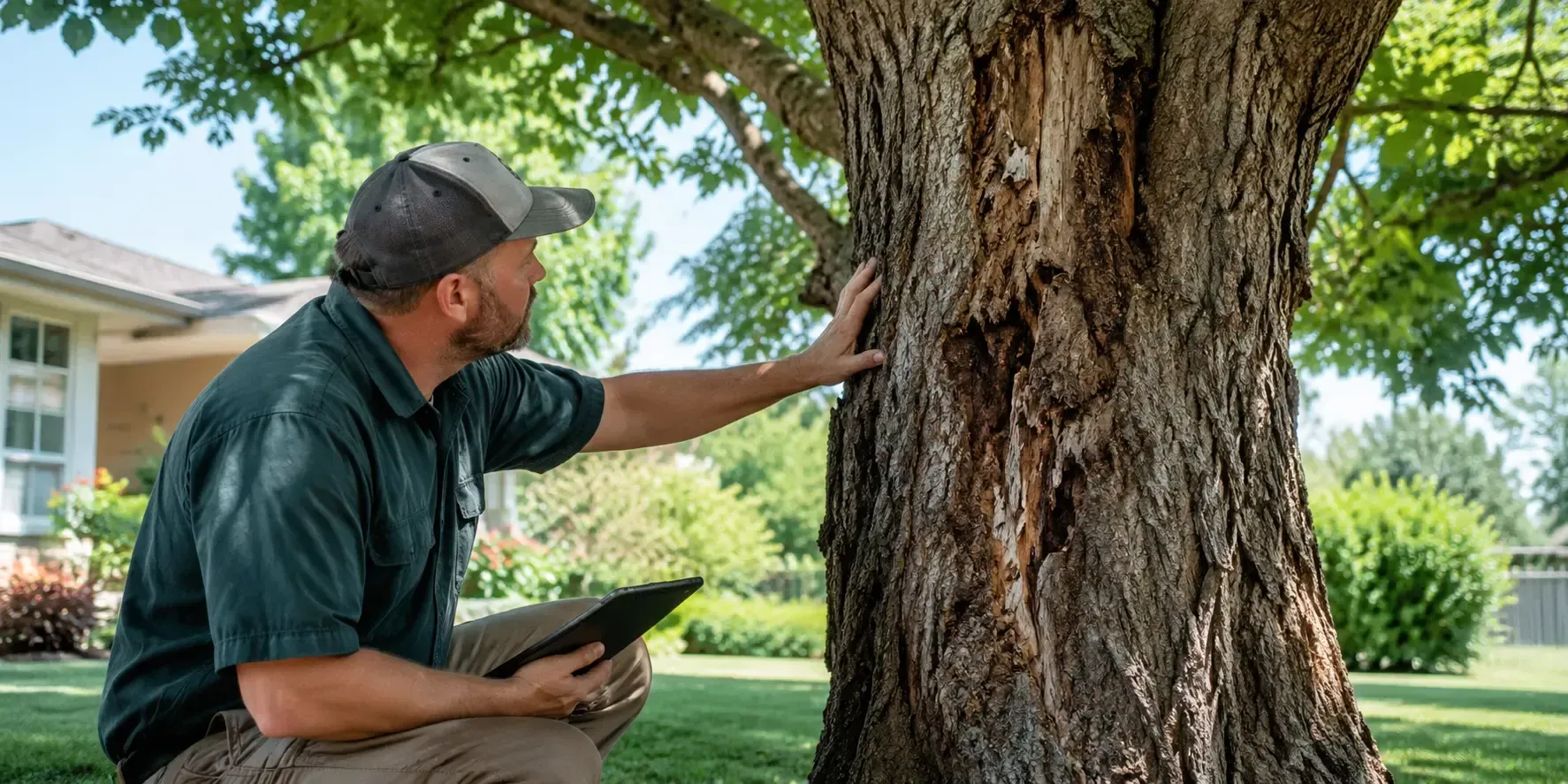
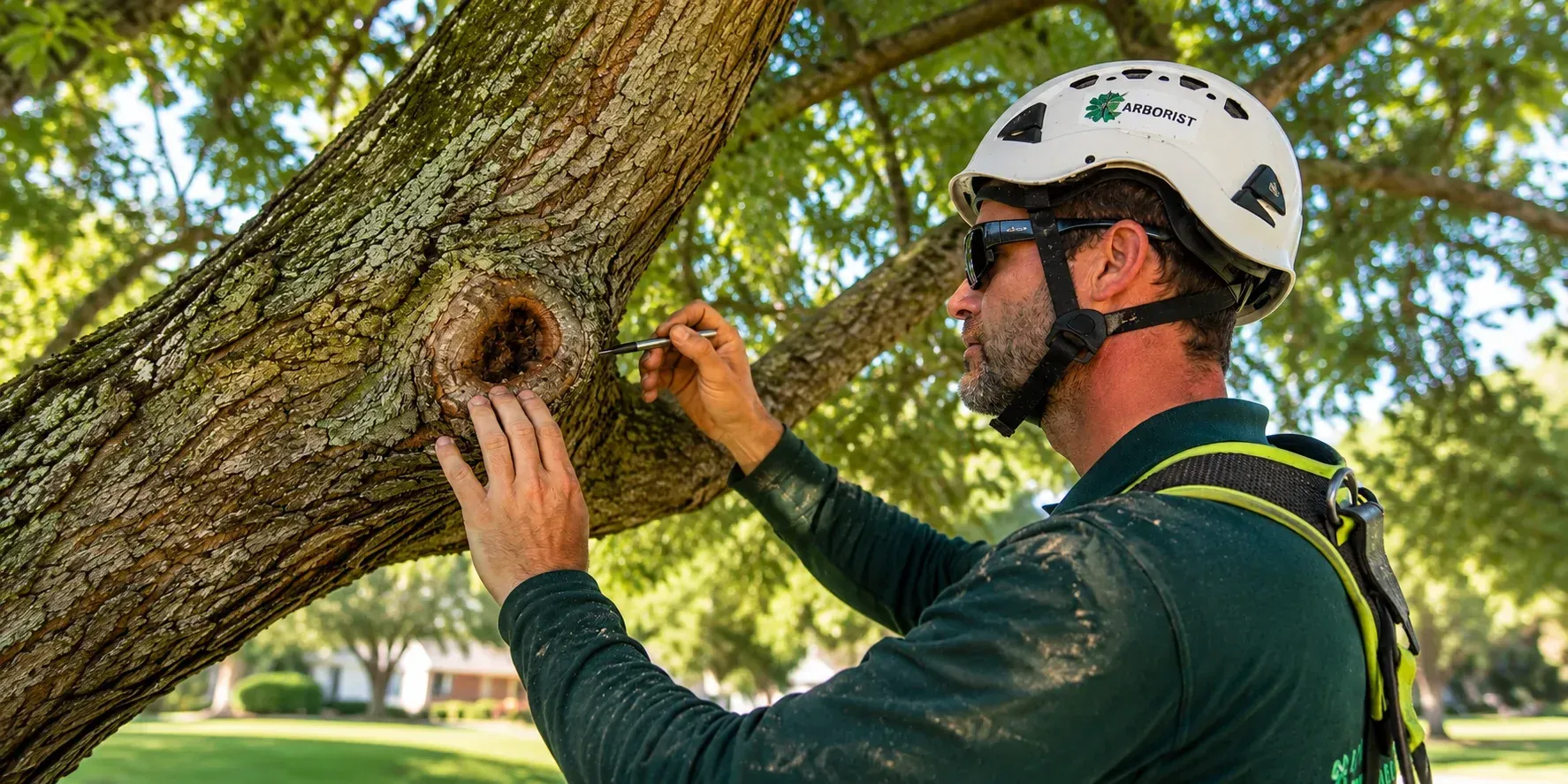
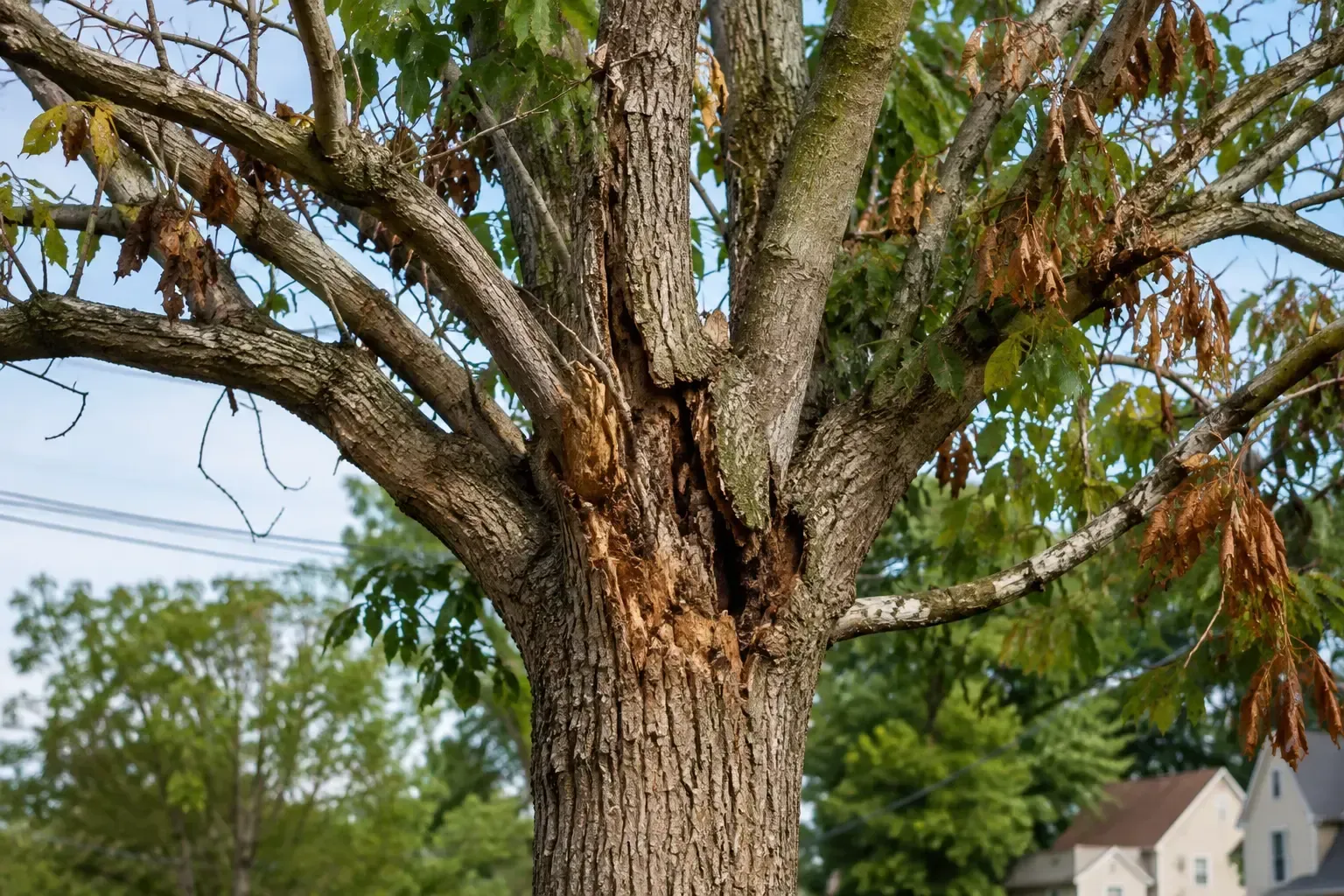
Not all tree hazards are immediately obvious to the untrained eye. While dead wood is easy to spot, other structural weaknesses require professional assessment. Branches that cross and rub together strip protective bark, leaving the tree vulnerable to fungal infections that rot the wood from the inside out. Overextended branches create a lever effect, putting unsustainable stress on the branch collar.
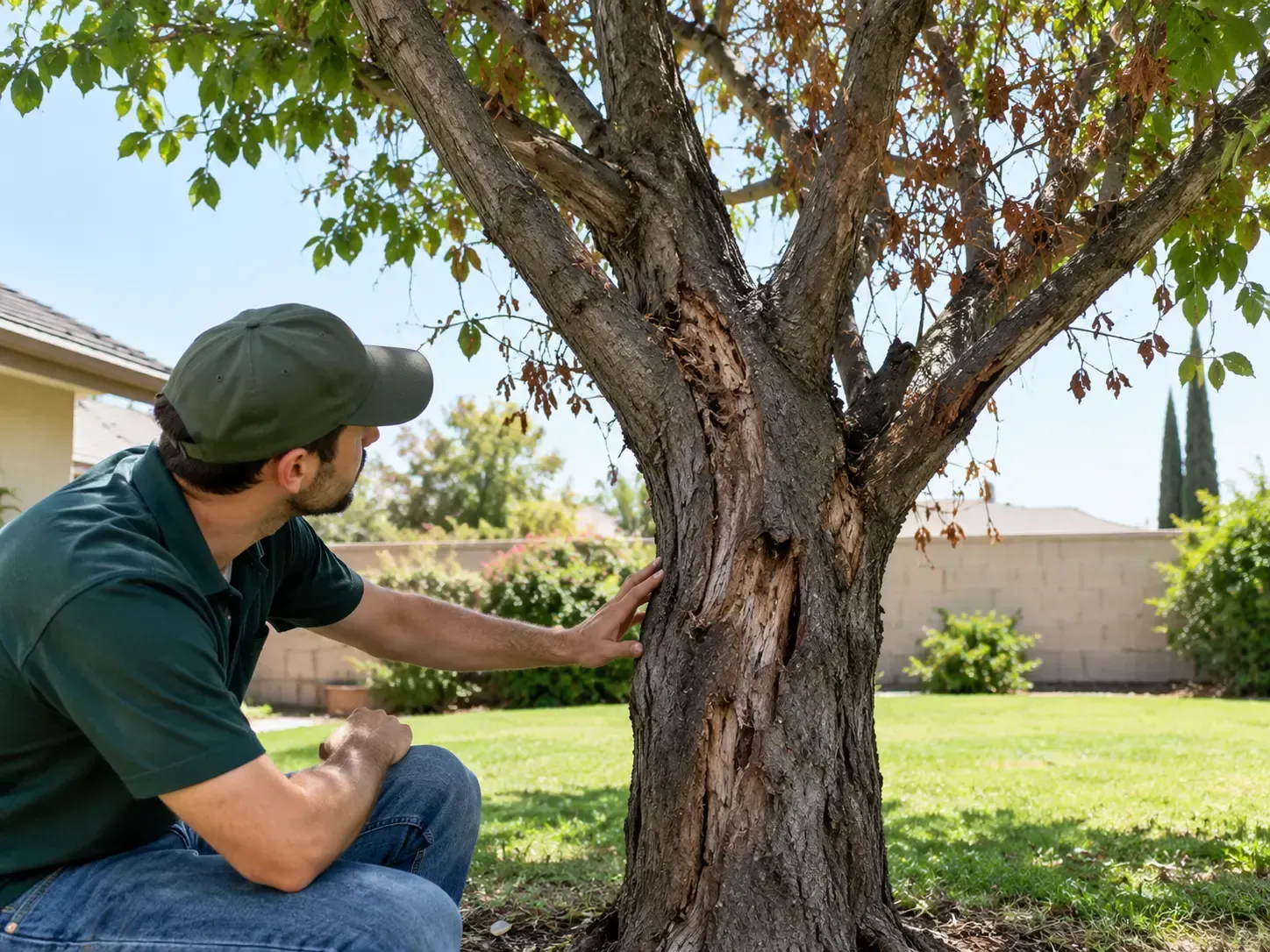
For older homeowners concerned with safety and maintenance, monitoring trees for subtle signs of decay is a highly recommended practice. Look for deep cracks in the bark, fungal fruiting bodies near the base of the trunk, or an uncharacteristic lean in the tree's posture. Canopy density is another critical factor. A tree with an overly dense crown acts like a sail during high winds, capturing the full force of the gusts rather than allowing the air to pass safely through the branches.
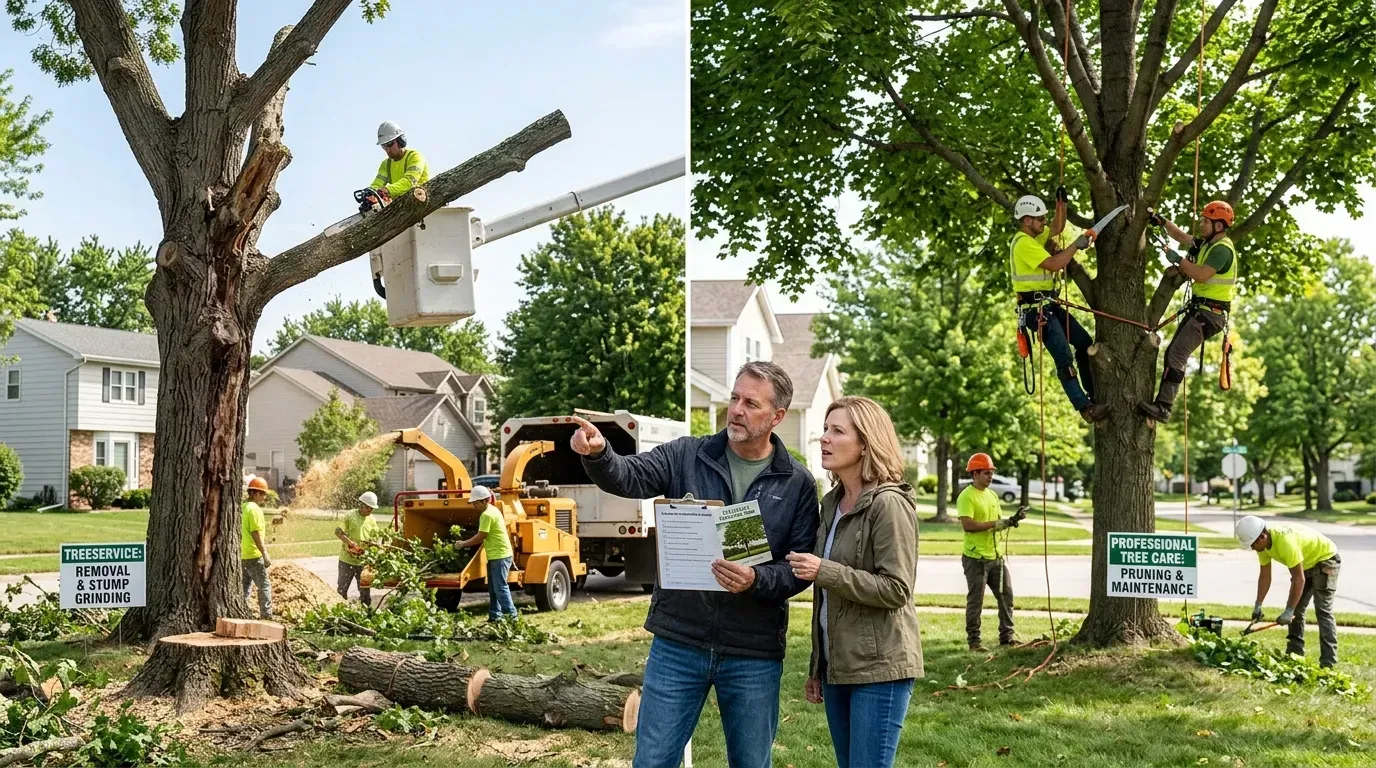
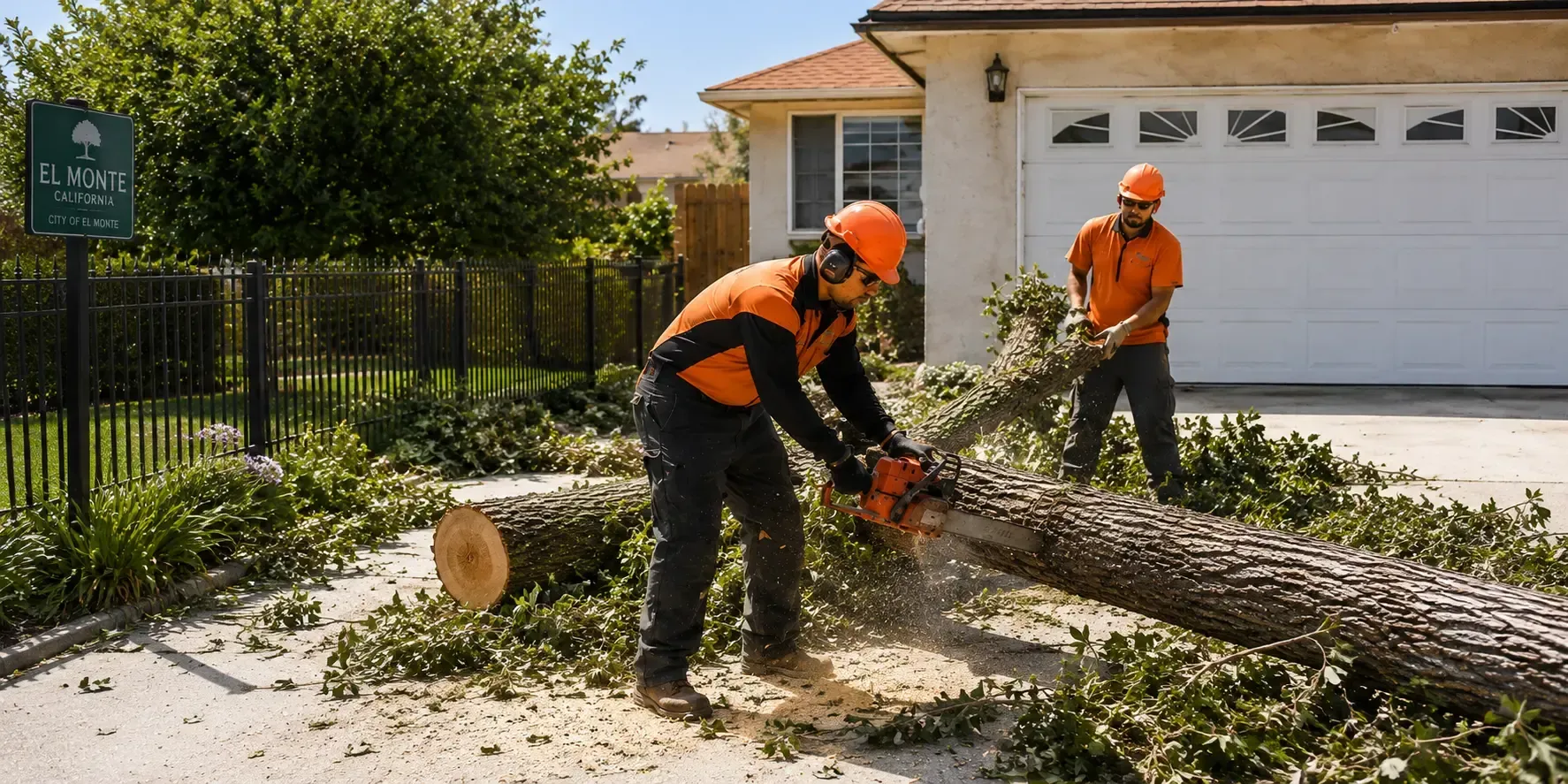
If a professional assessment reveals that a tree is beyond the help of structural pruning due to extensive internal decay or root damage, it may require complete extraction. In these high-risk scenarios, utilizing professional tree removal services is the only definitive way to eliminate the danger.
Why Safety and Reliability Matter to Property Managers and Landlords
Managing multiple properties involves balancing budgets, tenant satisfaction, and strict liability protocols. Property managers and landlords operate in an environment where safety cannot be compromised. A tenant injured by a falling branch or a vehicle damaged in a commercial parking lot can lead to complex legal disputes and steep insurance claims.
This demographic requires operational predictability. Real estate investors and HOA/property managers rely heavily on contractors who prioritize safety, reliability, and strict adherence to industry standards. Partnering with an established company guarantees that the arborists working on site possess the necessary insurance/licensing to protect the property owner from liability during the maintenance process.
Commercial property owners similarly depend on consistent maintenance schedules to protect their physical assets and their brand reputation. Overgrown, messy trees signal neglect, whereas well-manicured landscapes project success and stability. By securing routine trimming services, property managers ensure compliance with local safety codes while simultaneously maintaining an inviting environment for residents and customers.
The Mechanics of Professional Tree Maintenance
Effective tree trimming is an exact science rooted in arboricultural standards. It involves much more than simply cutting away low-hanging foliage. Proper maintenance requires a strategic approach to canopy management.
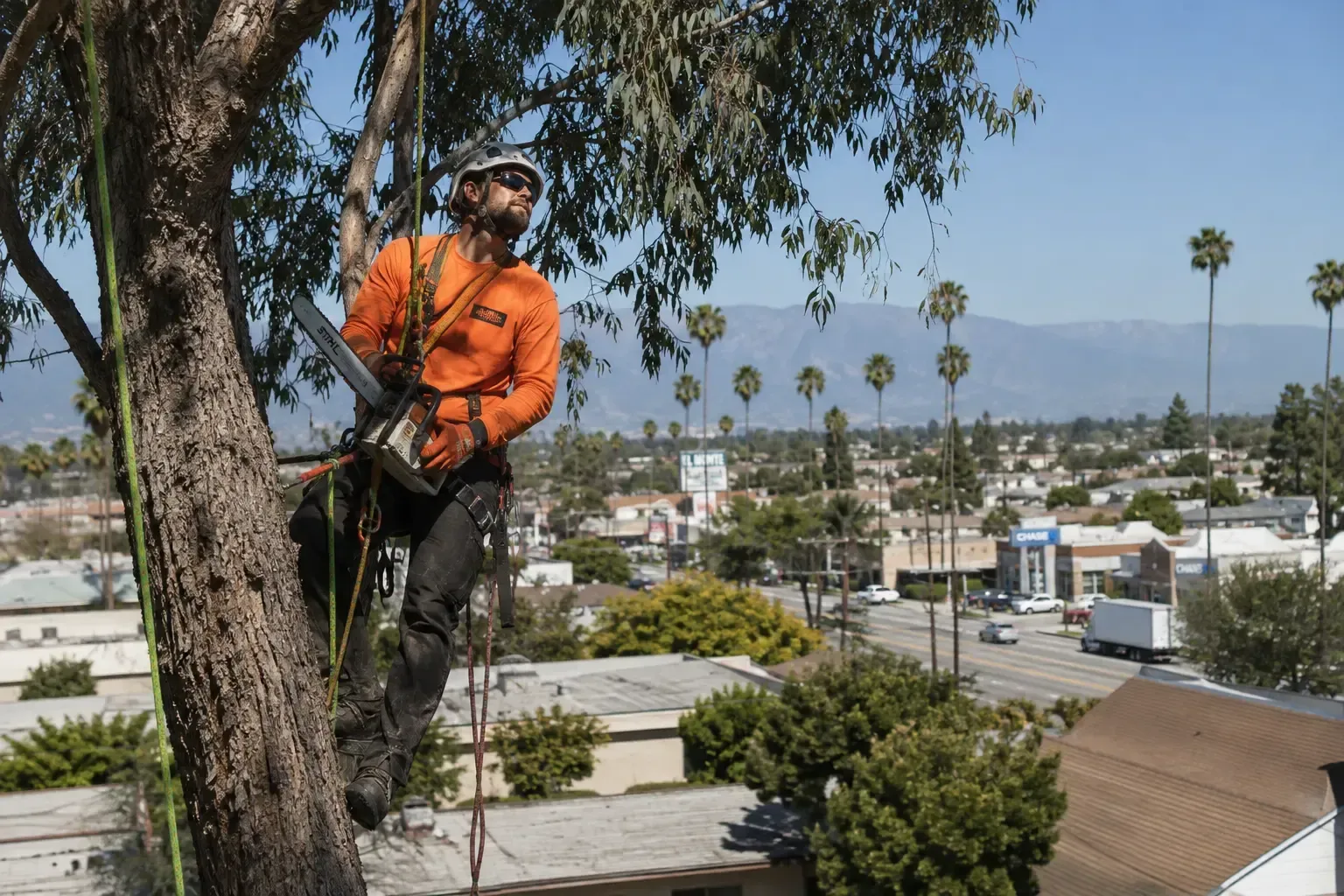
- Crown Thinning: This process removes select branches throughout the canopy to increase light penetration and air movement, reducing the dangerous sail effect during high winds.
- Crown Raising: Arborists remove lower branches to provide safe clearance for pedestrians, vehicles, and nearby structures.
- Deadwooding: The systematic removal of dead, dying, or diseased branches eliminates the most immediate falling hazards.
- Weight Reduction: Shortening heavy lateral branches reduces the mechanical stress placed on the tree's structural joints.
Implementing these techniques through professional tree trimming ensures that the tree maintains its natural shape while shedding hazardous structural defects.
Strategic Maintenance Schedules for El Monte Properties
Different tree species possess unique growth rates, wood densities, and structural vulnerabilities. A blanket approach to tree care is ineffective. Developing a species-specific maintenance schedule is vital for long-term safety and aesthetic quality. Retirees maintaining long-term properties often benefit from keeping a documented schedule of their landscape care to ensure no maintenance windows are missed.
Below is a detailed guide outlining the growth habits and hazard risks of tree species frequently found in El Monte and the surrounding San Gabriel Valley.
| Tree Species Common to El Monte | Average Growth Rate | Recommended Trimming Frequency | Primary Structural Hazard Risk |
|---|---|---|---|
| California Sycamore | Fast | Every 1 to 2 Years | Heavy horizontal branch weight |
| Coast Live Oak | Slow to Moderate | Every 3 to 5 Years | Fungal decay in mature limbs |
| Eucalyptus | Extremely Fast | Annually | High wind susceptibility |
| Queen Palm | Moderate | Bi-Annually | Dead frond accumulation |
| Jacaranda | Moderate to Fast | Every 2 to 3 Years | Soft wood prone to splitting |
Proper adherence to a schedule like the one above mitigates the overwhelming majority of branch failure incidents.
Fast Emergency Response and Storm Cleanup in El Monte
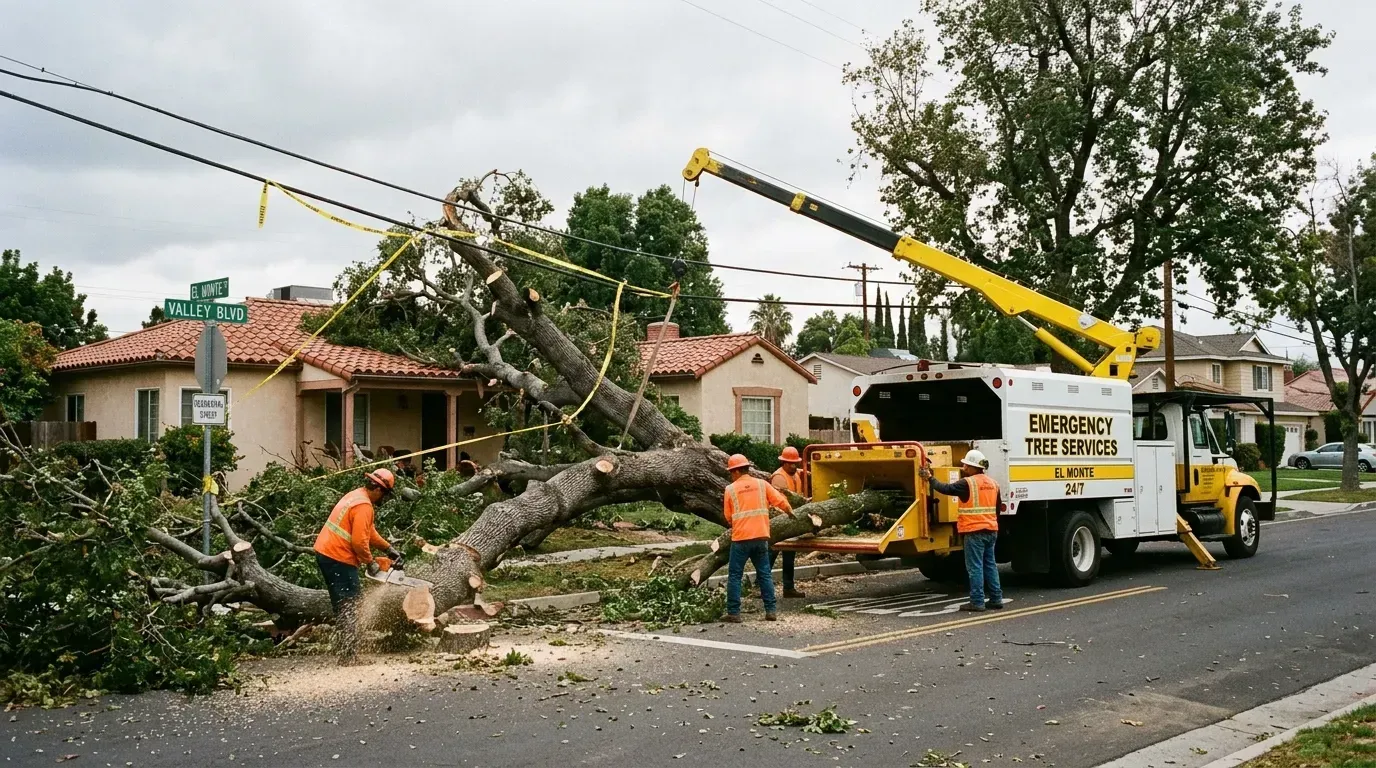
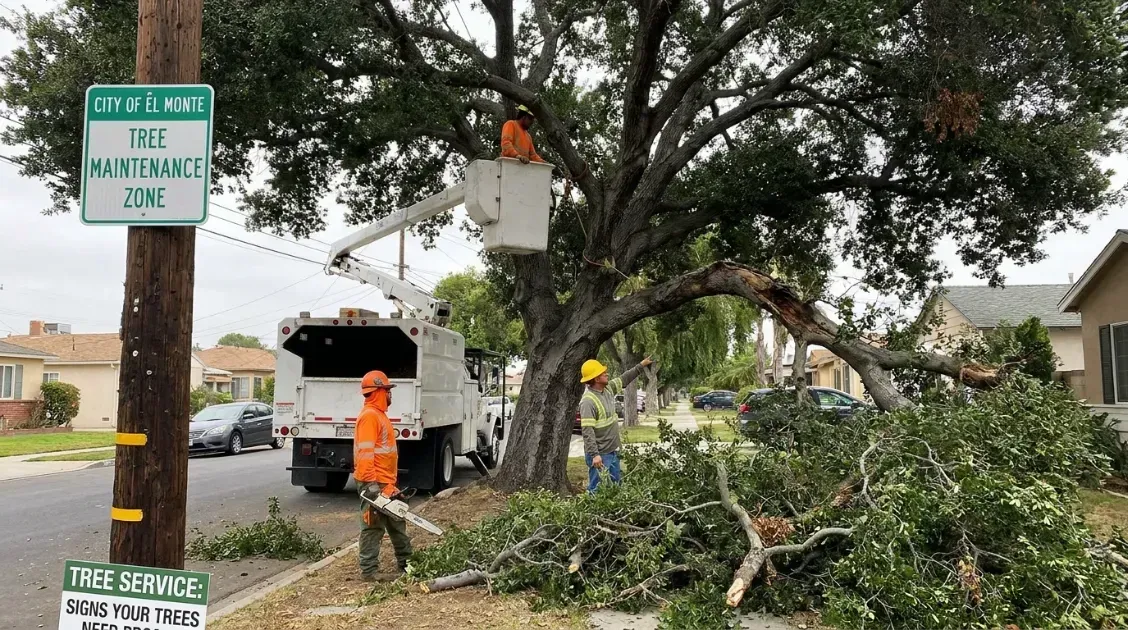
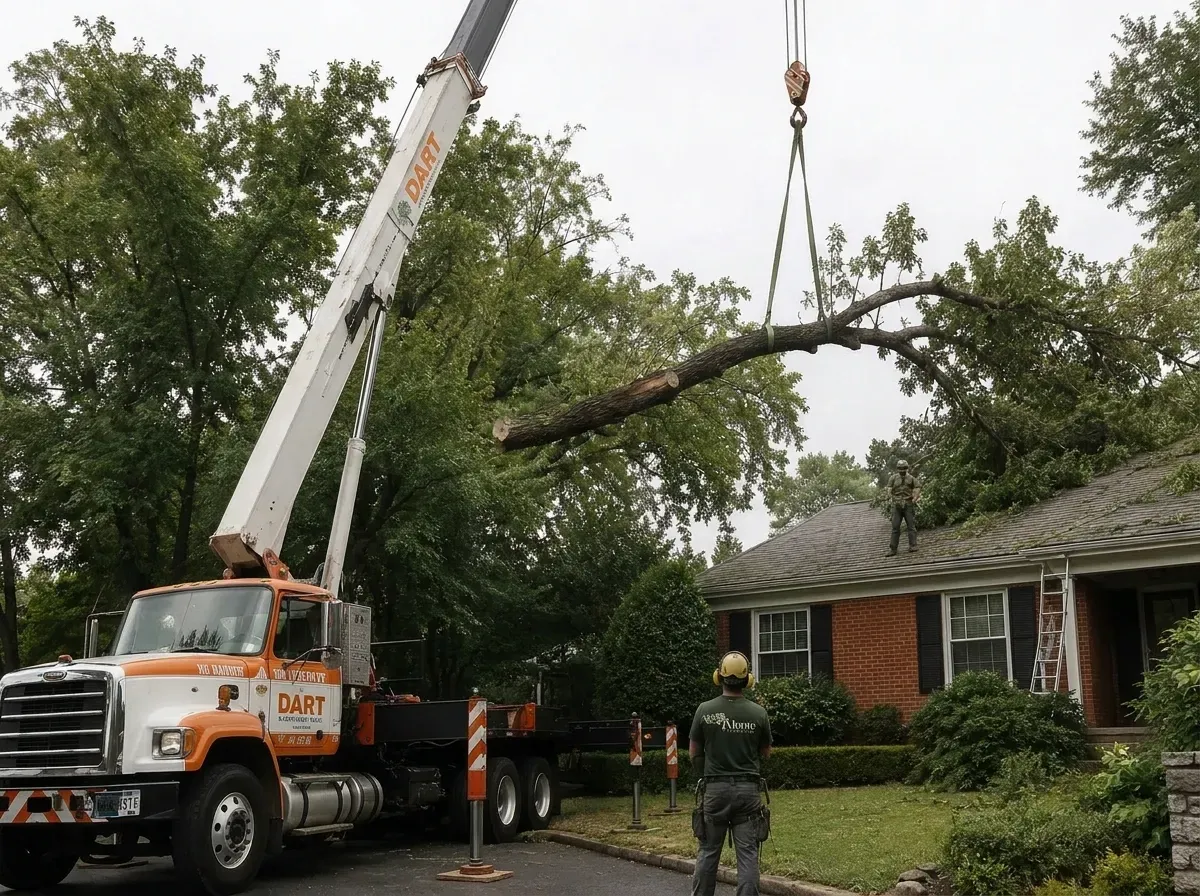
Despite the best preventative efforts, extreme weather events like intense Santa Ana windstorms or heavy winter atmospheric rivers can cause unpredictable damage. When a severe storm hits El Monte, healthy branches can snap under extreme duress, and compromised trees can uproot entirely. In these critical moments, immediate intervention is necessary to prevent further structural damage to homes and businesses.
Families investing in curb appeal and outdoor aesthetics rely on swift action to restore their properties to a safe and beautiful state. Access to emergency tree removal is a critical component of property management in Southern California. A fast emergency response ensures that dangerous debris is cleared from driveways, roofs, and power lines without delay.
Professional appearance and cleanup are essential markers of a quality tree service provider. Following a storm, property owners need a team that not only removes the immediate hazard but also thoroughly clears the resulting organic debris, leaving the property safe, clean, and fully restored.
Partnering with Local Experts for Long-Term Property Value
Routine tree care is a direct investment in the longevity and safety of your real estate. By prioritizing preventative trimming, identifying structural risks early, and maintaining an organized care schedule, property owners protect their families, their tenants, and their financial assets. Proper arboriculture significantly enhances long-term property value by ensuring the landscape remains robust, healthy, and structurally sound.
Elmonte Tree Service provides expert, safety-focused tree care tailored to the specific environmental demands of the San Gabriel Valley. Our commitment to rigorous safety protocols and precise arboricultural techniques ensures that your trees remain a beautiful asset rather than a dangerous liability.
You can reach our team at our local headquarters: Elmonte Tree Service 3380 Flair Dr Suite 215 test El Monte, CA 91731 Phone: +1 626 654-3698
Frequently Asked Questions
How often should mature trees be trimmed to prevent branch failure?
The frequency of trimming depends entirely on the tree species, its location, and its overall health. Fast-growing trees like Eucalyptus require annual inspections and thinning to reduce wind resistance. Slower-growing hardwood trees like oaks may only need structural pruning every three to five years. An arborist can establish a safe, customized timeline for your specific landscape.
Does routine trimming improve tree health or just property safety?
Routine trimming significantly improves both. By removing dead, diseased, or dying branches, the tree can redirect its vital energy and nutrients toward healthy new growth. Proper thinning also increases sunlight penetration and air circulation throughout the canopy, which naturally suppresses fungal growth and pest infestations.
What are the signs that a tree requires immediate professional attention?
Immediate warning signs include deep vertical cracks in the trunk, sudden leaning, the presence of large dead hanging branches (often called widow-makers), ground heaving near the root zone, or substantial decay at the base of the tree. If you notice any of these indicators, you should restrict access to the area and contact a professional arborist immediately for a structural assessment.
How can I tell if my tree is suffering from root damage?
Signs include leaning, reduced leaf growth, yellowing foliage, or visible soil heaving near the base. Professional inspection is recommended if these symptoms appear.