How Do You Know If a Tree Is Dangerous? 10 Warning Signs for El Monte CA Homeowners
Why El Monte Trees Become Dangerous
Before we get into the specific warning signs, you need to understand why trees fail in our area.
Drought Stress: El Monte gets about 15 inches of rain per year (compared to the US average of 38 inches). Many homeowners don't water their trees enough, especially older, established trees. Drought-stressed trees slowly die from the inside out.
Santa Ana Winds: Those 40-70 mph gusts we get in fall and winter? They don't just blow leaves around. They snap weakened branches and topple trees with compromised root systems. If your tree has structural issues, Santa Ana winds will find them.
Age and Neglect: Many El Monte properties have 40, 50, even 80-year-old trees that have never been professionally maintained. Trees don't live forever, and old trees without proper care become hazards.
Root Damage: Construction, trenching for utilities, lawn irrigation changes, and even heavy foot traffic can damage tree roots. You can't see it, but that root damage means the tree can't support itself.
Heat Stress: Our summers regularly hit 95-100°F. Trees that are already stressed from drought, disease, or age can't handle the heat and decline rapidly.
The combination of these factors means El Monte trees fail more often than trees in wetter, cooler climates. That's why you need to know these warning signs.
The 10 Warning Signs Your Tree Is Dangerous
1. Dead or Dying Branches in the Canopy
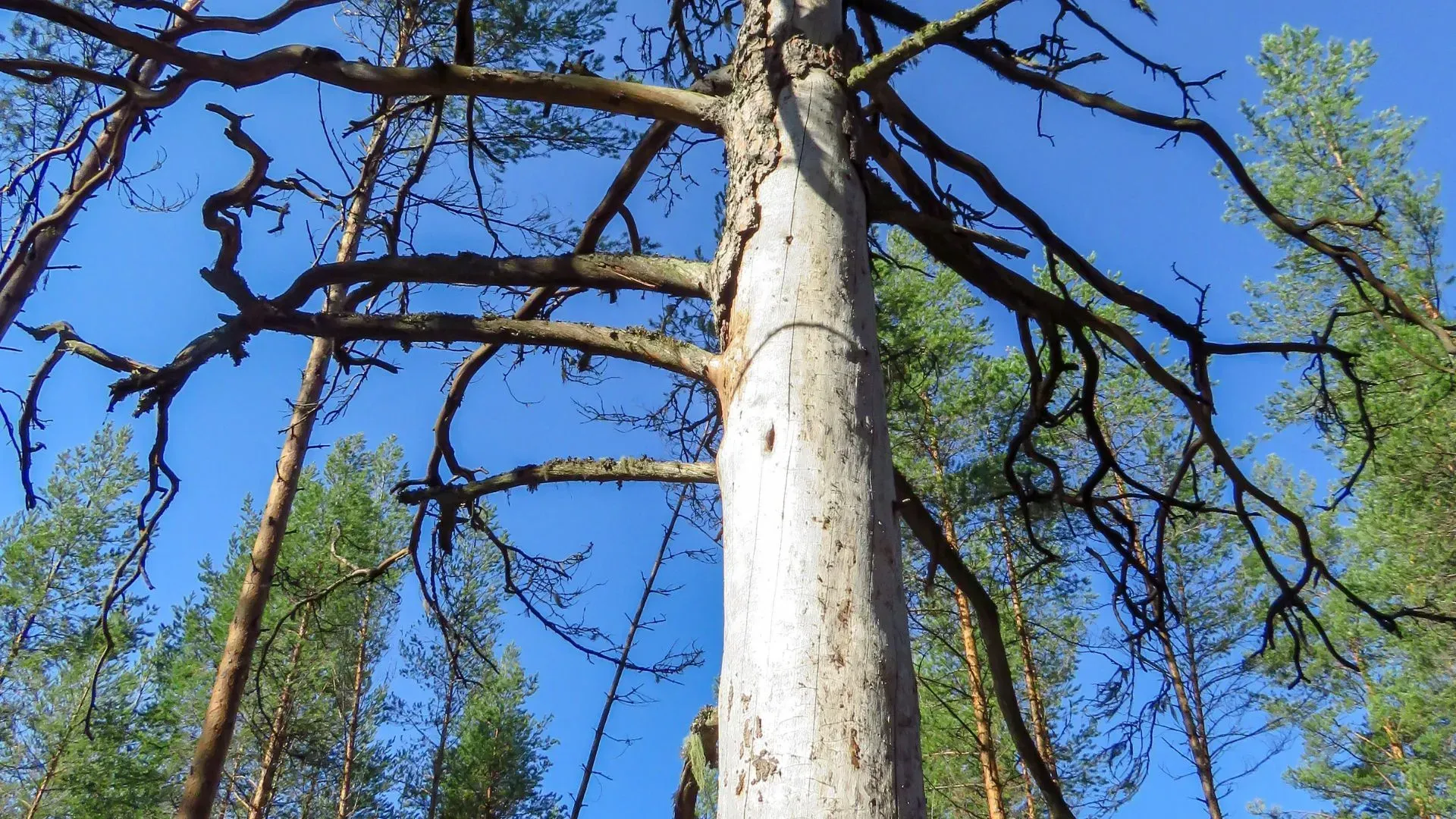
What to Look For: Large branches (bigger than 2 inches in diameter) with no leaves during growing season, or branches that look brittle and brown while the rest of the tree is green.
Why It's Dangerous: Dead branches become "widow makers"—they can fall without warning, especially during wind. A 30-foot fall from a large dead branch can kill someone or cause serious property damage.
What It Means: If it's just one or two branches, the tree might be salvageable with pruning. If more than 25-30% of the canopy is dead, the entire tree is likely dying and should be removed.
El Monte Context: Drought stress is the #1 cause of branch dieback here. Look especially at the south and west-facing sides of trees—they get the most sun and stress.
Immediate Action Needed? If dead branches are large or hanging over structures, cars, or walkways: YES. Call today.
2. The Tree Is Leaning More Than 15 Degrees
What to Look For: Stand back and look at the tree's trunk. Does it lean significantly to one side? Use a phone with a level app if you want to be precise—anything over 10-15 degrees is concerning.
Why It's Dangerous: A leaning tree indicates root failure or soil movement. It's slowly losing its grip and will eventually fall. The question isn't IF, it's WHEN.
What It Means:
- Sudden lean (happened recently): Emergency situation. Tree could fall at any time.
- Gradual lean (been leaning for years): Still dangerous but less urgent. Schedule assessment within a week.
- Lean toward a target (house, car, neighbor's property): Extreme risk.
Look for This Too: Soil heaving or cracking around the base on the opposite side of the lean. That means roots are pulling up.
El Monte Context: We see a lot of lean from Santa Ana winds hitting trees with compromised root systems. Also common after heavy irrigation changes or nearby construction.
Immediate Action Needed? If lean is recent or increasing, or if the tree is leaning toward a structure: YES. Emergency assessment needed.
3. Cracks or Splits in the Trunk or Major Limbs
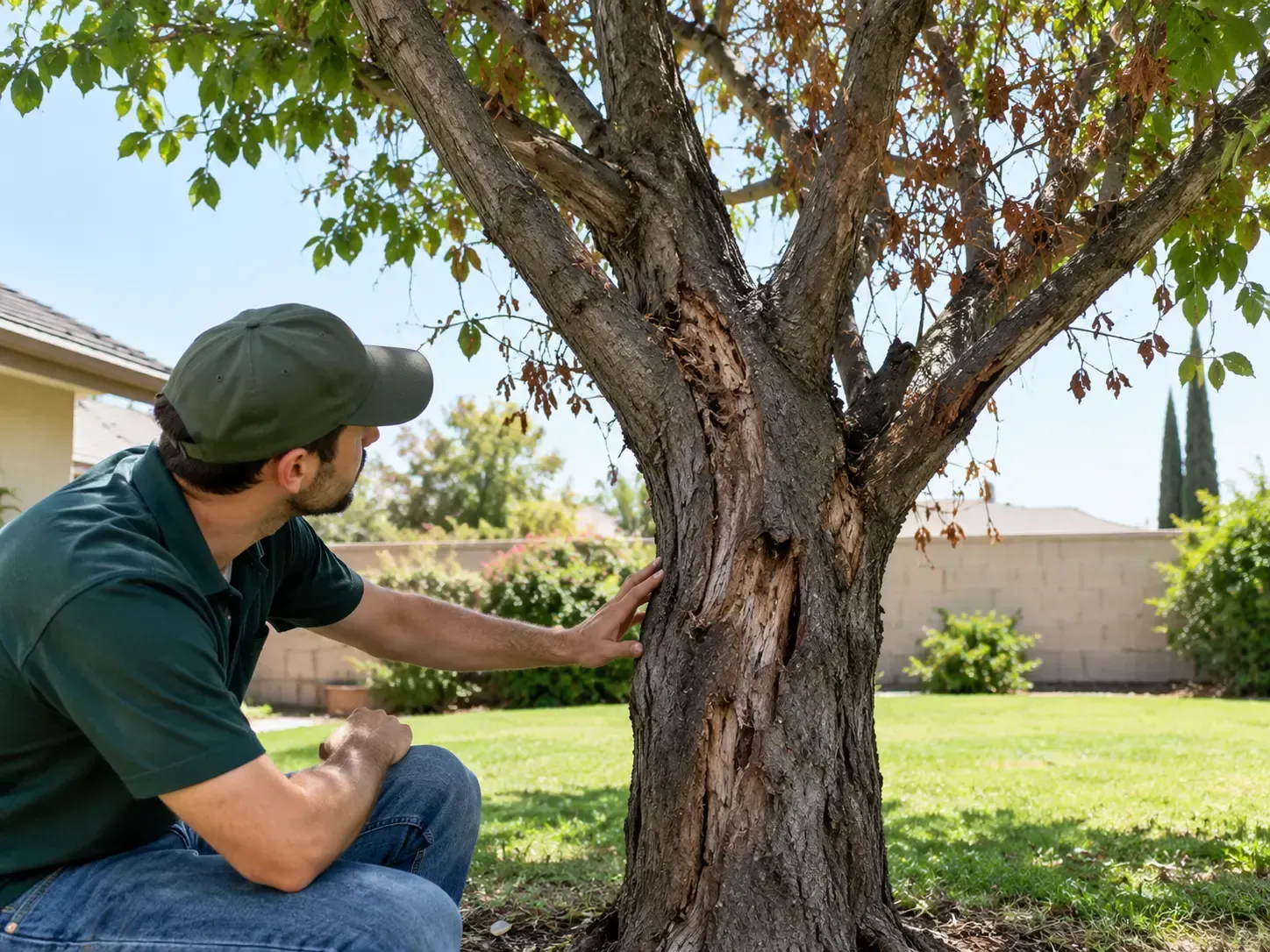
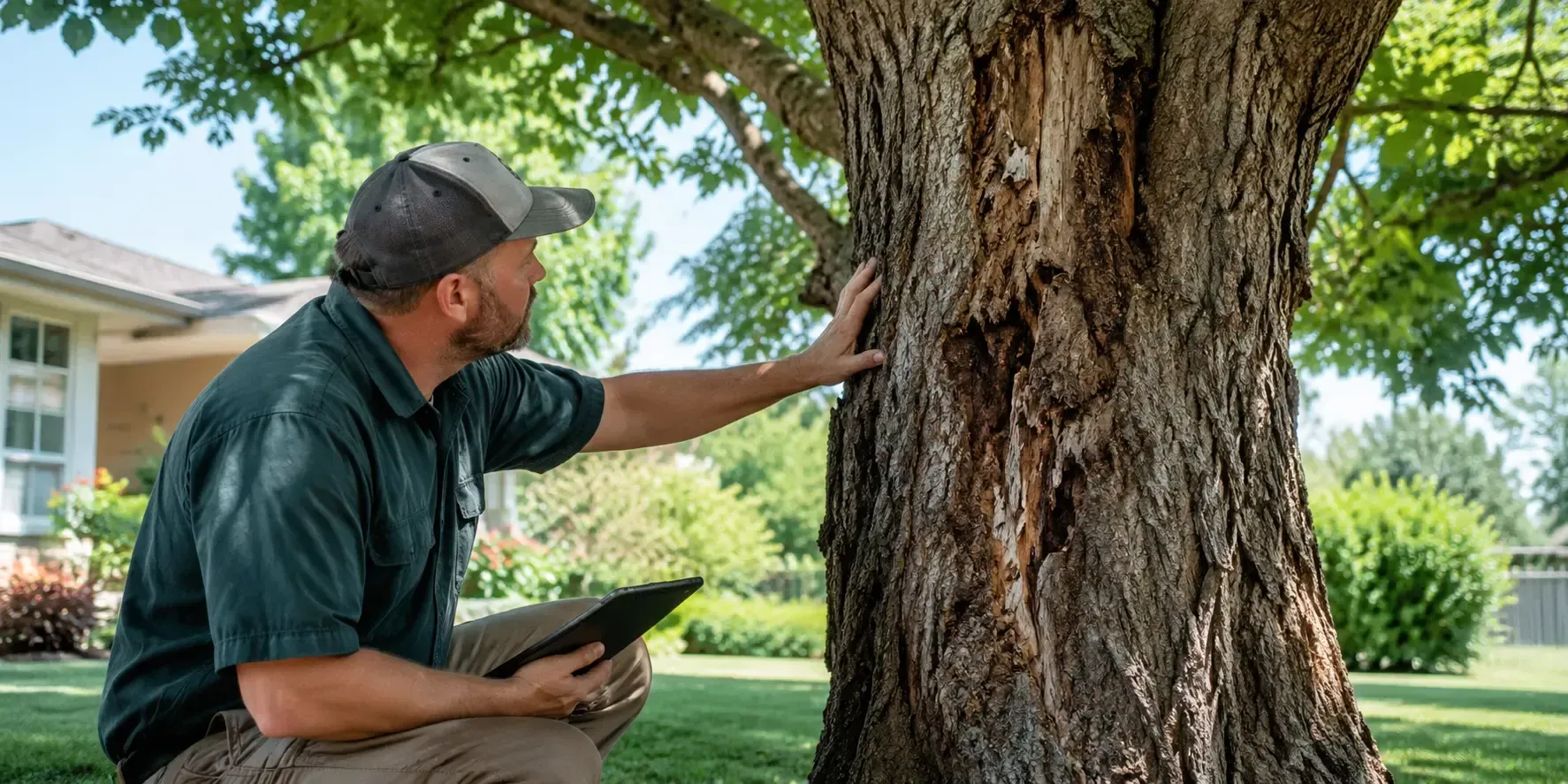
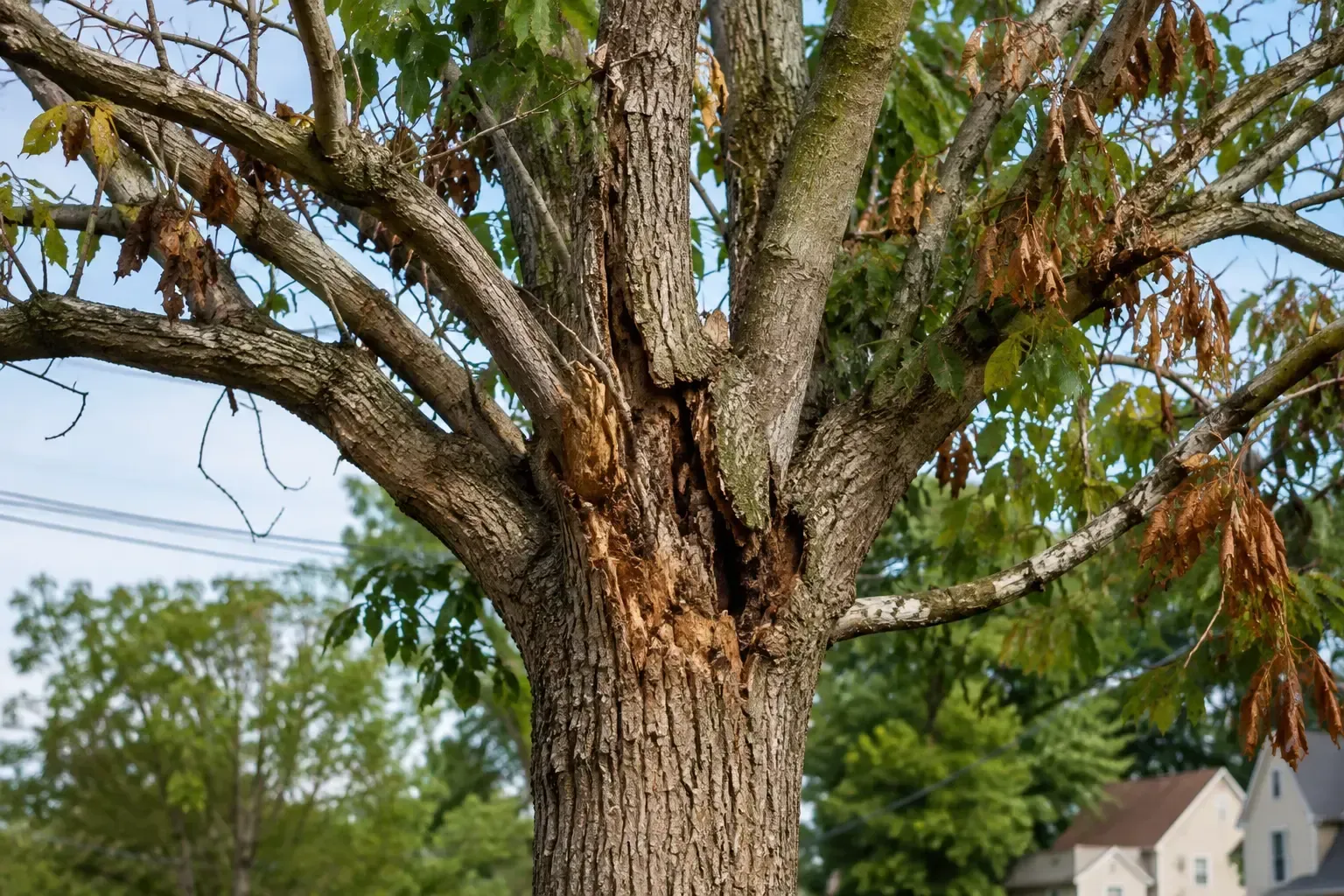
What to Look For: Visible vertical or horizontal cracks in the trunk or where major limbs attach. These might be hairline cracks or large splits you could fit your hand into.
Why It's Dangerous: Cracks are structural failures waiting to happen. The tree or limb can split completely during high winds, under heavy load (like during rain when the canopy is wet), or just from its own weight.
Types of Dangerous Cracks:
- Vertical cracks running down the trunk: Tree is splitting in half
- Horizontal/ring cracks: Trunk is failing at that point
- V-shaped crotches: Where two trunks meet at a narrow angle (weak attachment)
- Cracks with separation: You can see daylight through them
What It Means: Most cracks cannot be repaired. The tree needs removal or, in rare cases, heavy-duty cabling by a professional arborist.
El Monte Context: Our extreme temperature swings (cold nights, hot days) can cause trunk cracks, especially in thin-barked trees. Look for cracks on the south and west sides.
Immediate Action Needed? If cracks are large, widening, or in trunks/limbs over structures: YES. Call immediately.
4. Root Damage, Decay, or Exposure
What to Look For:
- Roots that are cut, broken, or damaged
- Fungus or mushrooms growing at the base or on exposed roots
- Roots that are rotted or soft when you push on them
- Soil erosion exposing large roots
- Recent trenching, construction, or digging near the tree
Why It's Dangerous: Roots are the tree's anchor and its lifeline. Damage to major roots (anything thicker than 2-3 inches) compromises stability. Rot means the anchoring system is failing.
Rule of Thumb: If more than 25% of the root system is damaged or compromised, the tree is a high fall risk.
Hidden Danger: You can't see most of the roots. Surface damage often means worse damage underground.
El Monte Context: Common causes here include:
- Trenching for irrigation or utilities
- New driveway or patio installation
- Soil compaction from vehicles
- Grade changes (adding or removing soil)
- Lawn replacement projects
Immediate Action Needed? If you've had recent construction near a tree, or if you see significant rot/fungus on roots: Schedule assessment within days.
5. Fungus or Mushrooms Growing on the Trunk or Roots
What to Look For: Any mushroom, conk (shelf fungus), or fungal growth on the trunk, at the base, or on major roots. This includes:
- Shelf-like growths on the bark
- Mushrooms at the base
- White or colored fungal patches
- Soft, spongy bark
Why It's Dangerous: Fungus feeds on dead wood. If you see it, that part of the tree is dead or dying. The tree's structural integrity is compromised.
Critical Understanding: By the time you see mushrooms or conks, the internal decay is usually advanced. Think of mushrooms like the tip of an iceberg—there's way more damage you can't see.
What It Means: Most trees with significant fungal growth cannot be saved and need removal.
El Monte Context: Fungus thrives in moisture. Check carefully after winter rains or in spots where sprinklers hit the trunk (which they shouldn't—that's bad for trees).
Immediate Action Needed? If fungus is present on the trunk or major roots of a large tree near structures: YES. Get assessed this week.
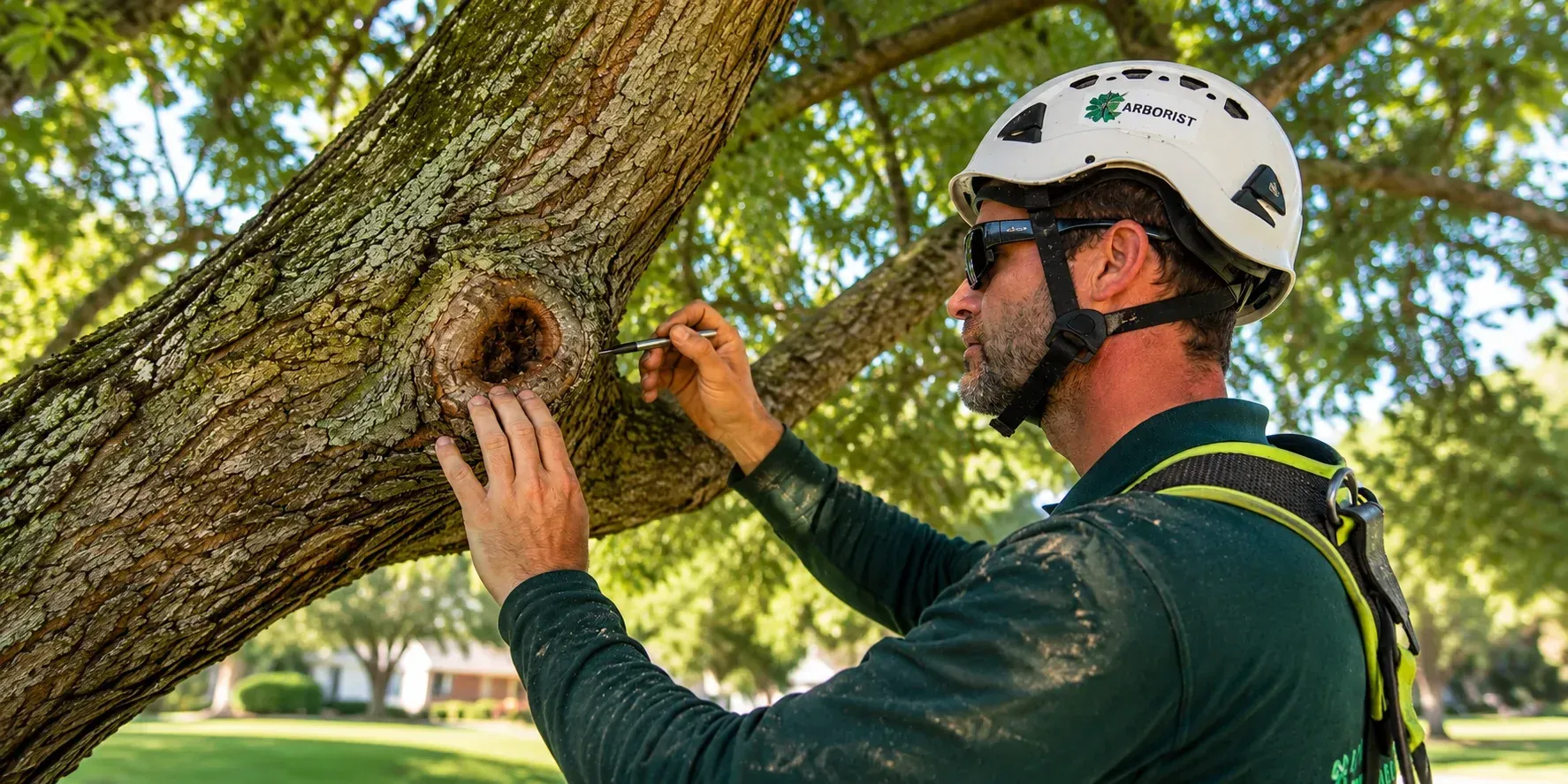
6. Hollow Trunk or Large Cavities
What to Look For:
- Holes or openings in the trunk
- Hollow-sounding trunk when tapped
- Large cavities where bark has fallen away
- Areas where you can see inside the tree
Why It's Dangerous: A hollow tree is like a straw—it can snap under stress. Trees can survive with some hollowing, but there's a tipping point where there's not enough solid wood left to support the weight.
How to Check: Gently tap the trunk with your knuckles at different heights. Solid trees sound solid (dull thud). Hollow areas sound hollow (like tapping a door).
What It Means:
- Small cavities (less than 30% of trunk diameter): May be okay with monitoring
- Large cavities (more than 50% of trunk diameter): High failure risk
- Hollow all the way through: Extreme danger
El Monte Context: Old pepper trees, eucalyptus, and palms commonly develop hollows with age. Woodpeckers making holes is a sign of insect infestation, which creates more hollowing.
Immediate Action Needed? If the tree is large, hollow, and near structures or people: YES. Professional assessment needed.
7. Multiple Trunks with Weak Attachment
What to Look For: Trees that split into two or more trunks, especially if:
- They form a V-shape (narrow angle) rather than a U-shape
- There's bark trapped between the trunks (called "included bark")
- You can see cracks where the trunks join
- One trunk is much larger than the other
Why It's Dangerous: Multi-trunk trees with weak attachments can split apart, especially during wind or when one side gets heavy (like during rain when the canopy holds water).
The V vs. U Rule:
- V-shaped crotches (narrow angle): Weak attachment, high failure risk
- U-shaped crotches (wide angle): Stronger attachment, lower risk
What It Means: Some multi-trunk trees can be cabled by a professional arborist to reduce risk, but many need removal.
El Monte Context: Many ornamental trees (like liquidambar and Chinese elm) naturally form multiple trunks. These need professional assessment when young to determine if they need structural pruning or cabling.
Immediate Action Needed? If you see cracks forming at the trunk attachment, or if one of multiple trunks is leaning: Schedule assessment soon.
8. Tree Is Too Close to Power Lines
What to Look For: Any part of the tree within 10 feet of power lines, especially primary lines (the high-voltage ones at the top).
Why It's Dangerous:
- Safety: Contact with power lines can electrocute people and start fires
- Liability: You're responsible if your tree damages power lines
- Service interruption: Your tree can cause neighborhood outages
The Rules:
- Never trim near power lines yourself - you can be killed
- Call your utility company for trees touching lines
- For trees near but not touching lines, call a professional tree service with line clearance certification
What It Means: Trees within 10 feet of lines need regular professional trimming. Trees growing into lines need immediate attention.
El Monte Context: Southern California Edison handles primary lines. They may trim for free if the tree threatens their lines, but they won't be gentle—they'll hack it back to 10 feet. Better to pay a professional for a prettier job.
Immediate Action Needed? If tree is touching power lines: Call utility company immediately. Do not touch the tree.
9. Storm Damage or Recent Trauma
What to Look For: After Santa Ana winds, summer storms, or any tree trauma:
- Broken or hanging branches
- Stripped bark
- Leaning that wasn't there before
- Exposed or lifted roots
- Cracks that are new or bigger
- Soil heaving around the base
Why It's Dangerous: Storm damage weakens trees. Even if the tree didn't fall, it may have internal damage that makes it unstable. Hanging branches ("hangers") can fall without warning.
Critical: After any significant wind event in El Monte, inspect all your trees.
What It Means:
- Minor damage (small branches broken): Usually fine after cleanup
- Major damage (large limbs broken, trunk damage, leaning): Needs professional assessment
- Severe damage (50%+ of canopy gone, major lean): Often requires removal
El Monte Context: After Santa Ana winds, we get swamped with calls. Book early after storms, or better yet, get trees assessed and trimmed BEFORE wind season (late summer/early fall).
Immediate Action Needed? If storm created large broken branches hanging in tree, new lean, or exposed roots: YES. Get it assessed immediately.
10. The Tree just Doesn't Look Right
What to Look For:
- Sparse canopy (you can see through it easily)
- Leaves smaller than normal
- Leaves changing color out of season
- Entire tree looks "sick" but you can't pinpoint why
- Tree declined noticeably in the last year
- Your gut says something's wrong
Why It's Dangerous: Trees don't decline for no reason. If a tree looks unhealthy, something is wrong—drought stress, disease, root damage, or structural issues.
Trust Your Instincts: You walk past your trees every day. If something seems off, it probably is.
What It Means: Sometimes trees can be saved with proper care (watering, fertilizing, pest treatment). But often, a tree in visible decline is in advanced failure mode.
El Monte Context: Summer heat stress shows up as:
- Leaf scorch (brown edges)
- Premature leaf drop
- Wilting even when soil is moist
- Dead branch tips
Immediate Action Needed? If tree declined rapidly (within weeks): Schedule assessment. If decline is gradual: Monitor and schedule assessment within a month.
What to Do If You Spot These Warning Signs
Here's your action plan:
Step 1: Document Everything
- Take photos of all warning signs
- Note when you first noticed the problem
- Take wide shots showing the tree's location relative to structures
- Date all photos
Why? For insurance purposes if the tree fails, and for the arborist's assessment.
Step 2: Assess the Urgency
EMERGENCY (Call Today):
- Tree is leaning toward a structure
- Large dead branches over house, car, or walkways
- Tree is touching power lines
- Recent storm damage with hanging branches
- Large cracks that are widening
- Tree fell partially (still upright but compromised)
URGENT (Call This Week):
- Multiple warning signs present (3+)
- Significant lean but not toward structures
- Large areas of dead canopy
- Visible trunk rot or cavities
- Root damage from recent construction
- Fungus on trunk or major roots
SCHEDULE SOON (Within 2-4 Weeks):
- 1-2 warning signs present
- Tree looks unhealthy
- Haven't had professional assessment in 3+ years
- Tree has never been professionally trimmed
Step 3: Call a Professional Tree Service
Not a handyman. Not a landscaper. A professional tree service with:
- ISA Certified Arborists on staff
- Proper insurance (liability and worker's comp)
- Experience with hazardous tree removal
- Good local reviews
What to Ask:
- "Can you do a tree hazard assessment?"
- "What are your certifications?"
- "Are you licensed and insured?"
- "What's your availability for urgent situations?"
- "Do you provide written assessments?"
Cost for Assessment: Expect to pay $100-300 for a professional tree hazard assessment. Worth every penny.
Step 4: Don't Try to Fix It Yourself
I can't stress this enough: dangerous tree work is professional work. People die every year trying to remove their own hazardous trees.
Never:
- Climb a damaged or dying tree
- Try to remove large dead branches yourself
- Attempt to cut down a leaning tree
- Work near power lines
- Use a chainsaw if you're not trained and experienced
The Real Cost of Ignoring a Dangerous Tree
Let's talk money, because that's what motivates a lot of people to wait.
Cost to Remove a Dangerous Tree (El Monte area):
- Small tree (under 25 feet): $300-800
- Medium tree (25-50 feet): $800-2,000
- Large tree (50-80 feet): $2,000-5,000
- Very large/difficult tree: $5,000-15,000
Cost When a Tree Falls:
- Roof damage: $5,000-30,000+
- Vehicle damage: $3,000-20,000+
- Fence replacement: $2,000-8,000
- Power line damage: $10,000-50,000+ (yes, you're liable)
- Personal injury lawsuit: Unlimited
- Your insurance deductible: $1,000-5,000
- Increased insurance premiums: Years of higher costs
- Emergency tree removal: 2-3x normal cost
What Insurance Covers:
- Tree falls from an "act of God" (wind, lightning): Usually covered
- Tree falls from neglect or known hazard: Often NOT covered
- The tree removal itself: Usually NOT covered (only damage it caused)
The Bottom Line:
- Proactive removal: $2,000
- After it falls and damages your house: $2,000 (removal) + $15,000 (repairs) + $2,000 (deductible) = $19,000
Which would you rather pay?
How to Prevent Trees from Becoming Dangerous
An ounce of prevention is worth a pound of cure.
Have Trees Professionally Assessed Every 3-5 Years
- More often if trees are old or stressed
- Always after major storms
- After any construction near trees
- If you notice changes
Keep Trees Properly Watered
- Established trees need deep watering during drought
- Even drought-tolerant trees need water in El Monte
- Drip irrigation is better than sprinklers
- Water to the drip line, not just near the trunk
Professional Trimming on Schedule
- Every 3-5 years for most trees
- Every 1-2 years for fast-growing trees
- Removes dead wood before it becomes a hazard
- Improves structure and reduces wind resistance
Watch for Warning Signs
- Walk around your trees seasonally
- Look up (check the canopy)
- Look down (check roots and base)
- Note any changes
Address Problems Early
- Small problems are cheap to fix
- Big problems are expensive and dangerous
- Don't wait for trees to fail
Choose Appropriate Trees for El Monte
- Drought-tolerant species
- Wind-resistant species
- Right size for the location
Proper placement away from structures
Frequently Asked Questions
How much does a tree hazard assessment cost in El Monte?
Professional tree hazard assessments typically cost $100-300 in the El Monte area. Some tree services offer free estimates, but a thorough hazard assessment with a written report from an ISA Certified Arborist is more detailed and costs extra.
Can my neighbor force me to remove a tree they think is dangerous?
California law says you're responsible for maintaining trees on your property in a safe condition. If your tree causes damage to a neighbor's property due to neglect (you knew or should have known it was dangerous), you may be liable.
What if a dangerous tree is on city property?
Trees in the public right-of-way (parkway between sidewalk and street) are typically the city's responsibility.
How long does dangerous tree removal take?
Simple removals (no obstacles, easy access): Half day to full day. Complex removals (near houses, power lines, tight access): 1-3 days. Emergency removals can often be done within 24-48 hours